
1004 45th St, West Des Moines, IA 50266
This page contains affiliate links. We may earn a small commission at no extra cost to you.
Author: Jewls Krueger
Before dawn on Sunday, September 5, 1982, 12-year-old Johnny Gosch left his family's home in West Des Moines, Iowa to deliver the Sunday edition of the Des Moines Register. He never came back. His wagon, still loaded with undelivered papers, was found about two blocks away. More than four decades later, no arrest has ever been made, and the case is now cold but still open.
The disappearance helped awaken the country to the problem of missing and exploited children. Johnny's face was among the first to appear on milk cartons, and his mother's fight for answers reshaped how American law enforcement responds when a child goes missing.
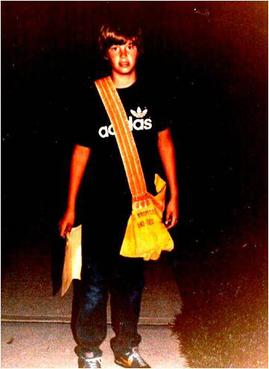
John David Gosch was born on November 12, 1969, in Des Moines. He was the youngest child of John and Noreen Gosch. Friends and family described a boy who liked building model rockets and who took his paper route seriously.
By 1982 Johnny had a delivery route in his West Des Moines neighborhood. It was usually his custom to wake his father to walk the route with him, but on the morning he disappeared, the boy set out with only the family's miniature dachshund, Gretchen, for company.
Johnny left home in the pale light before sunrise and headed for the drop point where carriers picked up their bundles, near the 42nd Street and Marcourt Lane area. Other paperboys later told police they had seen him there loading his wagon. It was the last sighting of Johnny that multiple witnesses could confirm.
A paperboy named Mike reported seeing Johnny talking to a stocky man in a blue, two-toned car. Another witness, John Rossi, also saw the man in the blue car and thought something seemed wrong. Johnny told Rossi the man was asking for directions. Rossi tried to note the license plate but could not recall the number, even after later undergoing hypnosis. A neighbor reported hearing a door slam and seeing a car speed away from where the wagon was found.
Gretchen returned home alone. Around 7:45 that morning, the Gosch household began receiving calls from customers whose papers had not arrived. Johnny's father searched the neighborhood and quickly found the wagon, still full, a short distance from the house. The family called the West Des Moines police to report their son missing.
Police initially treated Johnny as a possible runaway before concluding he had likely been kidnapped. Noreen Gosch has long criticized that early response, including a policy at the time that a child could not be classified as a missing person until 72 hours had passed. By her account, officers took roughly 45 minutes to arrive and take the report. Investigators turned up little physical evidence and never identified a serious suspect.
In August 1984, another Des Moines-area paperboy, Eugene Martin, disappeared under similar circumstances while delivering papers on the city's south side. Photos of both boys were printed on milk cartons produced by the Des Moines-based Anderson Erickson Dairy. Johnny was among the first missing children publicized this way, and the milk carton campaign spread across the country.
Noreen Gosch turned her grief into decades of advocacy. She founded the Johnny Gosch Foundation, spoke at schools and seminars, and lobbied for legislation. The "Johnny Gosch Bill," requiring an immediate police response to reports of missing children, was signed into Iowa law in 1984, and similar measures followed in other states. She also testified before a U.S. Senate subcommittee that year.
Noreen came to believe her son was taken by an organized network that exploited children, a theory she has continued to develop over the years. She has named several alleged perpetrators, none of whom has been charged in the case. In 1991, a man named Paul Bonacci claimed he had been forced to help abduct Johnny as part of such a ring. The FBI and local police have not treated Bonacci as a credible witness and have said members of his family placed him at home at the time.
According to Noreen, in March 1997 Johnny, then 27, appeared at her door in the middle of the night with an unidentified man, told her he had been the victim of a pedophile organization, and said he was living under a false identity because he feared for his life. Authorities have never confirmed the visit. John Gosch, who divorced Noreen in 1993, has publicly said he is not certain the visit occurred. In 2006, Noreen reported that photographs appearing to show a bound child had been left at her door, and she said one of the boys was Johnny. A former Florida detective linked the images to an unrelated 1970s case, though Noreen has maintained her interpretation.
Book Recommendation

Written by Johnny Gosch's mother Noreen, this heartbreaking account of her son's abduction tells the story the way only a mother could. It was updated in 2024 with new breaking information about a network she believes took him.
Buy on Amazon →By purchasing through this link, we may earn a small commission at no extra cost to you. Thank you for supporting our work!
The case has drawn renewed national coverage, including a 2014 documentary, Who Took Johnny, and a lengthy 2023 CNN feature. In 2024, Noreen released an updated edition of her book, in which she names the men she now believes were responsible. Into 2025, she continued speaking publicly about the case. No new arrest has been announced, and the disappearance remains an open, unsolved cold case.
The Gosch family home still stands in a residential neighborhood of West Des Moines, near the Interstate 235 and Interstate 35 interchange. It is a private residence and is almost certainly occupied by people with no connection to the case. If you visit, stay on public sidewalks and roads, do not enter the property, and do not attempt to contact the current residents or the neighbors. This is a quiet neighborhood and, for one family, the site of a loss that has never been resolved.
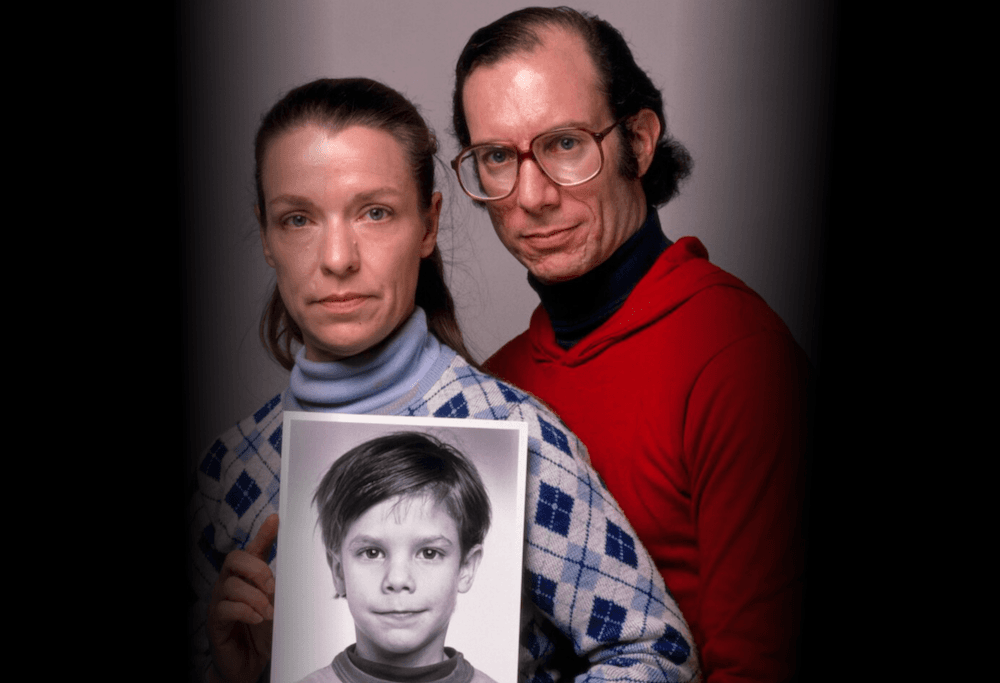
Six-year-old Etan Patz vanished near this SoHo corner in 1979 while walking to his school bus stop alone for the first time.

Elizabeth Smart was abducted through the window of this Salt Lake City home in 2002.
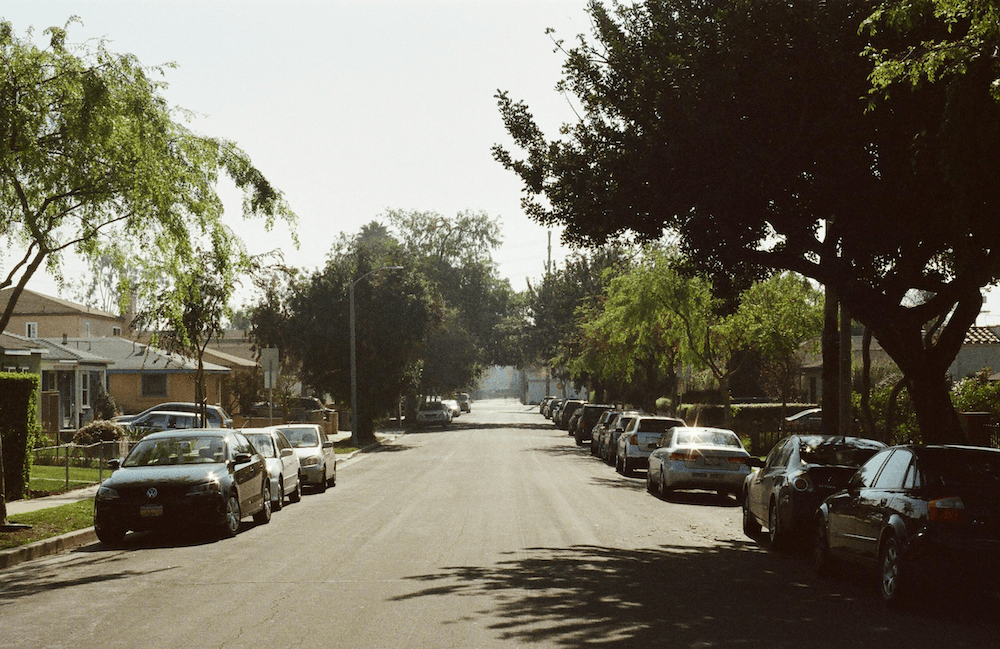
Twelve-year-old Courtney Sconce was abducted from this corner in 2000.
A Quick Note From Our Founder
Morbid Tourism is independently researched and maintained by one person. Every location is fact-checked, verified, and mapped so you can find exactly what you're looking for. If this page helped you, a coffee keeps the research going.