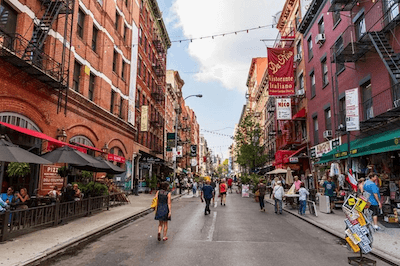
Prince St & W. Broadway, New York, NY 10012
This page contains affiliate links. We may earn a small commission at no extra cost to you.
Author: Jewls Krueger
On the morning of May 25, 1979, six-year-old Etan Patz left his family's loft on Prince Street in SoHo and set out for his school bus stop two blocks away. It was the first time his parents had let him make the short walk by himself. He never reached the bus, and he was never seen again.
Etan's disappearance became one of the most consequential missing child cases in American history. It helped launch a national missing children movement, put a generation of young faces on milk cartons, and changed how American families thought about letting children out of sight. The case went unsolved for more than three decades before a man named Pedro Hernandez was arrested, and the fight over his conviction reached the United States Supreme Court in 2026. Etan's body has never been found.
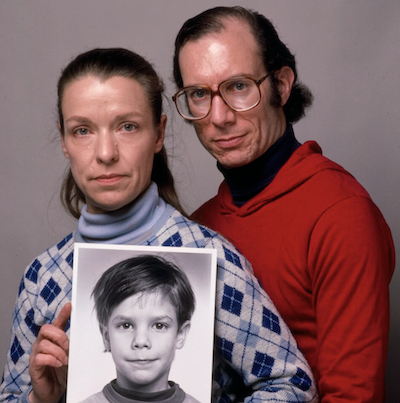
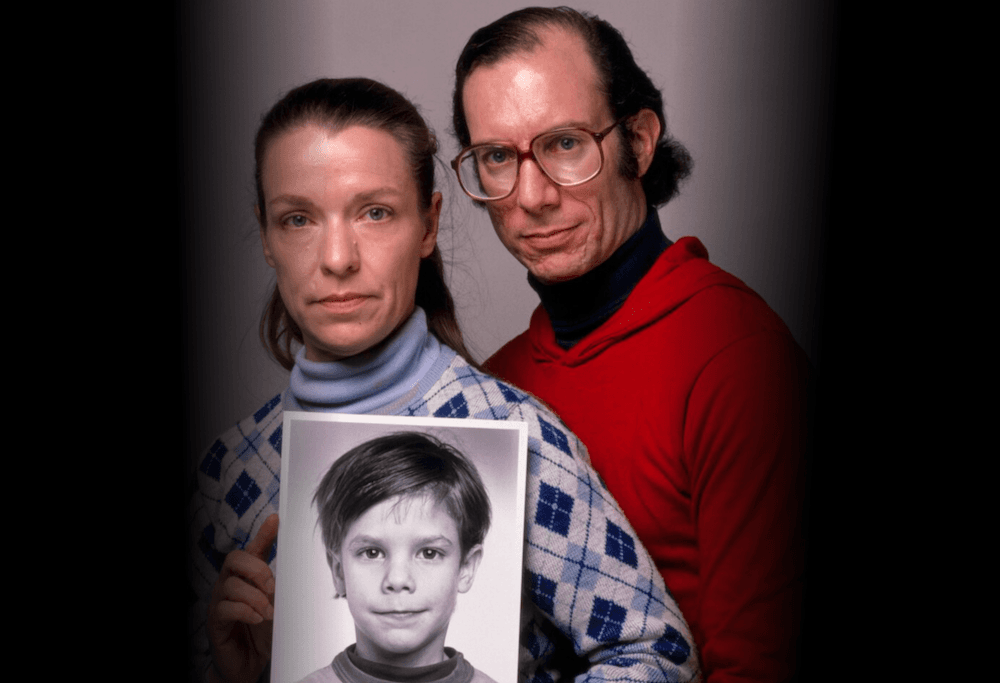
Etan Kalil Patz was born in New York City on October 9, 1972, the middle child of Stanley and Julie Patz. The family lived in a third-floor loft on Prince Street that his parents bought the year he was born, when SoHo was a rough industrial neighborhood filling with artists and young families rather than the luxury shopping district it later became. Neighbors from that era remembered a tight-knit community where families knew one another.
Etan was six years old and finishing first grade in the spring of 1979. He was known for a bright smile and a streak of independence, and for weeks he had been asking his parents to let him walk to the bus stop alone like the older kids.
On Friday, May 25, 1979, the day before the Memorial Day weekend, Etan's mother agreed to let him make the walk by himself. He left the loft carrying a bag decorated with elephants and a dollar to buy a soda, and headed west on Prince Street toward the bus stop at West Broadway, about two blocks away. He was going to P.S. 3, his school in Greenwich Village.
Etan never arrived at school, but because of the holiday timing his parents did not learn he was missing until he failed to come home that afternoon. They called the police, and within hours officers and neighbors were searching the streets, alleys, and rooftops of SoHo with bloodhounds. The search grew into one of the largest the city had seen, but it turned up no trace of him. A judge would not formally declare Etan dead until June 2001, more than twenty years later.
Etan's case arrived at a moment when missing children had little national visibility, and it helped change that. His photograph became one of the first to appear on milk cartons, and his parents pressed for new laws and reporting systems. In 1983, President Ronald Reagan designated May 25, the anniversary of Etan's disappearance, as National Missing Children's Day. The case was also among those that led to the founding of the National Center for Missing and Exploited Children.
For years, investigators focused on Jose Ramos, a convicted child molester who had dated a woman hired to walk Etan home during a school bus strike shortly before the boy vanished. Ramos acknowledged encountering a young boy who resembled Etan on the day he disappeared but denied harming him, and he was never criminally charged in the case. In 2004, after Etan's father filed a civil suit, a Manhattan judge found Ramos responsible for the boy's death.
In 2012, the case reopened publicly when the FBI and NYPD spent days digging up a basement on Prince Street, near the Patz home, that had been used as a workshop by a handyman known to the family. Investigators recovered debris for testing but found no human remains.
Also in 2012, attention turned to Pedro Hernandez, who had worked as a teenage stock clerk at a bodega at the corner of Prince Street and West Broadway in 1979, close to the bus stop. Police said they were tipped off after learning Hernandez had told a church prayer group in the early 1980s that he had harmed a child in New York.
Questioned by detectives, Hernandez told them he had lured Etan into the bodega's basement with the promise of a soda, choked him, and disposed of the body in the trash. He was arrested and charged with murder and kidnapping. From the start, the confession was disputed. Hernandez had a documented history of mental illness and a very low IQ, and he had been questioned for about seven hours before he was read his Miranda rights. His attorneys argued that the confession was false and the product of a vulnerable man being pressured to close a decades-old case. No physical evidence ever tied him to Etan.
Hernandez was tried in 2015, but the jury deadlocked and the judge declared a mistrial. At a second trial in 2017, a jury convicted him of felony murder and kidnapping while acquitting him of intentional murder. He was sentenced to 25 years to life in prison and became eligible for parole in 2037. He is held at the Elmira Correctional Facility in upstate New York.
Book Recommendation
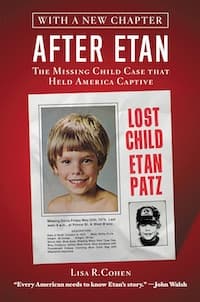
For the fullest account of the case, "After Etan" by Lisa R. Cohen draws on twenty years of reporting and the Patz family's own files. The 2009 book predates Pedro Hernandez's arrest and centers on the Ramos investigation, but now contains a new chapter with additional information.
Buy on Amazon →By purchasing through this link, we may earn a small commission at no extra cost to you. Thank you for supporting our work!
In July 2025, a federal appeals court overturned Hernandez's conviction and ordered a new trial, ruling that the trial judge had given jurors a flawed instruction about how to weigh his confession. Manhattan prosecutors announced they would try him a third time, and a retrial was expected in the fall of 2026.
That plan ended on June 22, 2026, when the Supreme Court, in a 6 to 3 decision, reinstated the conviction and reversed the appeals court. The three dissenting justices would have let the lower ruling stand. The decision closed off the retrial and left the 2017 verdict in place. Manhattan District Attorney Alvin Bragg said the ruling upheld the conviction of the man responsible for a crime that changed a generation of New Yorkers. Hernandez's attorneys said they were deeply disappointed and continued to maintain that an innocent man is in prison.
The SoHo of 1979 is gone. The blocks around Prince Street and West Broadway, once lined with vacant industrial buildings and cast-iron storefronts, are now among the busiest shopping streets in Manhattan, filled with flagship stores, designer boutiques, and crowds of visitors. The corner where the bodega once stood has long since been given over to retail, and there is no marker at the site.
The Patz family remained in their Prince Street loft for decades after Etan vanished, keeping the same apartment and phone number in case he ever came home. The area is a mix of residences and businesses, and any building connected to the family is private property. Visitors who come to see the neighborhood should treat it as the ordinary, busy place it is. Stay on public sidewalks, do not seek out or photograph private homes or their occupants, and remember that this remains, for one family, the last place a child was ever seen.

The first "Milk Carton Kid" Johnny Gosch went missing from near his suburban Iowa home
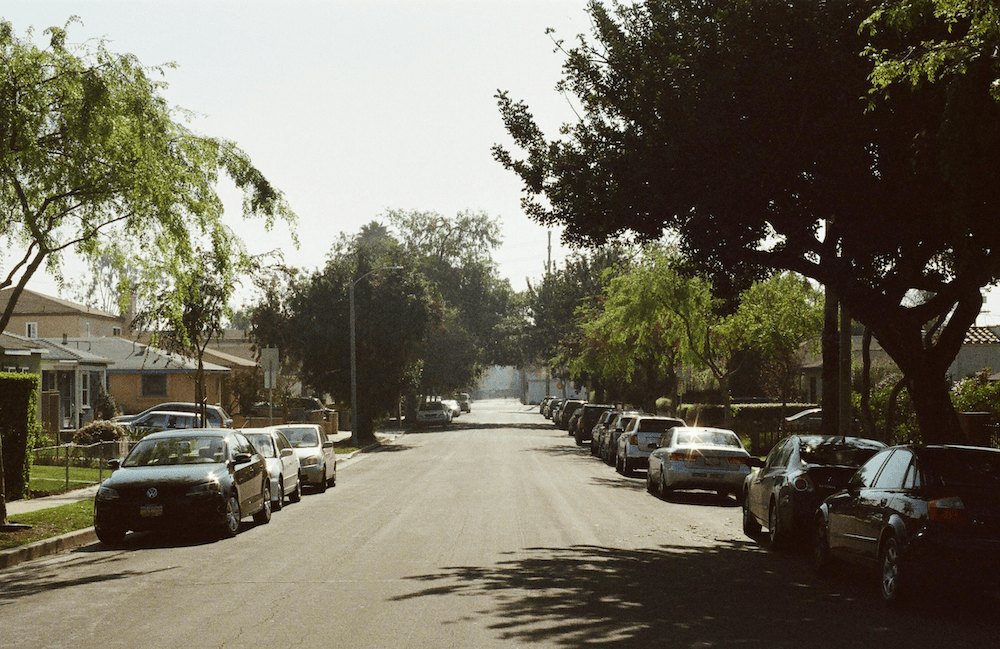
Twelve-year-old Courtney Sconce was abducted from this corner in 2000.

Elizabeth Smart was abducted through the window of this Salt Lake City home in 2002.
A Quick Note From Our Founder
Morbid Tourism is independently researched and maintained by one person. Every location is fact-checked, verified, and mapped so you can find exactly what you're looking for. If this page helped you, a coffee keeps the research going.