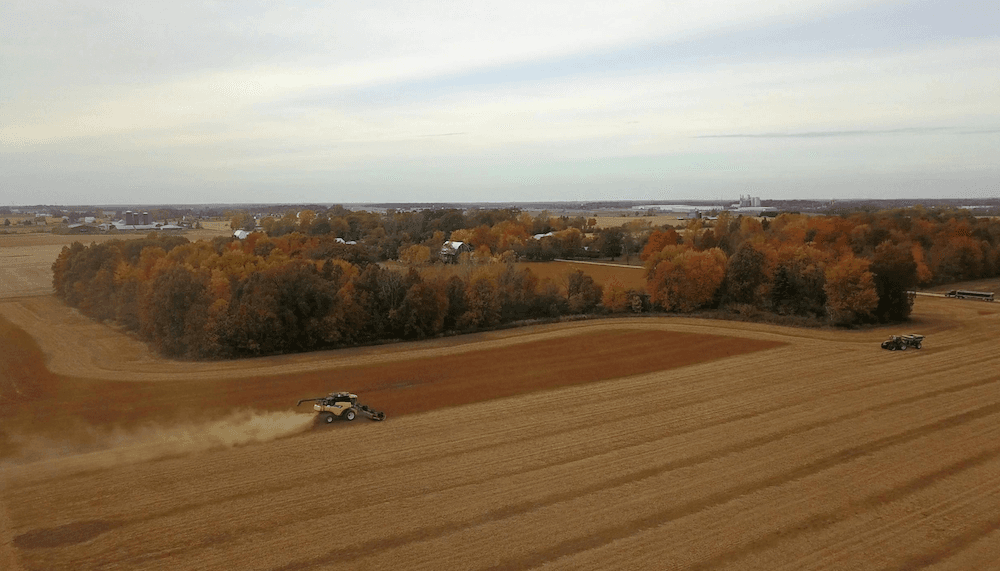
Fox Hollow Farm, Westfield, IN 46032
ADVERTISEMENT
This page contains affiliate links. We may earn a small commission at no extra cost to you.
Author: Jewls Krueger
In June 1996, investigators searched Fox Hollow Farm, suspected serial killer Herb Baumeister's house in Indiana, and found the remains of at least 11 men buried across the wooded 18 acre property in the Indianapolis suburb of Westfield, Indiana. Before being suspected in the murders, Herb Baumeister was a married father of three and the founder of the successful Sav-A-Lot thrift store chain in Indianapolis. Decades later, the investigation into who is buried at Fox Hollow Farm is still ongoing.
.png)
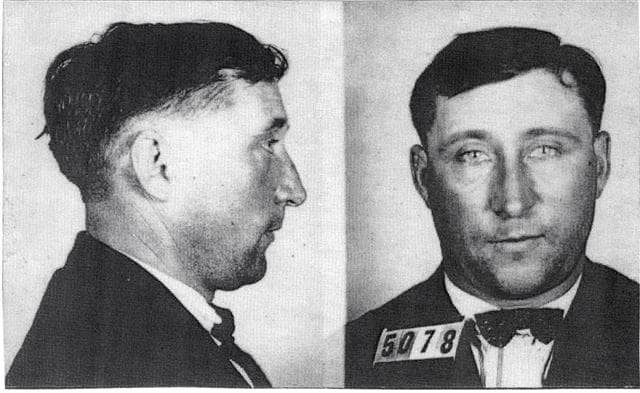
Herb Baumeister's Mugshot - Public Domain
Herbert Richard Baumeister was born in Indianapolis on April 7, 1947, the oldest of four children born to Dr. Herbert Eugene Baumeister, an anesthesiologist, and Elizabeth Baumeister. His childhood was reportedly normal but he began exhibiting antisocial behavior by adolescence, with classmates and teachers later recalling his interest in dead animals, urine, and odd outbursts. As a teenager he was diagnosed with paranoid schizophrenia and antisocial personality disorder, but did not receive further psychiatric treatment.
Baumeister attended Indiana University for one semester in 1965 and again in 1967, dropping out both times. While there he met Juliana "Julie" Saiter, a high school journalism teacher, whom he married in November 1971. The couple eventually had three children. Just six months after the wedding, his father had him committed to a psychiatric hospital for two months.
In 1988, Baumeister borrowed $4,000 from his mother and opened the first Sav-A-Lot, a thrift store in Indianapolis with no affiliation to the grocery store of the same name. The store became known for its organization, cleanliness, and quality second hand merchandise. With the early success of the business, he and Julie purchased Fox Hollow Farm, an 18 acre estate off 156th Street and the Monon Trail in Westfield, Indiana, in 1988. A second Sav-A-Lot location opened a few years later but never matched the success of the first.
For over a decade before Herb Baumeister bought Fox Hollow Farm, a serial killer dubbed the "I-70 Strangler" had been picking up young gay men in Indianapolis bars and dumping their bodies along Interstate 70 in Indiana and Ohio. From the 1980 murder of 15 year old Michael Sean Petree through 1991, at least 11 victims were attributed to the I-70 Strangler. After Baumeister bought Fox Hollow Farm in 1988, bodies stopped being found along I-70.
Indiana law enforcement officially named Baumeister as the prime suspect in the I-70 Strangler murders in April 1999, by which point he had been dead for nearly three years. Investigators believe that Baumeister had simply switched his disposal method from the highway to his own property.
By the early 1990's, it was apparent to investigators with the Hamilton County Sheriff's Office and the Indianapolis Metropolitan Police Department that someone was murdering gay men in central Indiana. By 1992, they had a description of a man who was using the name "Brian Smart" who had attempted to murder a survivor during a sex act at the survivor's home before the survivor escaped.
Eventually, the man who had survived the attempted murder saw "Brian Smart" again in 1995. He followed Smart's car, recorded the license plate number, and provided investigators with information that led them to Herb Baumeister and Fox Hollow Farm.
Unknown to investigators at the time, Herb Baumeister's wife had her own suspicions about Herb's involvement in the murders. In December 1994, one of their children had found a human skull on the property and brought it inside to show the rest of the family. At the time Herb had explained that it was a skull from a medical model from his father's medical practice, and that he had decided to bury it on the property. He then claimed a raccoon had carried it from the garage out to the woods.
After investigators questioned her in late 1995, Julie became convinced that her husband was responsible. In January 1996 she filed for divorce, and on June 24, 1996, while Herb was away on vacation, she consented to a search of Fox Hollow Farm. Within days, investigators recovered roughly 10,000 bone fragments scattered across the wooded property, along with shotgun shells and pairs of hinged handcuffs.
Further Reading
Herb Baumeister was on vacation at the time of the search of his property. When he found out what was happening, he fled to Ontario, Canada, where he ultimately committed suicide by shooting himself in the head at Pinery Provincial Park on July 3, 1996 at the age of 49. In his three page suicide note, he did not mention the murders of the men, but by that time investigators were confident that Herb was the perpetrator of at least 11 murders.
The original 1996 investigation, led by then Hamilton County Sheriff's Sergeant Eddie Moore, was able to identify the remains of eight of the men using dental records and the limited DNA technology of the time. Those eight victims were:
Two more victims have since been identified through advanced DNA analysis. Allen Livingston, who had been missing since August 6, 1993, was identified in October 2023, and Daniel Thomas Halloran was identified in May 2025, bringing the total number of identified victims to 10.
In 2022, Hamilton County Coroner Jeff Jellison reopened the identification effort after being contacted by Eric Pranger, who believed his cousin Allen Livingston might be among Baumeister's victims. Working in partnership with the FBI, the Indiana State Police, the University of Indianapolis Human Identification Center, and Texas-based forensic genealogy lab Othram, Jellison's team has begun reanalyzing the roughly 10,000 bone fragments using forensic genetic genealogy.
Jellison and his team have publicly appealed to anyone in Indiana and nearby states who had a male family member go missing in the mid 1980s through the mid 1990s to submit a DNA sample for comparison against the remaining bone fragments. The investigators have estimated that the remains found at Fox Hollow Farm could belong to as many as 25 different victims.
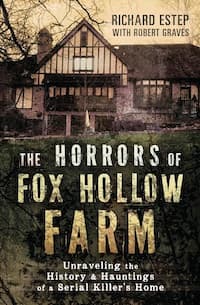
The Tudor style main house on the property is still standing. The original 18 acre estate has been largely subdivided and redeveloped into a gated residential community, with newer homes built across what was once the wooded back portion of the property. The original house is owned by Robert and Vicki Graves, who purchased it in May 2009. The Graves family has spoken extensively in true crime and paranormal media about the home's history. Robert Graves co-authored the 2019 book "The Horrors of Fox Hollow Farm: Unraveling the History and Hauntings of a Serial Killer's Home" with paranormal investigator Richard Estep.
Do not trespass onto private property. Stay on public roads and walkways at all times.
The Lonely Hearts Killer lived on this farm in West Virginia where he killed at least 5 people.
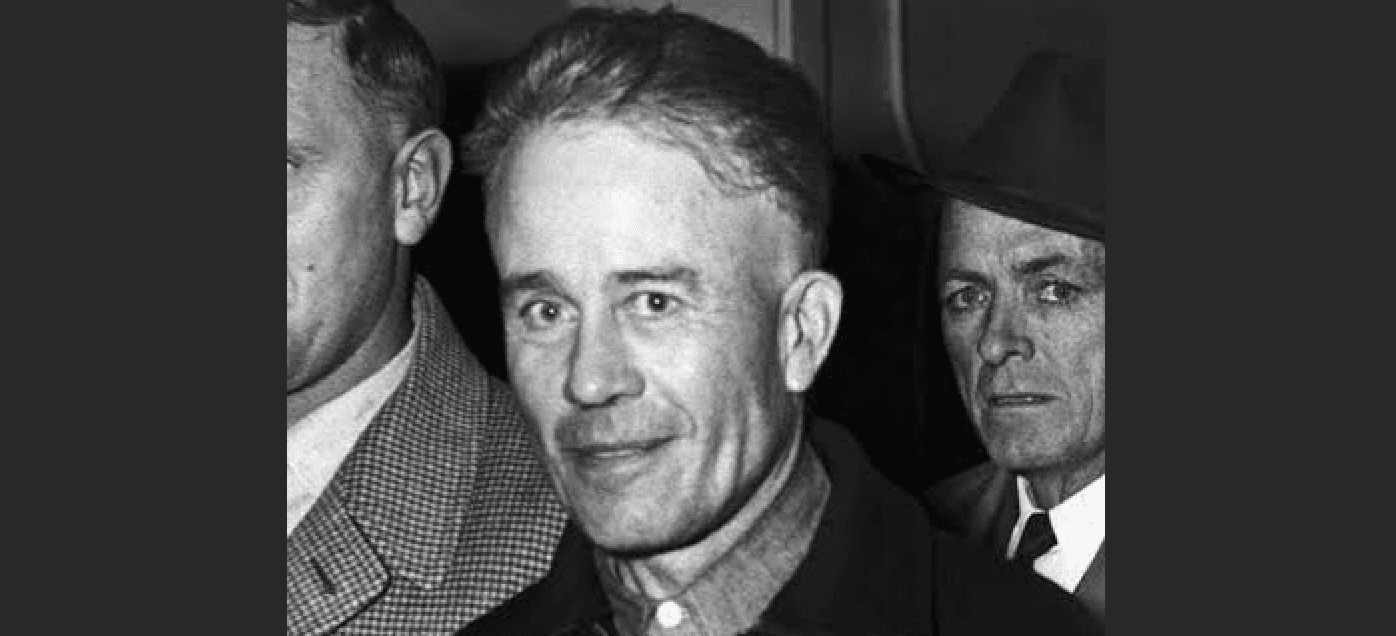
Serial killer Ed Gein's house was filled with items made from human body parts.
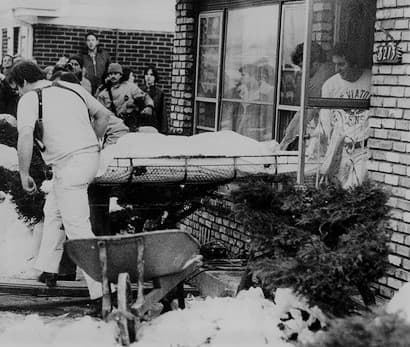
Serial killer John Wayne Gacy buried most of his victims under the floorboards of his suburban home.
A Quick Note From Our Founder
Morbid Tourism is independently researched and maintained by one person. Every location is fact-checked, verified, and mapped so you can find exactly what you're looking for. If this page helped you, a coffee keeps the research going.