Archer Ave & 2nd Ave, Plainfield, WI 54943
ADVERTISEMENT
This page contains affiliate links. We may earn a small commission at no extra cost to you.
Author: Jewls Krueger
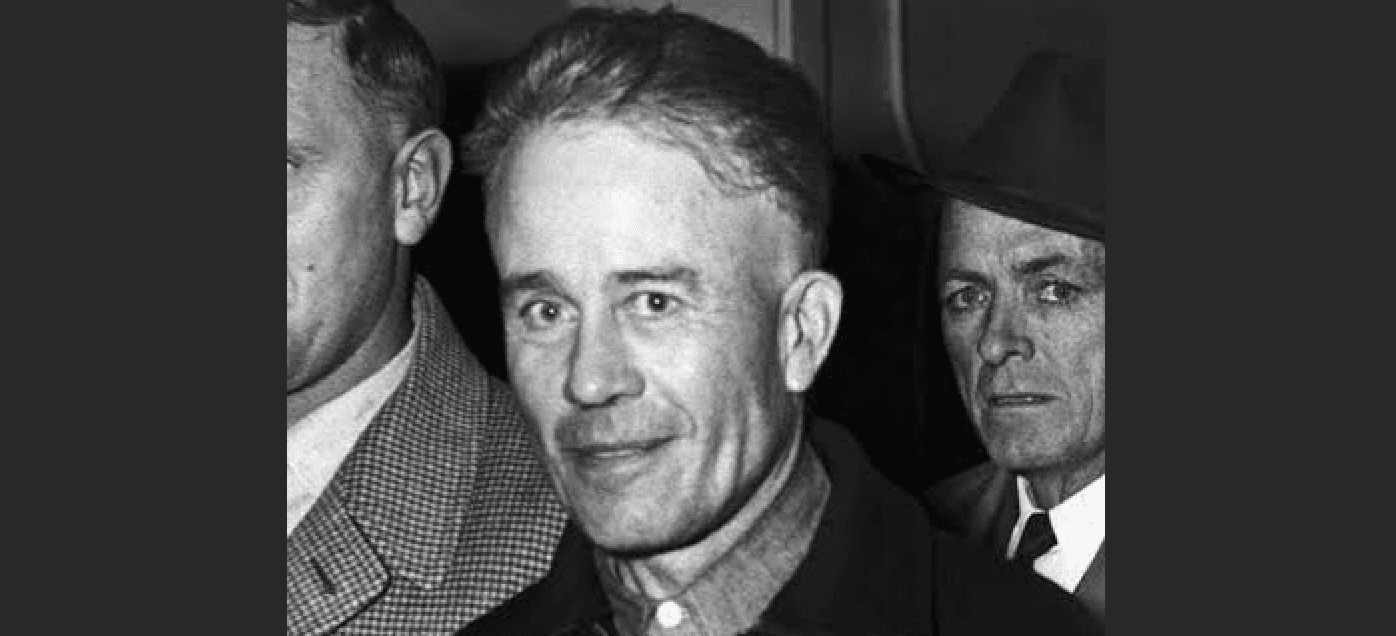
Ed Gein's name is tied to one of the most disturbing crime scenes in American history. In November 1957, investigators searching for a missing Plainfield, Wisconsin, shopkeeper walked into Gein's dilapidated farmhouse and found evidence of murder alongside a collection of items fashioned from human remains. The discovery turned a quiet farming community into the center of a national horror story and gave rise to some of the most enduring villains in film.
Gein confessed to killing two women and to robbing graves in local cemeteries over roughly a decade. He was never sent to prison. Instead, he spent the rest of his life in state mental institutions, and the farmhouse that held his secrets burned to the ground a few months after his arrest.
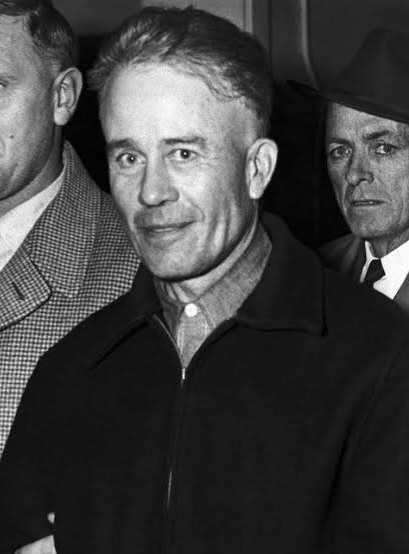
Edward Theodore Gein was born on August 27, 1906, in La Crosse County, Wisconsin, the younger of two sons. When he was a boy, the family settled on a farm outside Plainfield, in rural Waushara County, where they lived in near isolation. His mother, Augusta, was severely religious and controlling, and she taught her sons that the outside world, and women in particular, were corrupt. Gein was devoted to her and had few relationships beyond the farm.
By the mid-1940s, Gein was alone. His father, George, died in 1940. His older brother, Henry, died in 1944 while fighting a brush fire on the property, a death some investigators later questioned but never proved to be a crime. Augusta died in 1945. Left by himself, Gein sealed off the rooms his mother had used and let much of the house fall into squalor while he worked odd jobs for neighbors, who generally regarded him as a harmless eccentric.
Bernice Worden was a 58-year-old widow who ran the family hardware store in Plainfield, a business she had operated for years. She was well known in the small community. Her son, Frank Worden, was a Waushara County sheriff's deputy, a detail that would place him at the center of the investigation into her disappearance.
Mary Hogan operated a tavern in the Plainfield area and vanished on December 8, 1954, roughly three years before Worden. For a time her disappearance went unsolved. Gein later confessed to shooting her, and her remains were among those recovered from his home.
ADVERTISEMENT
On the morning of November 16, 1957, opening day of Wisconsin's deer hunting season, Bernice Worden disappeared from her hardware store. When her son returned that evening, he found the cash register open and bloodstains on the floor. The last sales slip his mother had written was for a gallon of antifreeze, an item Gein had told her he would come back to buy. Suspicion turned quickly to Gein, and deputies went to his farm.
In a shed on the property, a deputy found Worden's body. Investigators then entered the house. Inside the cluttered, filthy rooms they found human skulls, some made into bowls, chairs and other objects covered in human skin, masks made from the skin of human faces, and additional remains, including those of Worden and Hogan. Gein was arrested that night.
Book Recommendation

Interested in learning more about Ed Gein? This book delivers the definitive account of the Wisconsin farmhand whose crimes were so disturbing they inspired the horror classics Psycho, The Texas Chain Saw Massacre, and The Silence of the Lambs.
Buy on Amazon →By purchasing through this link, we may earn a small commission at no extra cost to you. Thank you for supporting our work!
When questioned, Gein told investigators that between about 1947 and 1952 he had made dozens of nighttime visits to local cemeteries, digging up recently buried middle-aged women who reminded him of his mother. He admitted taking bodies from nine graves and led authorities to them. Because officials doubted that the slightly built Gein could have dug up graves alone, they exhumed several of the plots he identified and found them disturbed exactly as he had described, which corroborated much of his account.
Gein said he had used the skin and bones of the dead to make keepsakes and clothing, part of what investigators later described as an attempt to recreate the presence of his mother. He denied any sexual contact with the bodies. Police briefly suspected him in other regional disappearances, but polygraph tests and psychiatric evaluation did not connect him to them, and he was charged only in Worden's death.
ADVERTISEMENT
Gein was arraigned on a single count of first-degree murder in November 1957 and pleaded not guilty by reason of insanity. Doctors diagnosed him with schizophrenia and found him mentally incompetent to stand trial, and in early 1958 he was committed to a state hospital for the criminally insane.
A decade passed before physicians judged him competent. His trial began in November 1968 and was heard by a judge rather than a jury. Gein was found guilty of murdering Bernice Worden, but in a second phase the judge found him not guilty by reason of insanity and ordered him returned to a secure hospital. He was later moved to the Mendota Mental Health Institute in Madison, where he died of respiratory failure related to lung cancer on July 26, 1984, at the age of 77. He was buried in Plainfield Cemetery, near his family and, in a grim irony, near graves he had once robbed.
The details that emerged from the farmhouse proved impossible for the public to forget, and they seeped into fiction almost immediately. Robert Bloch's 1959 novel Psycho, adapted by Alfred Hitchcock the following year, drew on the case for its portrait of a disturbed man dominated by his dead mother. Gein's crimes also helped inspire Leatherface in The Texas Chain Saw Massacre and Buffalo Bill in The Silence of the Lambs, along with countless other films, songs, and books over the decades.
Interest in the case surged again in 2025 with the release of Monster: The Ed Gein Story, the third season of Ryan Murphy's Netflix anthology, with Charlie Hunnam in the lead role. The season arrived on Netflix on October 3, 2025, and renewed public attention on Plainfield and the sites connected to Gein. Several accounts of the case have noted that the series takes considerable dramatic liberties with the historical record.
ADVERTISEMENT
Nothing remains of the farmhouse. Early on the morning of March 20, 1958, as Gein's belongings were being prepared for a public auction and rumors spread that the property might be turned into a tourist attraction, the house was destroyed by fire. Arson was widely suspected, but the cause was never officially determined. When Gein was told about the fire, he reportedly answered, "Just as well."
The land sits on a rural stretch on the outskirts of Plainfield, in Waushara County, central Wisconsin. The spot where the house once stood is now private farmland, an overgrown clearing set back from the road with no building, marker, or memorial. Curiosity seekers still make the drive, but the property is posted against trespassing and remains in private hands. Visitors are asked to view the area only from the public road, to respect the no trespassing signs, and to remember that Plainfield is a small community that has lived with this history for decades.
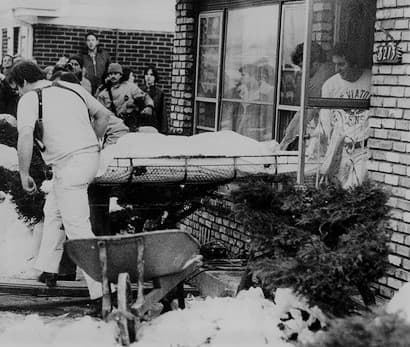
Serial killer John Wayne Gacy buried most of his victims under the floorboards of his suburban home.
The small apartment where cannibal Jeffrey Dahmer tortured, murdered, and ate some of his victims.

Serial killer Herb Baumeister killed 11 men and hid their bodies on his large property.
A Quick Note From Our Founder
Morbid Tourism is independently researched and maintained by one person. Every location is fact-checked, verified, and mapped so you can find exactly what you're looking for. If this page helped you, a coffee keeps the research going.