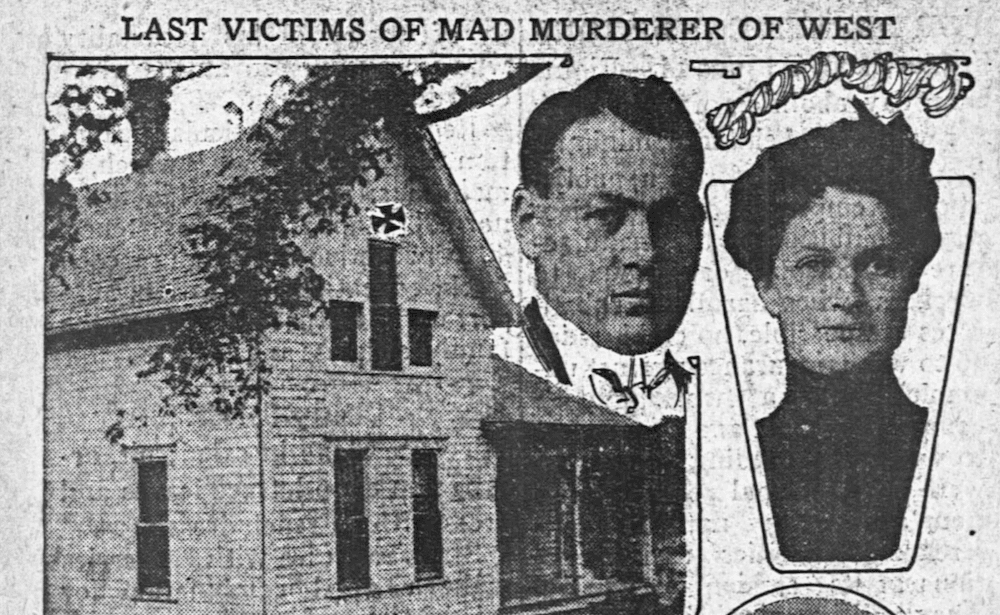
508 E 2nd St., Villisca, IA 50864
ADVERTISEMENT
Author: Jewls Krueger
In the pre-dawn hours of June 10, 1912, an intruder entered the Josiah B. Moore home in the small town of Villisca, Iowa, and killed everyone inside. Six members of the Moore family and two young houseguests were bludgeoned to death in their sleep with the family's own axe. More than a century later, no one has ever been convicted of the crime, and the case remains one of the most famous unsolved mass murders in American history.
Josiah & Sarah Moore - Public Domain
Josiah B. "Joe" Moore, 43, was a successful farm implement dealer in Villisca. He and his 39 year old wife Sarah lived with their four children in a two story white frame home in town: 11 year old Herman, 10 year old Mary Katherine, 7 year old Arthur "Boyd," and 5 year old Paul. The Moores were affluent, well liked, and active members of the local Presbyterian Church.
On the afternoon of Sunday, June 9, 1912, Mary Katherine invited two friends, sisters Lena Gertrude Stillinger, 11, and Ina May Stillinger, 8, to spend the night after church. That evening, the Moore family and the Stillinger sisters attended the Children's Day program at the newly built Villisca Presbyterian Church, which Sarah Moore had helped organize. The program ended around 9:30 p.m., and the group walked back to the Moore house on the corner of Second Street and East Fourth Street, arriving shortly before 10 p.m.
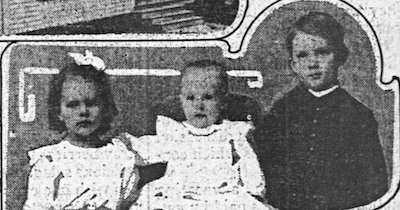
3 of the Moore Children - Public Domain
Sometime between midnight and 5 a.m. on June 10, 1912, an unknown intruder entered the Moore home. According to the coroner's later determination, the killer began in the parents' upstairs bedroom, striking Josiah first, followed by Sarah. Josiah was struck significantly more times than any of the other victims. The intruder then moved down the hall to the children's bedroom, where all four Moore children were killed in their beds, before going back downstairs to the guest room and killing the Stillinger sisters.
All eight victims had been bludgeoned in the head with the blunt end of an axe belonging to Josiah Moore. The weapon was left behind at the scene. The killer took time to hang aprons and skirts over the windows and mirrors and pulled bedclothes up over each victim's face. A slab of uncut bacon and a bowl of bloody water were also found near the scene.
Further Reading
At around 7 a.m. on June 10, the Moores' next door neighbor, Mary Peckham, noticed that the family had not come outside to do their morning chores. After knocking with no answer, she called Josiah's brother Ross Moore, who lived nearby. Ross arrived, tried the door, then let himself in with his own key. In the downstairs guest bedroom, he found the bodies of the Stillinger sisters. He immediately called for Henry "Hank" Horton, the town's primary peace officer, who searched the rest of the house and discovered the six additional victims.
On June 12, 1912, funeral services for all eight victims were held in Villisca's town square, drawing thousands of mourners. National Guardsmen blocked the streets as a hearse moved slowly toward the town firehouse, where the eight coffins had been laid out. The Moore family and Stillinger sisters were later buried in the Villisca Cemetery.
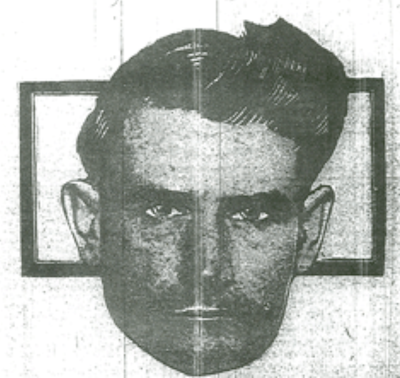
Axe Murderer Henry Moore - Public Domain
The investigation that followed lasted nearly a decade and produced a long line of suspects. English born traveling minister Reverend George Kelly, who had been in Villisca to teach at the Children's Day program the day of the murders, later confessed while in custody. He was tried twice, in 1917. The first trial ended in a hung jury, and the second in a full acquittal. Iowa State Senator Frank F. Jones, a business rival of Josiah Moore's, was also long suspected of hiring a killer to carry out the crime, though he was never charged. Traveling axe murderers William Mansfield, Henry Lee Moore, and, in a 2017 theory advanced by baseball statistician Bill James, German immigrant drifter Paul Mueller, have all been proposed as possible suspects over the years. No one has ever been convicted of the murders.
The Josiah B. Moore home still stands today on the corner of Second Street and East Fourth Street in Villisca, in southwestern Iowa. In the 1990s, historians Darwin and Martha Linn purchased the home and painstakingly restored it to its 1912 condition, removing the electricity, plumbing, and modern additions and returning the outhouse, chicken coop, and barn to the property. The house is on the National Register of Historic Places. The actual axe used in the murders is preserved in the collection of the State Historical Museum of Iowa in Des Moines.
The Villisca Axe Murder House is open to the public for guided daytime tours and overnight stays. Individual daytime tickets and private group tours are available April through October, and overnight stays run year round, ranging from single room bookings to full house rentals for up to 12 guests. Overnight guests are typically left alone in the house from evening through 8 a.m. the following morning. Because the home is a preserved museum with no plumbing or electricity, guests are provided a restroom and modern amenities in the restored barn next door.
Please be respectful of the surrounding neighborhood, which remains a quiet residential area of Villisca. Follow all posted signage and tour guidelines during your visit, and book any tours or stays through the official Villisca Axe Murder House website.
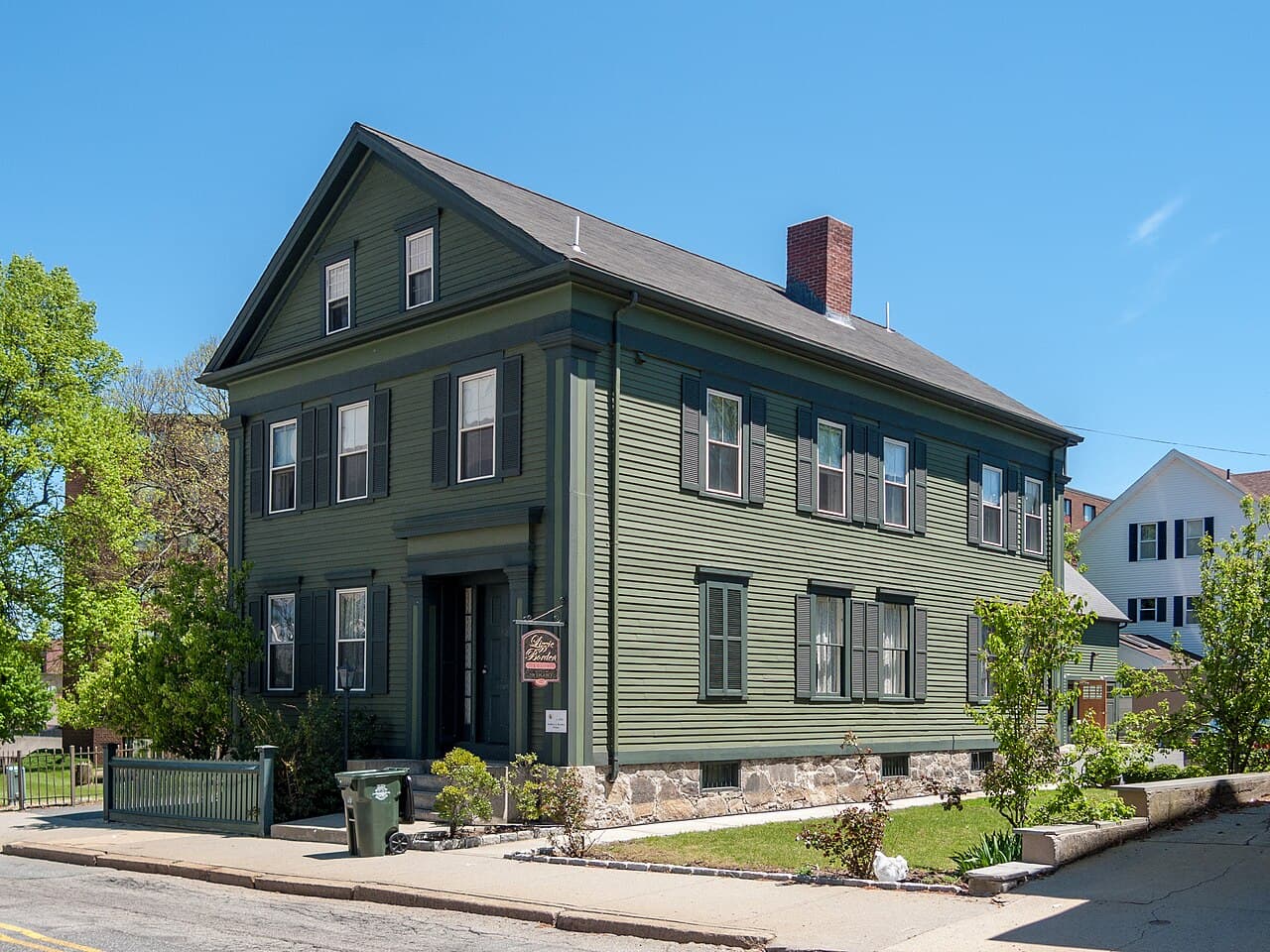
Lizzie Borden took an axe, and gave her father 40 whacks... or did she?
Sixteen year old David Brom killed his entire family in this Rochester, MN home.
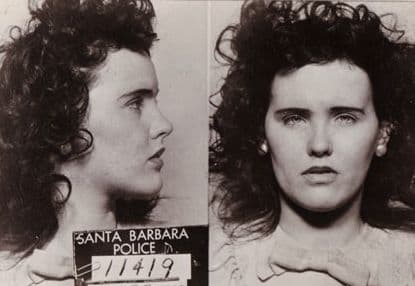
22-year-old Elizabeth Short's mutilated body was found in a Los Angeles vacant lot in 1947 in one of America's most famous unsolved cases.
A Quick Note From Our Founder
Morbid Tourism is independently researched and maintained by one person. Every location is fact-checked, verified, and mapped so you can find exactly what you're looking for. If this page helped you, a coffee keeps the research going.


,_14_June_1912.jpg)
