3850 E. New York Street, Indianapolis, IN 46201
ADVERTISEMENT
This page contains affiliate links. We may earn a small commission at no extra cost to you.
Author: Jewls Krueger
In the summer of 1965, a 16-year-old girl named Sylvia Likens was left to board with a family on the east side of Indianapolis while her parents traveled with a carnival. Over the following three months, she was starved, beaten, burned, and confined to the basement of the house on East New York Street until she died. The case became one of the most notorious crimes in Indiana history and helped reshape how the state treats the reporting of child abuse.
The house where it happened stood at the corner of East New York Street and North Denny Street. It was demolished in 2009, and the lot is now used as parking for a nearby church.
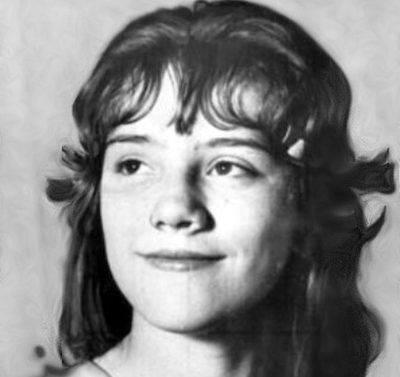
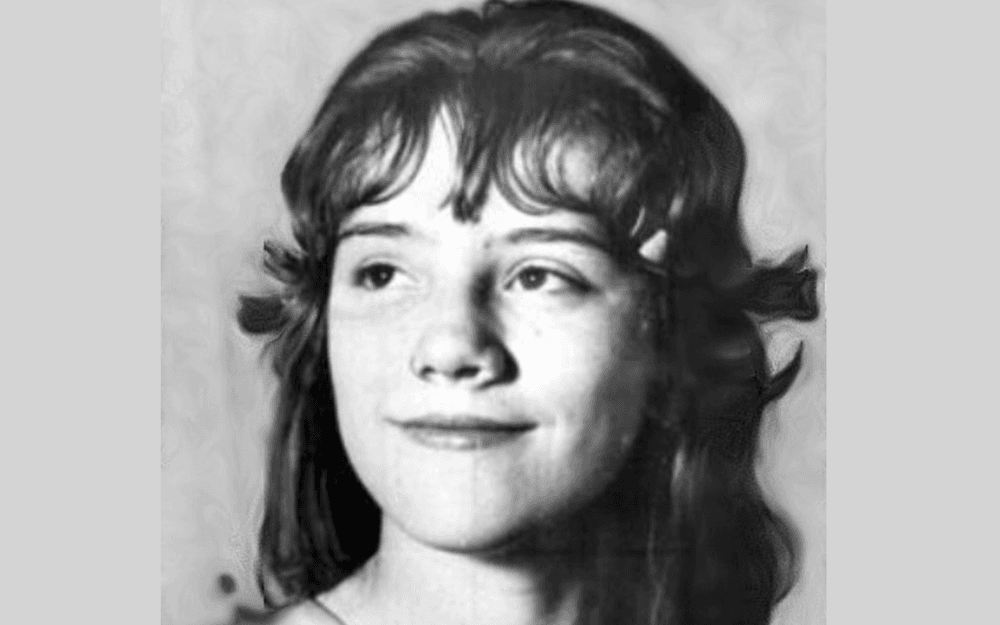
Sylvia Marie Likens was born on January 3, 1949, in Lebanon, Indiana, the third of five children of Lester and Betty Likens, who worked as traveling carnival concessionaires. She was often described as friendly and lively, was fond of the Beatles, and was known to keep her mouth closed when she smiled because of a front tooth she had lost as a child. She was especially protective of her younger sister, Jenny, who had a limp and wore a leg brace as a result of childhood polio.
Because the family moved frequently and money was tight, Sylvia and Jenny were usually kept out of the carnival work their brothers did. In July 1965, their father arranged for the two girls to stay with Gertrude Baniszewski, whose daughters the sisters knew from Arsenal Technical High School. The agreement was that Baniszewski would care for the girls for roughly twenty dollars a week until their parents returned that fall.
Gertrude Baniszewski, born Gertrude Van Fossan, was a divorced mother of seven in her mid-thirties, living in a rented house and relying on odd jobs and support payments to raise her children. She had experienced years of financial strain, failed marriages, and poor health.
The first weeks of the boarding arrangement passed with little trouble. The abuse began after the weekly payments started arriving late, and it escalated sharply through August and September, when Baniszewski increasingly singled out Sylvia. Investigators and later writers have pointed to jealousy and resentment as central motives. Baniszewski encouraged her own children and children from the neighborhood to take part, turning the abuse into something a group of young people participated in and, at times, watched.
ADVERTISEMENT
By early October, the mistreatment had become sustained torture. Sylvia was beaten, burned with cigarettes and matches, scalded, and eventually forced to live in the basement, where she was rarely fed and often deprived of water. In one of the most widely reported details of the case, words were carved and burned into her skin, an act that would feature heavily in the later trial testimony.
Sylvia's sister Jenny witnessed much of the abuse but was too frightened to seek help, having been threatened herself. On October 26, 1965, after weeks of decline, Sylvia stopped breathing. Baniszewski instructed one of the neighborhood teenagers to call police from a nearby payphone. Officers arrived that evening and found Sylvia's body on a mattress in an upstairs bedroom.
Jenny quietly told the officers, "You get me out of here and I'll tell you everything." Her account led to arrests within hours. An autopsy documented more than 150 separate wounds across Sylvia's body. The official cause of death was a subdural hematoma from a blow to the head, with shock and severe malnutrition listed as contributing factors.
Book Recommendation

John Dean's "House of Evil" is the definitive account of the Sylvia Likens case, tracing how Gertrude Baniszewski and a group of children subjected a teenager to months of escalating torture in what Indiana prosecutors called the worst crime ever perpetrated against an individual in state history.
Buy on Amazon →By purchasing through this link, we may earn a small commission at no extra cost to you. Thank you for supporting our work!
A Marion County grand jury indicted six people in December 1965: Gertrude Baniszewski; her children Paula, Stephanie, and John Jr.; and two neighborhood teenagers, Coy Hubbard and Richard Hobbs. Charges against Stephanie were later dropped after she agreed to testify for the state.
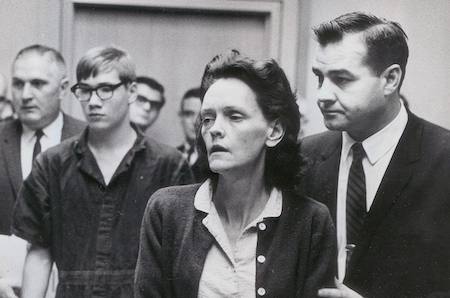
The trial of the remaining five began on April 18, 1966, and drew national attention. On May 19, 1966, the jury found Gertrude Baniszewski guilty of first-degree murder and recommended life imprisonment. Paula was convicted of second-degree murder, and Hobbs, Hubbard, and John Jr. were convicted of manslaughter.
In 1970, the Indiana Supreme Court reversed the convictions of Gertrude and Paula, ruling that they should have received a change of venue and separate trials. At a 1971 retrial, Gertrude was again convicted of first-degree murder, while Paula pleaded guilty to voluntary manslaughter. The three convicted teenagers each served less than two years before being paroled in 1968.
Gertrude Baniszewski was paroled in December 1985, despite a petition opposing her release that gathered more than 40,000 signatures. She changed her name, moved to Iowa, and died of lung cancer in 1990.
ADVERTISEMENT
The house on East New York Street sat vacant for years after the case. Plans to convert it into a shelter for young women were discussed but never funded, and the property fell into disrepair. It was torn down in 2009, and the site now serves as a parking lot for a church across the street. There is no marker at the location itself.
The intended place for reflection is elsewhere. In 2001, a six-foot granite memorial to Sylvia Likens was dedicated in Willard Park, on the near-east side of Indianapolis along East Washington Street. It is inscribed with a short poem and a message about the changes to child-protection awareness that followed her death, which is credited with strengthening Indiana's mandatory reporting laws.
Visitors who wish to pay their respects should go to the Willard Park memorial rather than the former house site. The lot on East New York Street is part of an active neighborhood and a working church property. Anyone passing by is asked to stay on public sidewalks, to avoid disturbing the church or nearby residents, and to remember that this remains a place tied to real loss for a family and a city.
The wooded West Memphis site where three eight-year-old boys were murdered in 1993, igniting one of America's most contested murder convictions.

A Duxbury, Massachusetts mother killed her three young children in 2023, and her 2026 murder trial ended in a mistrial.
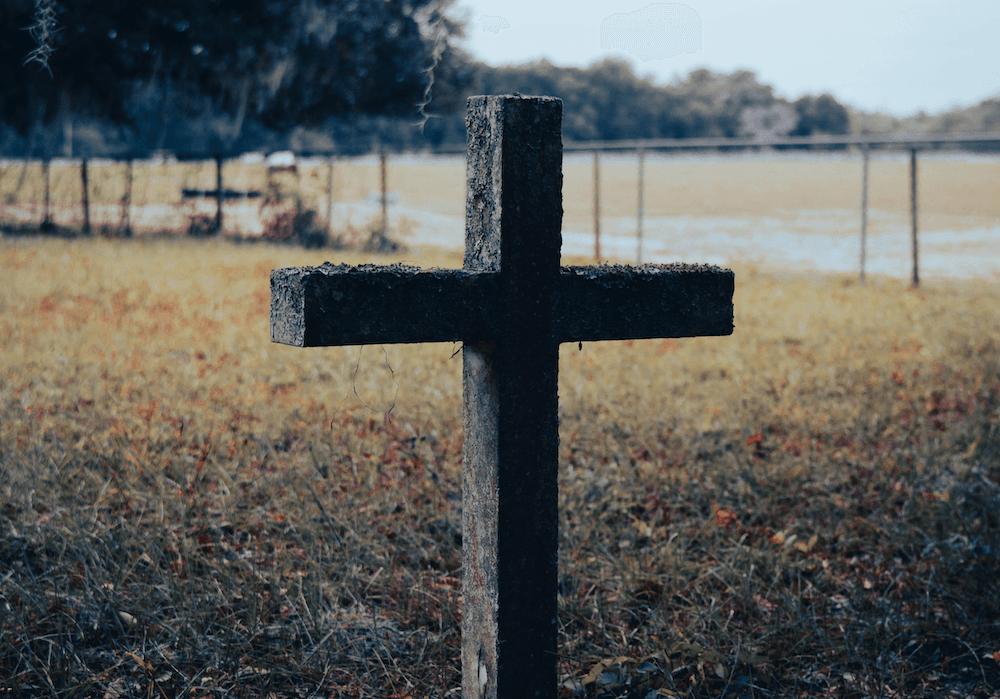
Jessica Keen was abducted and found murdered in this small, rural cemetery.
A Quick Note From Our Founder
Morbid Tourism is independently researched and maintained by one person. Every location is fact-checked, verified, and mapped so you can find exactly what you're looking for. If this page helped you, a coffee keeps the research going.