824 Roswell Ave., Long Beach, CA 90804
This page contains affiliate links. We may earn a small commission at no extra cost to you.
Author: Jewls Krueger
Between roughly 1971 and 1983, an unassuming Long Beach computer consultant named Randy Steven Kraft raped, tortured, and murdered at least 16 young men across Southern California. His "scorecard," a coded list of 61 entries recovered from his car at the time of his 1983 arrest, has led investigators to believe he may actually be responsible for as many as 65 to 67 murders across California, Oregon, and Michigan. Kraft carried out much of his violence from a home on the 800 block of Roswell Avenue on the east side of Long Beach, where he lived from the early 1970s until his arrest.
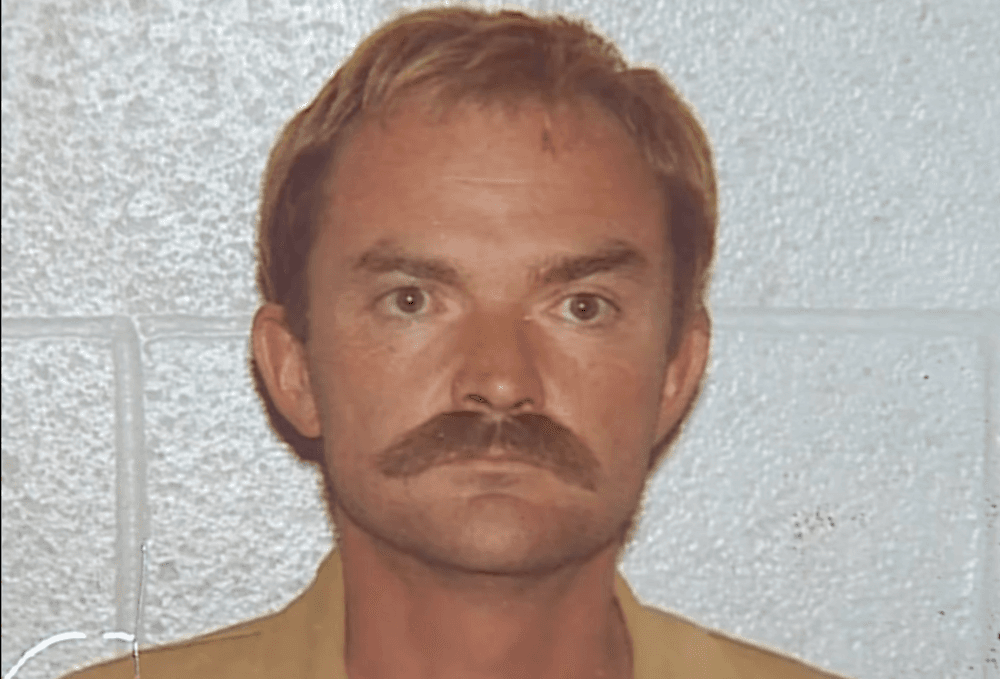
Randy Kraft - Public Domain
Randolph Steven Kraft was born on March 19, 1945 in Long Beach, California, the youngest of four children and only son of Harold and Opal Kraft. When Randy was three, the family moved to the small Orange County community of Midway City. He was reportedly a strong student, tested at an IQ of 129, and was described by his high school classmates as intensely politically conservative. After graduating high school in 1963, he attended Claremont Men's College on a scholarship, studying economics and joining the Reserve Officer Training Corps.
After graduating college, Kraft enlisted in the U.S. Air Force in 1968. He was discharged the following year under a general discharge after coming out to his supervisors as gay. He then moved back to Long Beach, where he worked briefly as a bartender at several gay bars and, over the following decade, held a series of computer consulting jobs. By the early 1970s, he had settled into a modest home on the 800 block of Roswell Avenue in the neighborhood near Seventh Street and Redondo Avenue in east Long Beach.
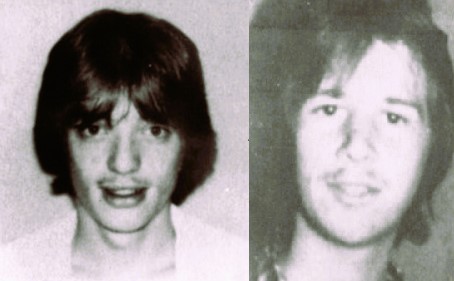
Victims Rodger DeVaul and Geoffrey Nelson - Public Domain
Randy Kraft's first suspected murder was in September 1971, when 30 year old bartender Wayne Joseph Dukette, an employee at a Sunset Beach gay bar Kraft frequented called Stables, went missing after leaving work. Dukette's decomposed body was found about six weeks later alongside a Sun Beach ramp of the 91 Freeway. Investigators believe Kraft continued killing at a rate of roughly two to four young men each year for the next 12 years, with some brief lulls corresponding to his more stable romantic relationships.
Kraft's victims were overwhelmingly young men between the ages of 13 and 35, and often United States Marines from the region's many military bases, hitchhikers, or young men leaving Long Beach and Orange County gay bars. Kraft would typically offer them a ride, incapacitate them with alcohol and prescription tranquilizers, most often diazepam, and then rape, torture, strangle, or asphyxiate them. Their bodies were most often dumped along or near Southern California freeways, earning Kraft one of his early nicknames, "The Freeway Killer." That nickname was later shared with two contemporaneous but unrelated Southern California killers, William Bonin and Patrick Kearney, whose overlapping murder sprees badly slowed the police investigation for years.
Kraft was briefly detained in 1970 after he sexually assaulted a 13 year old runaway named Joey Fancher at a prior residence, but charges were dropped after officers admitted they had entered his home without a warrant. In 1975, Long Beach police brought Kraft in for questioning after the severed head of 19 year old Keith Crotwell was found near the Long Beach Marina and witnesses reported having seen Crotwell get into Kraft's car. Kraft was released again due to a lack of evidence.
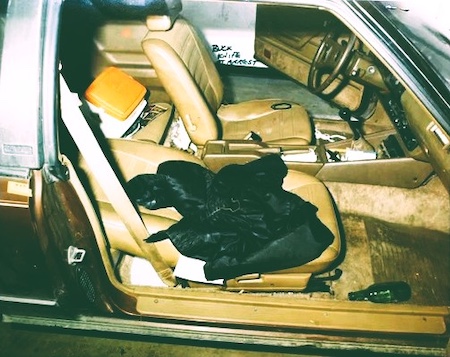
The Interior of Randy Kraft's Car - Public Domain
Just after 1 a.m. on May 14, 1983, California Highway Patrol officers pulled Kraft over on Interstate 5 near Mission Viejo after watching his Toyota Celica weave across multiple lanes. Kraft failed a field sobriety test and was cuffed. As officers were preparing to place Kraft in a patrol car, one of them noticed a young man slumped over in the passenger seat under a jacket. The man was 25 year old U.S. Marine Terry Lee Gambrel. He had been strangled to death with Kraft's own belt.
Investigators searching Kraft's car and Roswell Avenue home over the following weeks recovered dozens of photographs of young men, personal belongings later matched to missing victims, and a handwritten list Kraft kept in the trunk of his car. The list contained 61 short entries in a coded shorthand, ranging from simple names to phrases like "STABLE," "SKATES," "MC HB TATTOO," and "WHAT YOU GOT." Investigators eventually identified 43 of the 61 entries as almost certainly referring to specific known and suspected victims. It was on the strength of that list that the press dubbed Kraft "The Scorecard Killer."
Further Reading
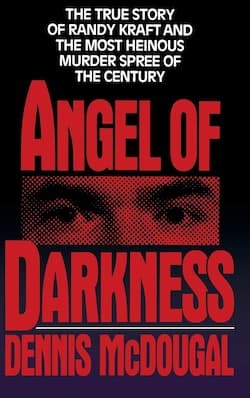
The Randy Kraft trial began in September 1988 in the Orange County Superior Court and was, at the time, the longest and most expensive trial in Orange County history. Kraft was represented by lead defense attorney C. Thomas McDonald. On May 12, 1989, after 11 days of jury deliberations, Kraft was convicted on 16 counts of first degree murder, along with associated sodomy and torture charges. On November 29, 1989, Superior Court Judge Donald McCartin formally sentenced Kraft to death. In one of the more notable moments in the case, McCartin also handed him a $1 fine for the roadside traffic infraction that had first led to his 1983 arrest.
Kraft's death sentence was upheld by the California Supreme Court in August 2000. He remains on death row and has never confessed to any of the killings. In 2022, following California Governor Gavin Newsom's order to convert San Quentin State Prison into a rehabilitation center, Kraft was one of many death row inmates transferred out. He is now held at the California Institution for Men in Chino, San Bernardino County. In November 2023, investigators with the Orange County Sheriff's Department used investigative genetic genealogy to identify 17 year old Iowa runaway Michael Ray Schlicht, whose body had been found along a trail in what is now Aliso Viejo in September 1974, as one of Kraft's earliest confirmed victims. In May 2025, the Marion County Sheriff's Office in Oregon publicly linked Kraft to the 1980 murder of an unidentified man in Woodburn, Oregon.
Randy Kraft's Long Beach home stood on the 800 block of Roswell Avenue, in the quiet, mostly single family Alamitos Heights neighborhood on the east side of Long Beach, near the corner of Seventh Street and Redondo Avenue. Kraft lived there from the early 1970s until his 1983 arrest. According to neighbors, investigators believe that at least some of the killings occurred inside the home. The property was sold shortly after Kraft's arrest and has been a private residence ever since.
The house remains a private home in an ordinary Long Beach residential neighborhood. Please be respectful of the current occupants, follow all posted signage, stay on public sidewalks at all times, and do not attempt to enter the property or interact with the neighbors.
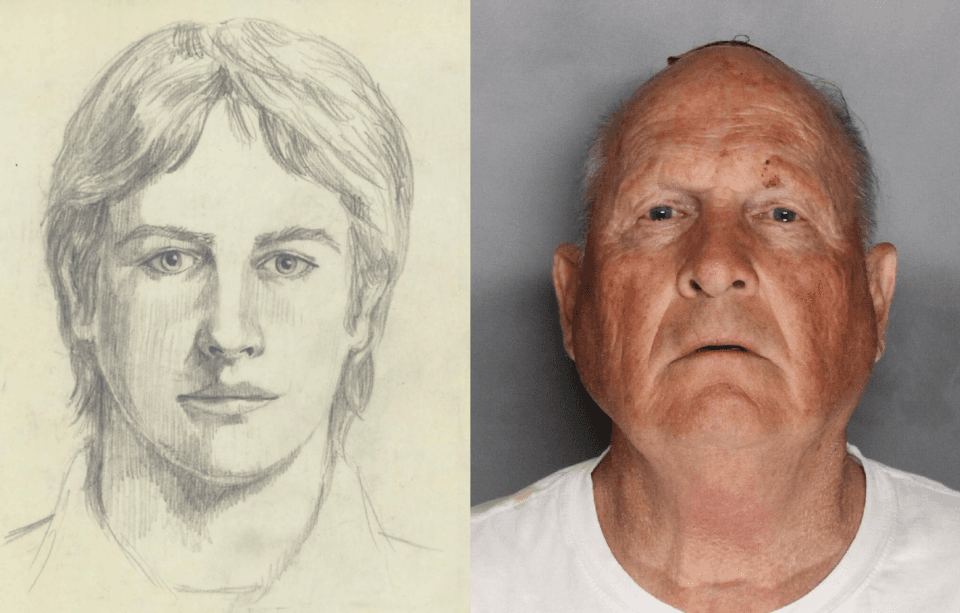
Golden State Serial Killer Joseph James DeAngelo lived in this quiet Citrus Heights home.
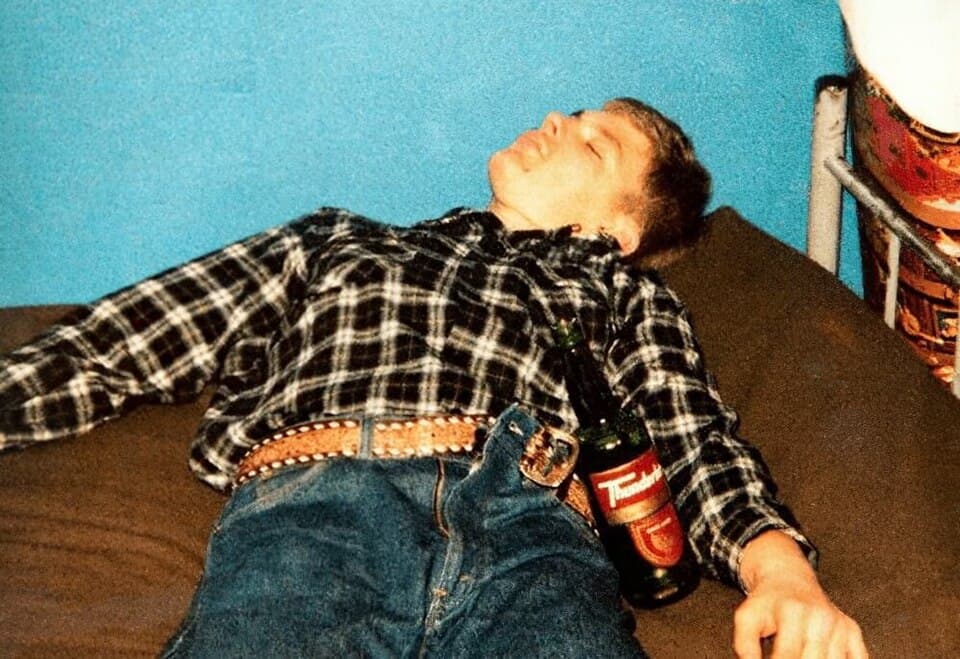
The small apartment where cannibal Jeffrey Dahmer tortured, murdered, and ate some of his victims.
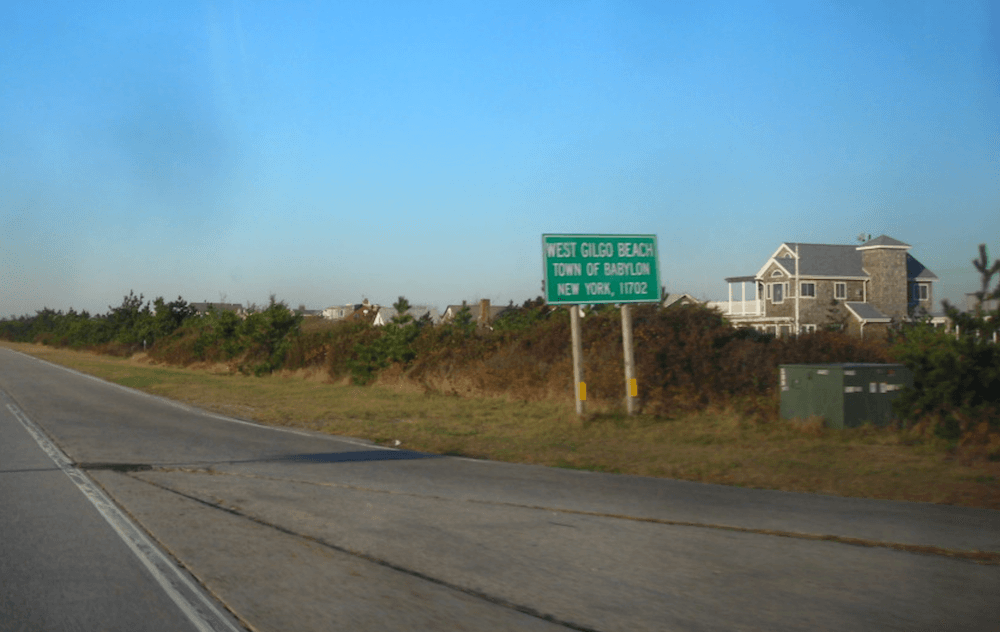
The Gilgo Beach Serial Killer, Rex Heuermann, killed 8 women in this Long Island home.
A Quick Note From Our Founder
Morbid Tourism is independently researched and maintained by one person. Every location is fact-checked, verified, and mapped so you can find exactly what you're looking for. If this page helped you, a coffee keeps the research going.