8316 Canyon Oak Dr., Citrus Heights, CA 95610
This page contains affiliate links. We may earn a small commission at no extra cost to you.
Author: Jewls Krueger
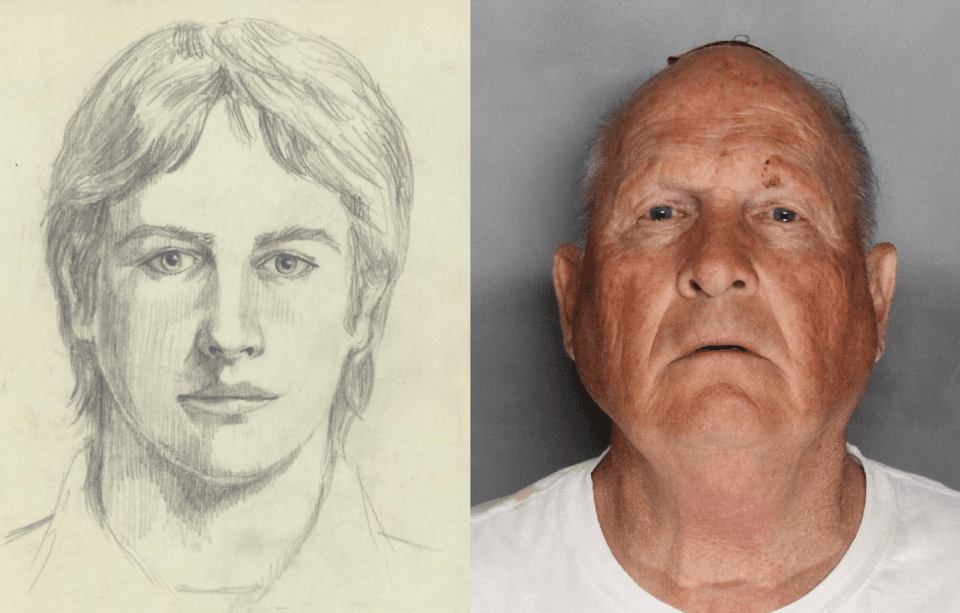
Joseph James DeAngelo committed at least 13 murders, more than 50 rapes, and over 120 burglaries across California between 1974 and 1986. For most of that time he was known only by a string of nicknames coined in different regions, including the Visalia Ransacker, the East Area Rapist, and the Original Night Stalker. He lived in this single-story home in Citrus Heights, a suburb northeast of Sacramento. It was here, more than three decades after his final known murder, that investigators arrested him after a breakthrough in forensic genetic genealogy finally put a name to the DNA he had left behind.

DeAngelo was born on November 8, 1945, in Bath, New York. He served in the Navy during the Vietnam War as a damage controlman, then earned a degree in police science at Sierra College and a bachelor's in criminal justice at Sacramento State University.
He worked as a police officer in Exeter, in the Central Valley, from 1973 to 1976, assigned to the burglary unit. He then moved to the Auburn Police Department, where he served from 1976 until he was fired in 1979 following an arrest for shoplifting a hammer and dog repellent.
DeAngelo married in 1973 and raised three daughters. In 1980 he and his wife bought the Citrus Heights house where he would later be arrested. From 1990 until his retirement in 2017, he worked as a truck mechanic at a supermarket distribution center in Roseville. According to prosecutors, neither his wife nor his children knew about the crimes he was committing during those years.
DeAngelo's crimes escalated over time and moved with him around the state. He is believed to have begun as the Visalia Ransacker, responsible for roughly 120 burglaries and one murder in the San Joaquin Valley between 1974 and 1975. His methods were distinctive from the start, including entering homes through windows, prowling neighborhoods in advance, and displacing small personal items rather than stealing valuables.
After relocating to the Sacramento area in 1976, his crimes escalated from burglary to rape. As the East Area Rapist, he was linked to at least 50 assaults in the suburbs east of Sacramento, including Carmichael, Citrus Heights, and Rancho Cordova, before the attacks spread to communities such as Stockton, Modesto, and Contra Costa County.
In 1979 he moved to Southern California, where the crimes escalated again, this time to murder. Operating in Santa Barbara, Ventura, and Orange counties, he killed at least ten people between 1979 and 1986 before going dormant.
DeAngelo's first murder victim was Claude Snelling, a journalism professor in Visalia who was shot in September 1975 after confronting an intruder attempting to abduct his teenage daughter. In February 1978, a young Rancho Cordova couple, Brian and Katie Maggiore, were killed while walking their dog near where a series of earlier attacks had occurred.
The Southern California murders followed a pattern of nighttime home invasions. The victims included Robert Offerman and Debra Manning in Goleta in 1979, Lyman and Charlene Smith in Ventura in 1980, and Keith and Patrice Harrington in Dana Point later that year. Manuela Witthuhn was killed in Irvine in 1981, followed by Cheri Domingo and Gregory Sanchez in Goleta that same year.
His final known victim was Janelle Cruz, an 18-year-old killed in her Irvine home in 1986. Her case, like many others, went unsolved for decades until DNA tied the crimes together.
For years, the crimes in Northern and Southern California were investigated as separate cases by separate agencies. In 2001, DNA testing established that the East Area Rapist and the Original Night Stalker were the same person, combining the two into the acronym EARONS. The Original Night Stalker had been given that name after serial killer Richard Ramirez claimed the "Night Stalker" title in the 1980s.
The now-familiar name came later. True crime writer Michelle McNamara, who ran the website True Crime Diary, coined the term "Golden State Killer" while researching the case in the 2010s. In June 2016, the FBI announced a renewed nationwide effort to identify the killer, releasing new composite sketches and offering a $50,000 reward.
Book Recommendation
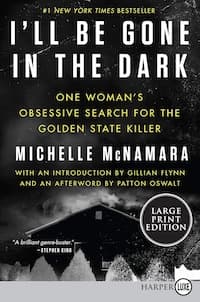
Want to learn more about the Golden State Killer? Michelle McNamara researched and wrote about the case for years, but tragically died before her difinitive book was published. It was finished by her friends and the lead investigator who finally brought DeAngelo to justice.
Buy on Amazon →By purchasing through this link, we may earn a small commission at no extra cost to you. Thank you for supporting our work!
For decades, authorities had a full DNA profile from the crime scenes but no match in any criminal database. The breakthrough came from genetic genealogy, a technique that had never before been used to crack a case of this profile.
In late 2017, a team led by investigator Paul Holes and FBI attorney Steve Kramer uploaded the killer's DNA profile, taken from an old rape kit, to GEDmatch, an open genealogy database that works much like consumer ancestry services. The upload returned distant relatives who shared common ancestors with the unknown suspect.
Working with forensic genealogist Barbara Rae-Venter, investigators built roughly two dozen family trees from those matches, one of which contained about 1,000 people. They gradually narrowed the field using details like age, sex, and place of residence until only DeAngelo remained. To confirm the match, they collected his DNA without his knowledge, first swabbing the door handle of his car while he shopped at a Roseville store, then retrieving a tissue from his curbside trash. Both samples matched the crime scene DNA.
On April 24, 2018, Sacramento County Sheriff's deputies arrested DeAngelo in the side yard of his Canyon Oak Drive home. He was taken into custody without incident. Because the statute of limitations had expired on the rapes and burglaries, he could not be charged for those crimes. He was instead charged with 13 counts of first-degree murder and 13 counts of kidnapping.
Prosecutors initially announced they would seek the death penalty. On June 29, 2020, under a plea agreement that removed that possibility, DeAngelo pleaded guilty to all 13 murders and publicly admitted to dozens of additional rapes for which he could no longer be charged. Prosecutors described the full scope of his crimes as spanning 87 victims at 53 separate crime scenes across 11 California counties.
Over three days that August, survivors and the families of victims delivered impact statements in a converted university ballroom large enough to hold them. DeAngelo told the court he was "truly sorry to everyone I've hurt." On August 21, 2020, he was sentenced to multiple consecutive life terms without the possibility of parole. He remains incarcerated in the California state prison system.
The home where Joseph James DeAngelo lived sits in Citrus Heights, about 30 minutes northeast of downtown Sacramento. The single-story house is on the south side of Canyon Oak Drive and has an arched entryway similar to the surrounding homes.
The home is private property. Please stay on public roads and sidewalks at all times, and be respectful of the current residents and neighbors, for whom this remains an ordinary place to live.
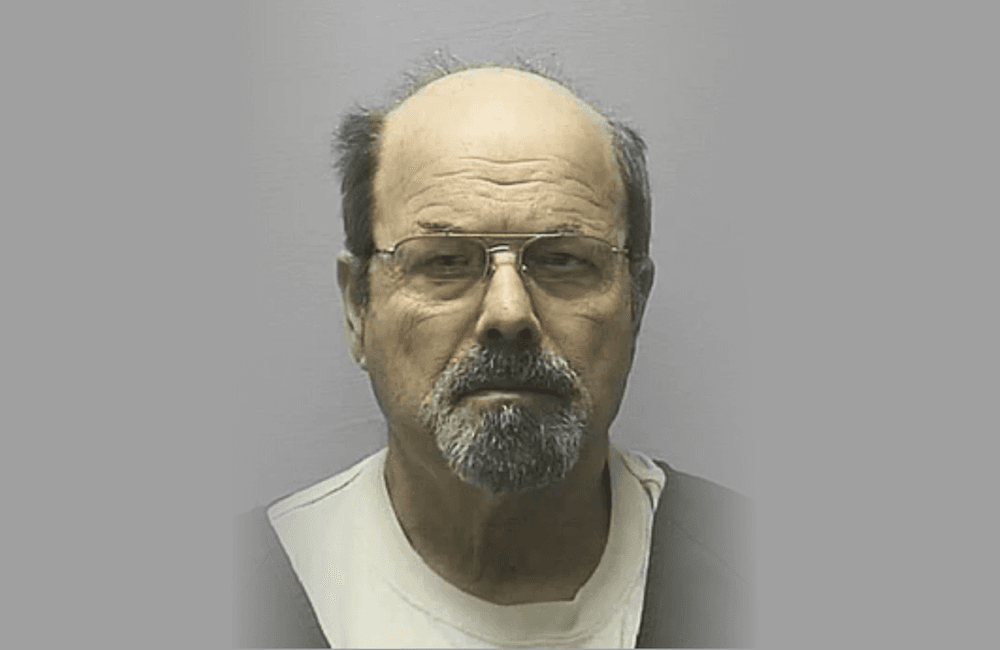
The Park City home where BTK killer Dennis Rader lived a double life for 25 years was demolished in 2007.
The small apartment where cannibal Jeffrey Dahmer tortured, murdered, and ate some of his victims.

The apartment where serial killer Son of Sam lived while he went on a murderous rampage.
A Quick Note From Our Founder
Morbid Tourism is independently researched and maintained by one person. Every location is fact-checked, verified, and mapped so you can find exactly what you're looking for. If this page helped you, a coffee keeps the research going.