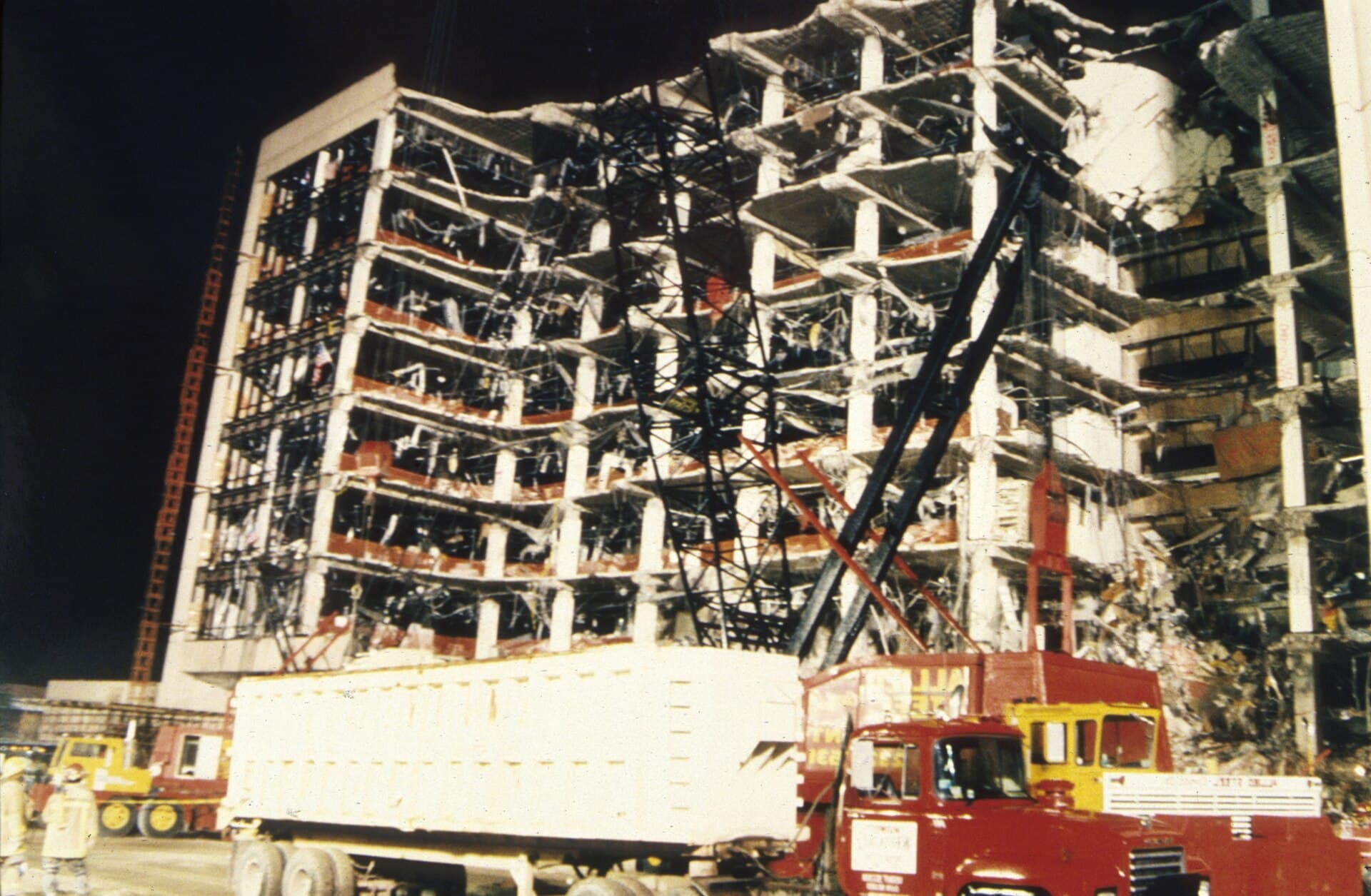
620 N Harvey Ave, Oklahoma City, OK 73102
This page contains affiliate links. We may earn a small commission at no extra cost to you.
Author: Jewls Krueger
On the morning of April 19, 1995, a rented Ryder truck packed with a homemade fertilizer bomb exploded outside the Alfred P. Murrah Federal Building in downtown Oklahoma City. The blast tore away much of the nine-story building, killed 168 people, and injured hundreds more. It was the deadliest act of domestic terrorism in United States history and remained the worst terrorist attack on American soil until September 11, 2001. The men responsible, Timothy McVeigh and Terry Nichols, were anti-government extremists who had planned the attack for months. The site is now the Oklahoma City National Memorial.
At 9:02 a.m. on Wednesday, April 19, 1995, the truck detonated at the north entrance of the Murrah Building. The bomb was built from roughly 4,800 pounds of ammonium nitrate fertilizer and fuel oil, a crude but powerful mixture. The explosion collapsed the north face of the building, incinerated cars parked nearby, and damaged or destroyed more than 300 other buildings across the surrounding blocks.
The blast was heard and felt across the city and for miles beyond. Emergency crews responded from across the country, and the search for survivors and victims continued for more than two weeks. When the recovery effort finally ended, the death toll stood at 168, including 19 children.
Timothy McVeigh was a 26-year-old Gulf War veteran who had grown deeply hostile toward the federal government. Terry Nichols, 40 at the time of the bombing, was a former Army soldier who shared McVeigh's anti-government views. The two men met during basic training in 1988 and stayed in contact for years afterward.
Their anger hardened after two deadly federal standoffs, the 1992 confrontation at Ruby Ridge in Idaho and the 1993 siege near Waco, Texas, which ended in a fire that killed dozens. McVeigh traveled to Waco during the standoff and handed out anti-government literature. He chose April 19 for the attack so it would fall on the second anniversary of the Waco fire. In the months before the bombing, the men gathered bomb materials, stored them in rented units in Kansas, and assembled the device shortly before driving to Oklahoma City.
Roughly 90 minutes after the explosion, Oklahoma Highway Patrol trooper Charlie Hanger stopped McVeigh on Interstate 35 for driving without a license plate. During the stop, Hanger found that McVeigh was carrying a concealed handgun and arrested him. McVeigh was booked into the Noble County jail on state charges. The trooper had no idea he had just detained the bombing suspect.
Investigators traced a vehicle identification number from the truck's wreckage to a rental agency in Junction City, Kansas, where employees helped identify McVeigh as the man who had rented it. Days later, just before McVeigh was set to be released, the FBI connected him to the bombing. The investigation soon led to Terry Nichols, who surrendered to police in Kansas. Michael and Lori Fortier were later identified as having known about the plot in advance.
Timothy McVeigh was tried in federal court and convicted in June 1997 on 11 federal counts, including eight counts of first-degree murder of federal employees and charges tied to using a weapon of mass destruction. He was sentenced to death. On June 11, 2001, McVeigh was executed by lethal injection at the federal prison in Terre Haute, Indiana, the first federal prisoner put to death since 1963. He was pronounced dead at 7:14 a.m.
Terry Nichols was tried separately. A federal jury convicted him of conspiracy to use a weapon of mass destruction and eight counts of involuntary manslaughter for the deaths of eight federal law enforcement officers, and he was sentenced to life in prison after the jury deadlocked on the death penalty. The state of Oklahoma later tried him on additional charges and convicted him of 161 counts of first-degree murder. He received 161 consecutive life sentences without parole and remains incarcerated at the ADX Florence supermax prison in Colorado.
Book Recommendation
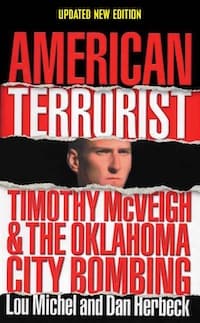
Interested in what led up to the Oklahoma City Bombing? This book contains the only authorized interviews with McVeigh himself, which results in an unsettling portrait of the bomber and his motives.
Buy on Amazon →By purchasing through this link, we may earn a small commission at no extra cost to you. Thank you for supporting our work!
A day care center called America's Kids operated on the second floor of the Murrah Building. Of the 168 people killed, 19 were children, most of them in that center. One of the most enduring images of the attack is a photograph of Oklahoma City firefighter Chris Fields carrying one-year-old Baylee Almon from the rubble. The image, taken by amateur photographer Charles Porter IV, won the 1996 Pulitzer Prize for spot news photography and became a symbol of the innocence lost that day.

The remaining portion of the Murrah Building was demolished in a controlled implosion on May 23, 1995, roughly a month after the attack. In its place stands the Oklahoma City National Memorial, dedicated on April 19, 2000, on the footprint of the destroyed building in the heart of downtown Oklahoma City.
The memorial centers on the Field of Empty Chairs, 168 chairs arranged in nine rows to represent the nine floors of the building, with 19 smaller chairs for the children. Each chair bears the name of a person killed in the attack. The grounds also include a Reflecting Pool along what was once N.W. 5th Street, the twin Gates of Time marked 9:01 and 9:03, and the Survivor Tree, an American elm that withstood the blast. An adjacent museum in the former Journal Record Building tells the story of the attack and its aftermath.
The memorial sits along N. Harvey Avenue in downtown Oklahoma City. The outdoor grounds are open to the public free of charge, and paid admission is available for the museum. Visitors should check the memorial's official website for current hours and tour information, and treat the site as the place of remembrance and grief that it remains for the families of those who were killed.
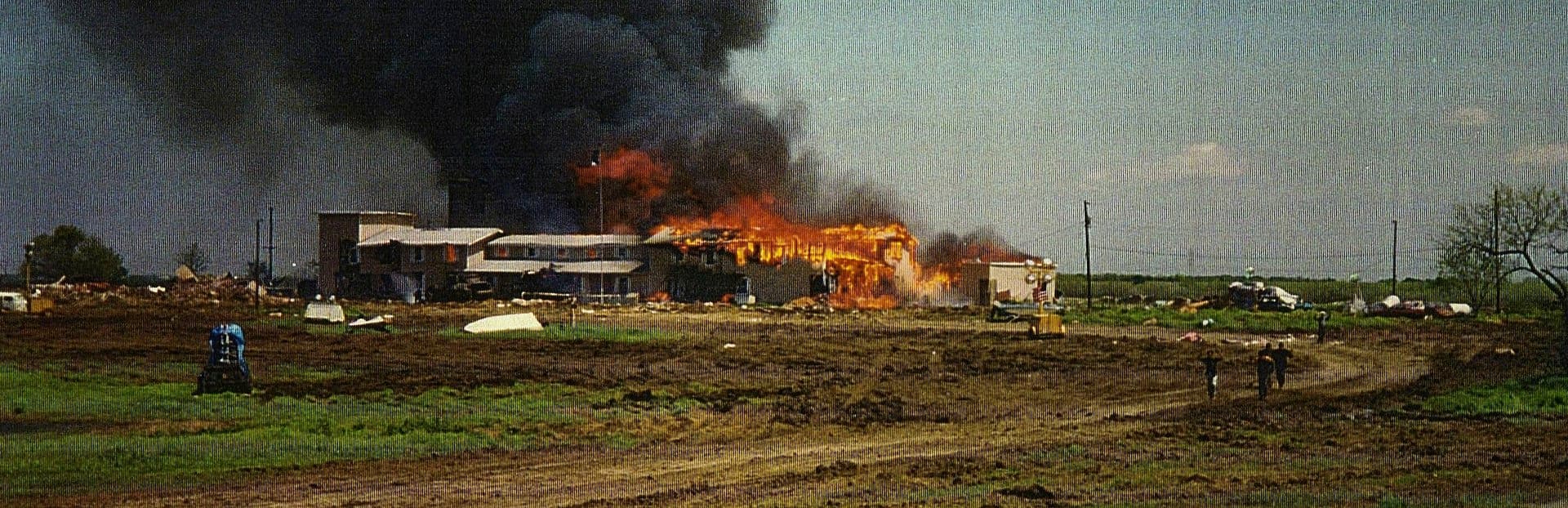
When the FBI tried to take down a cult, the unimaginable happened and led to the death of dozen.
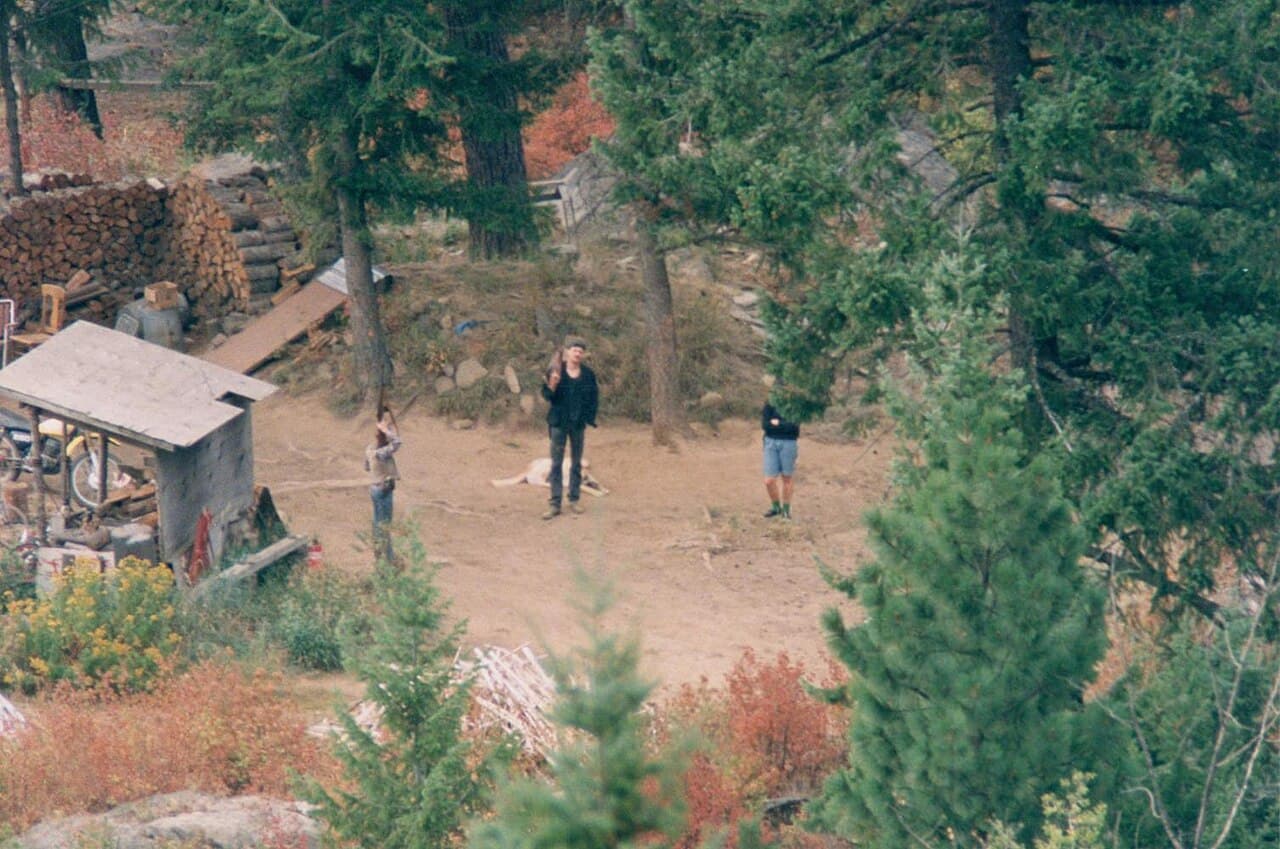
A standoff between property owners and the FBI that turned deadly in rural Idaho.
The only location to be hit twice by Unibomber Ted Kaczynski.
A Quick Note From Our Founder
Morbid Tourism is independently researched and maintained by one person. Every location is fact-checked, verified, and mapped so you can find exactly what you're looking for. If this page helped you, a coffee keeps the research going.