.jpg&w=3840&q=75)
Coords: 31.0790929, -90.5941698
This page contains affiliate links. We may earn a small commission at no extra cost to you.
Author: Jewls Krueger
On the evening of October 20, 1977, a chartered twin-engine plane carrying the Jacksonville, Florida based Southern rock band Lynyrd Skynyrd ran out of fuel and crashed in a wooded area near Gillsburg, Mississippi. Six of the 26 people on board were killed, including 29 year old lead vocalist and founding member Ronnie Van Zant. The crash effectively ended the band's original run and remains one of the most devastating single day losses in the history of American rock music.
+copy-sm.jpg)
Lynyrd Skynyrd in 1977 - Public Domain
Lynyrd Skynyrd formed in Jacksonville, Florida in 1964 as a group of teenagers playing under the name My Backyard. In 1969, the band adopted the name "Lynyrd Skynyrd" as a mocking tribute to their high school gym teacher Leonard Skinner. The band's 1973 debut album included the rock anthem "Free Bird," and their 1974 follow up "Second Helping" featured the even bigger hit "Sweet Home Alabama." By the mid 1970s, Lynyrd Skynyrd was one of the biggest touring acts in America.
On October 17, 1977, the band released their fifth studio album, "Street Survivors," and set out on what they were calling the "Tour of the Survivors." The lineup at the time was Ronnie Van Zant on lead vocals, Allen Collins and Gary Rossington on guitar, Steve Gaines on guitar and vocals, Leon Wilkeson on bass, Billy Powell on keyboards, and Artimus Pyle on drums. Cassie Gaines, Steve's older sister, was one of three backup vocalists known as the "Honkettes."
For the "Tour of the Survivors," Lynyrd Skynyrd had chartered a Convair CV-240, a twin engine propeller aircraft built in the late 1940s, from the L & J Company of Addison, Texas. The plane was nearly 30 years old and had been previously inspected during the summer of 1977 by members of the band Aerosmith, who ultimately rejected it for their own tour due to concerns about both the aircraft and its flight crew.
Members of Lynyrd Skynyrd had also expressed concerns about the plane. Two nights before the crash, ten foot flames had reportedly been seen shooting from the right engine during a flight. Keyboardist Billy Powell later told Rolling Stone that the band had already decided the flight to Baton Rouge would be its last on the Convair and that they planned to upgrade to a Learjet the following day.
Further Reading
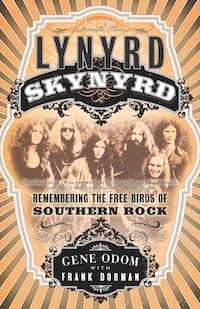
On the evening of October 19, 1977, Lynyrd Skynyrd performed at the Greenville Memorial Auditorium in Greenville, South Carolina. The following afternoon, the group boarded the Convair CV-240 at Greenville's downtown airport for the flight to Baton Rouge, Louisiana, where they were scheduled to perform the following night at Louisiana State University.
Roughly two hours into the flight, at approximately 6:42 p.m., the pilots radioed Houston Air Traffic Control to report they were low on fuel and needed vectors to McComb Airport in southwestern Mississippi, roughly 10 miles from what would become the crash site. Realizing shortly after that the aircraft would not reach McComb, the pilots attempted an emergency landing in an open pasture, but the plane clipped the top of the tree line about 100 yards short of their intended landing point. At approximately 6:52 p.m., the Convair slammed into a large tree and broke apart in the wooded, swampy terrain outside the tiny Amite County town of Gillsburg, Mississippi.
Six people were killed on impact: lead vocalist Ronnie Van Zant, guitarist Steve Gaines, backup vocalist Cassie Gaines, assistant road manager Dean Kilpatrick, Captain Walter McCreary, and First Officer William John Gray. Twenty others survived. Despite fractured ribs, drummer Artimus Pyle managed to climb out of the wreckage and, with band security manager Gene Odom and roadie Marc Frank, walked roughly three quarters of a mile through the dark swamp to a nearby farmhouse to alert the authorities. Emergency crews from around Amite County, along with staff from Southwest Mississippi Regional Medical Center in McComb, spent hours pulling survivors out of the wreckage.
The National Transportation Safety Board's June 1978 accident report cited the probable cause of the crash as "fuel exhaustion and total loss of power from both engines due to crew inattention to fuel supply," along with an engine malfunction of undetermined nature and inadequate flight planning as contributing factors.
The remaining members of Lynyrd Skynyrd would not perform together as a full band for another decade. In 1987, ten years after the crash, the surviving members reunited, with Ronnie Van Zant's younger brother Johnny Van Zant stepping in as the band's new lead vocalist. Lynyrd Skynyrd was inducted into the Rock and Roll Hall of Fame in 2006, with posthumous honors for Ronnie Van Zant and Steve Gaines.
The original cover of "Street Survivors," released just three days before the crash, had shown the band surrounded by flames. In the wake of the disaster, MCA Records pulled the original cover and replaced it with a simple photo of the band against a black backdrop. The album climbed to number 5 on the U.S. charts and was eventually certified double platinum.
The exact site of the crash is on the property of local landowner Dwain Easley, one of the neighbors who arrived at the wreckage on the night of October 20, 1977 and helped pull survivors out. The crash site itself sits in dense woods and swamp and is not publicly accessible.
On October 20, 2019, on the 42nd anniversary of the crash, a large public memorial was dedicated on land donated by Dwain and Lola Easley, roughly 400 yards from the actual crash site. The memorial features a seven ton black granite monument etched with the names and images of those who died, a series of granite tablets telling the story of the band and the crash, and steps and benches for visitors. It was privately funded through donations to the nonprofit Lynyrd Skynyrd Monument, Inc.
The memorial is located at 7364 Easley Road, off Mississippi State Highway 568 in Gillsburg, and is free and open to the public 24 hours a day, seven days a week. Please be respectful of the surrounding rural community, follow all posted signage during your visit, and do not attempt to walk into the woods toward the actual crash site.
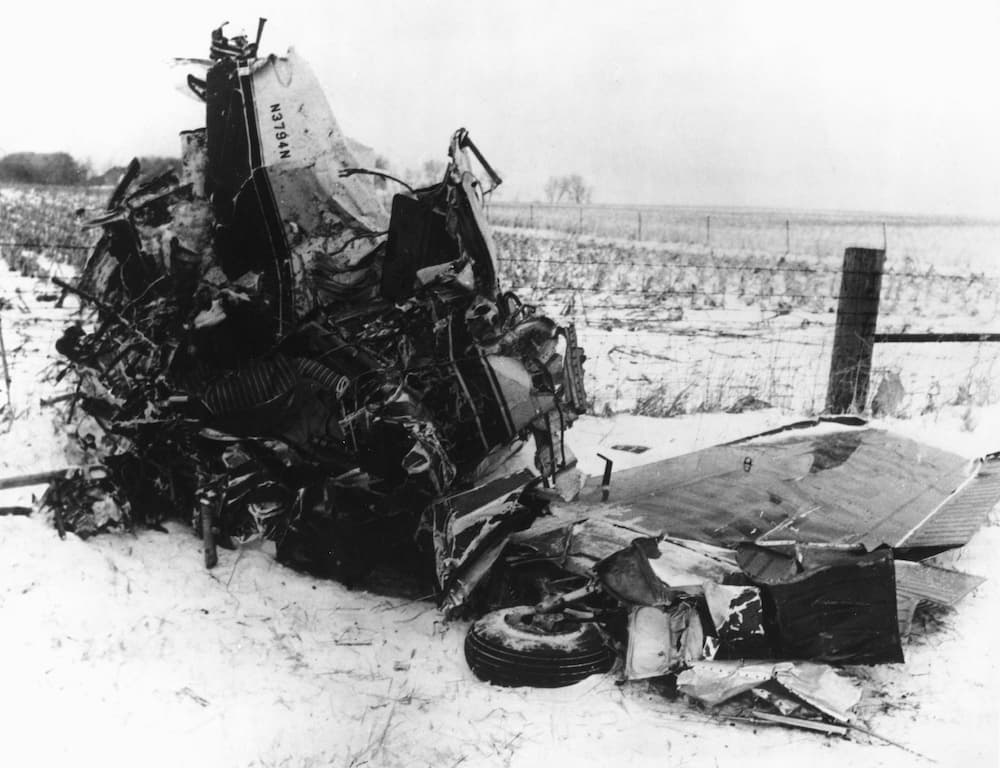
Rock and roll pioneers Buddy Holly, Ritchie Valens, and the Big Bopper died in a small plane crash in an Iowa cornfield in 1959.

NBA legend Kobe Bryant, his daughter Gianna, and seven others were killed when their helicopter crashed into a Calabasas hillside in 2020.
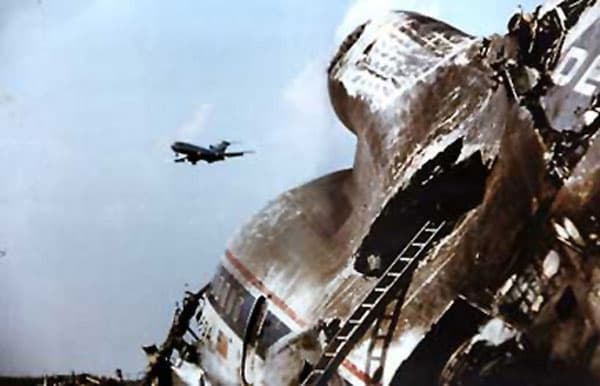
Delta Flight 191 crashed at DFW Airport during a microburst thunderstorm in 1985, killing 137 people.
A Quick Note From Our Founder
Morbid Tourism is independently researched and maintained by one person. Every location is fact-checked, verified, and mapped so you can find exactly what you're looking for. If this page helped you, a coffee keeps the research going.


.jpg)