Coords: 33.831973316346236, -90.27012618990031
ADVERTISEMENT
This page contains affiliate links. We may earn a small commission at no extra cost to you.
Author: Jewls Krueger
On the morning of August 31, 1955, the body of 14 year old Emmett Louis Till was pulled from the Tallahatchie River near a small fishing spot called Graball Landing, just outside the tiny Mississippi Delta town of Glendora.
Till, an African American teenager from Chicago, had been kidnapped, tortured, and lynched three nights earlier by two white men over an allegation that he had flirted with one of their wives at a small country store. The savage nature of his killing, his mother's decision to hold an open casket funeral, and the swift acquittal of his murderers by an all white jury made his death one of the most consequential events of the 20th century, helping ignite the modern American Civil Rights Movement.
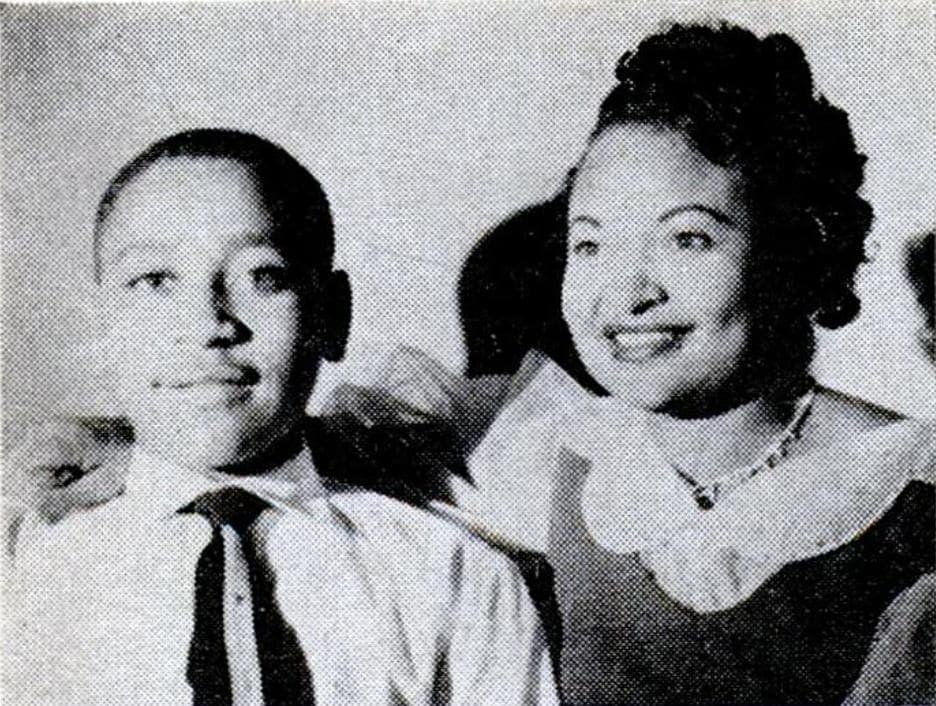
Emmett Louis Till was born July 25, 1941 in Chicago, Illinois, the only child of Mamie Carthan Till (later Mamie Till-Mobley). In August 1955, Mamie put her son on a train south to Mississippi for what was meant to be a two week summer visit with relatives, including his great-uncle, the sharecropper and Baptist minister Moses "Mose" Wright, in the Leflore County community of Money. Till had grown up in the segregated North and was not familiar with the unspoken rules of the Jim Crow South.
On the afternoon of August 24, 1955, Emmett and several of his cousins stopped at Bryant's Grocery and Meat Market in Money. Inside the store was 21 year old Carolyn Bryant, the wife of the owner Roy Bryant. Carolyn alleged that Emmett whistled at her, made physical contact, and used crude language toward her. Decades later, in interviews and notes attributed to Carolyn that emerged in 2017, she suggested that parts of her original story had been exaggerated.
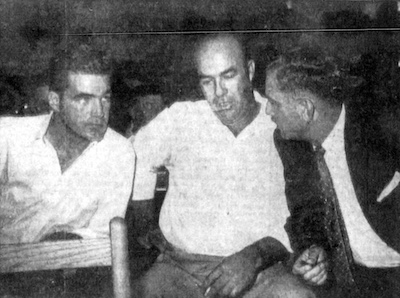
Bryant & Milam -Public Domain
In the early morning hours of August 28, 1955, 24 year old Roy Bryant and his 36 year old half brother J.W. Milam arrived at Moses Wright's home with a flashlight and a pistol and demanded "the boy from Chicago." They forced Emmett into their pickup truck and drove off.
Bryant and Milam took Emmett to a tool shed in Drew, Mississippi, where they beat and tortured him for hours. They then drove him to the bank of the Tallahatchie River, where they shot him in the head, tied a heavy cotton gin fan to his neck with barbed wire, and threw his body into the water.
Three days later, in the early morning of August 31, 1955, a Black teenager who was fishing near Graball Landing in the Tallahatchie River noticed a body caught on a root in the muddy water and ran for help. Tallahatchie County Sheriff H.C. Strider and his deputies pulled the body from the river. It was so badly disfigured that Moses Wright was only able to identify Emmett by an initialed silver ring on one of his fingers that had belonged to Till's late father.
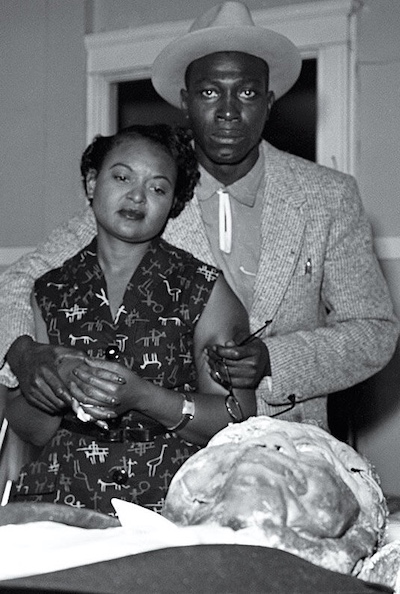
Emmett Till's Parents at his Funeral -Public Domain
Bryant and Milam were arrested almost immediately. The murder trial began on September 19, 1955 in Sumner, Mississippi, before an all white, all male jury at the Tallahatchie County Second District Courthouse. Mamie Till-Mobley traveled from Chicago to testify, as did Moses Wright, who took the stand and pointed out the two men who had taken his nephew. On September 23, 1955, after deliberating for just over an hour, the jury acquitted both men. One juror later said the deliberation would have been even shorter if they had not stopped for a soda break.
A few months later, on January 24, 1956, Look magazine published an article by journalist William Bradford Huie titled "The Shocking Story of Approved Killing in Mississippi," in which Bryant and Milam, protected from further prosecution by double jeopardy, gave a detailed paid confession to the kidnapping and murder. They were paid roughly $3,150 between them. A local grand jury declined to indict the men on kidnapping charges. Neither was ever criminally punished. Milam died in 1980 and Bryant in 1994, both of cancer. Carolyn Bryant Donham died in April 2023.
In Chicago, Mamie Till-Mobley made the decision to hold an open casket funeral for her son at the Roberts Temple Church of God in Christ on September 6, 1955. Tens of thousands of mourners viewed Emmett's mutilated body. Jet magazine published the funeral photographs, and the images would galvanize the emerging Civil Rights Movement. Three months later, Rosa Parks refused to give up her seat on a Montgomery, Alabama bus, beginning the Montgomery bus boycott.
Further Reading

Graball Landing sits on the eastern bank of the Tallahatchie River, just across from where the Black Bayou meets the river, near the tiny village of Glendora in Tallahatchie County, Mississippi. The land was originally cleared in 1840 by 35 enslaved people on the Cullen McMullen Place plantation and served as a working steamboat landing until a tornado destroyed most of the surrounding infrastructure in 1894. By 1955, all that remained was a small clearing in the dense vegetation along the riverbank, used by locals for fishing.
In 2008, the Emmett Till Memorial Commission dedicated the first of ten historical markers along its Tallahatchie Civil Rights Driving Tour at Graball Landing. Within six months, the sign was torn down by vandals and thrown into the river. Two replacement signs were dedicated in subsequent years, and both were riddled with bullets. On October 19, 2019, a fourth sign was installed at the site. The current memorial sign is more than one inch thick, weighs over 500 pounds, is bulletproof, and is monitored by security cameras.
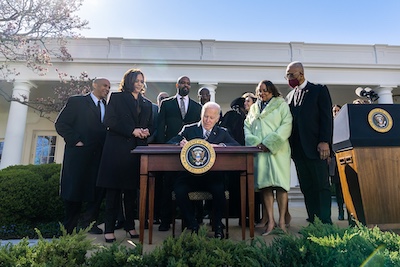
President Biden signing the anti-lynching act -Public Domain
On July 25, 2023, President Joe Biden signed a proclamation establishing the Emmett Till and Mamie Till-Mobley National Monument, which protects three historic sites across Mississippi and Illinois, including Graball Landing, the Tallahatchie County Second District Courthouse in Sumner, and the Roberts Temple Church of God in Christ in Chicago. It is the 425th unit of the National Park System.
Graball Landing is accessible to the public year round at no charge via River Road, a narrow unpaved road that can be difficult to traverse in wet weather. The site features a small clearing with views of the river, the bulletproof memorial sign, and limited roadside parking. There are no facilities at the site itself, and visitors are encouraged to first stop by the Emmett Till Interpretive Center in nearby Sumner, Mississippi, for current road conditions and historical context.
Please be respectful of the private farmland surrounding the site, stay on the small public clearing, and remember that Graball Landing remains a place of mourning for the Till family and for those who continue to honor Emmett's memory.
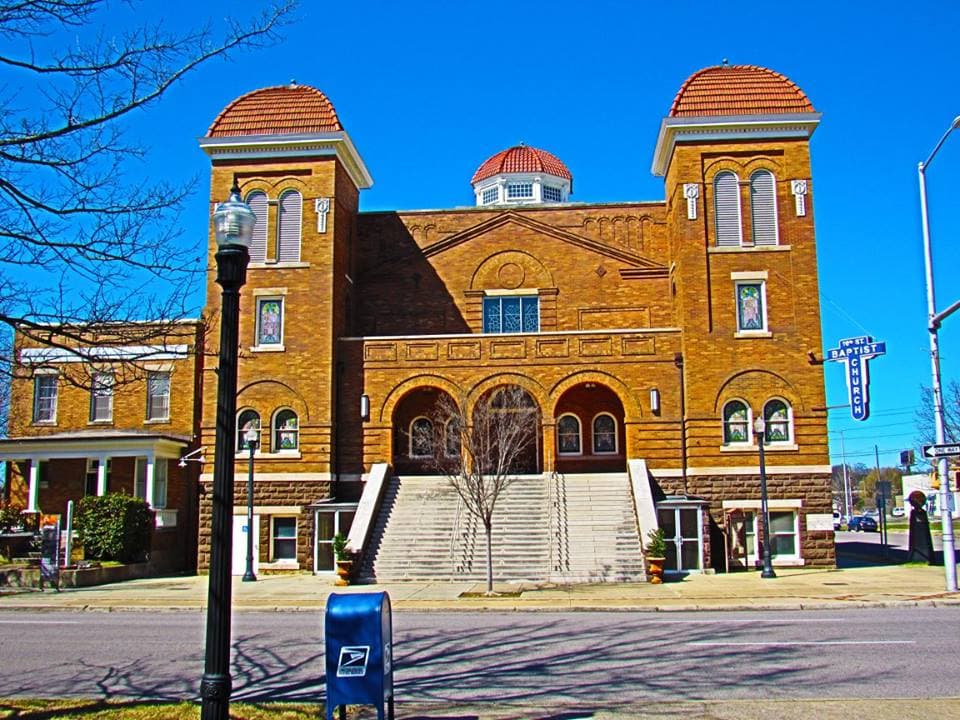
A 1963 bombing at a predominantly Black church left 4 young girls dead.
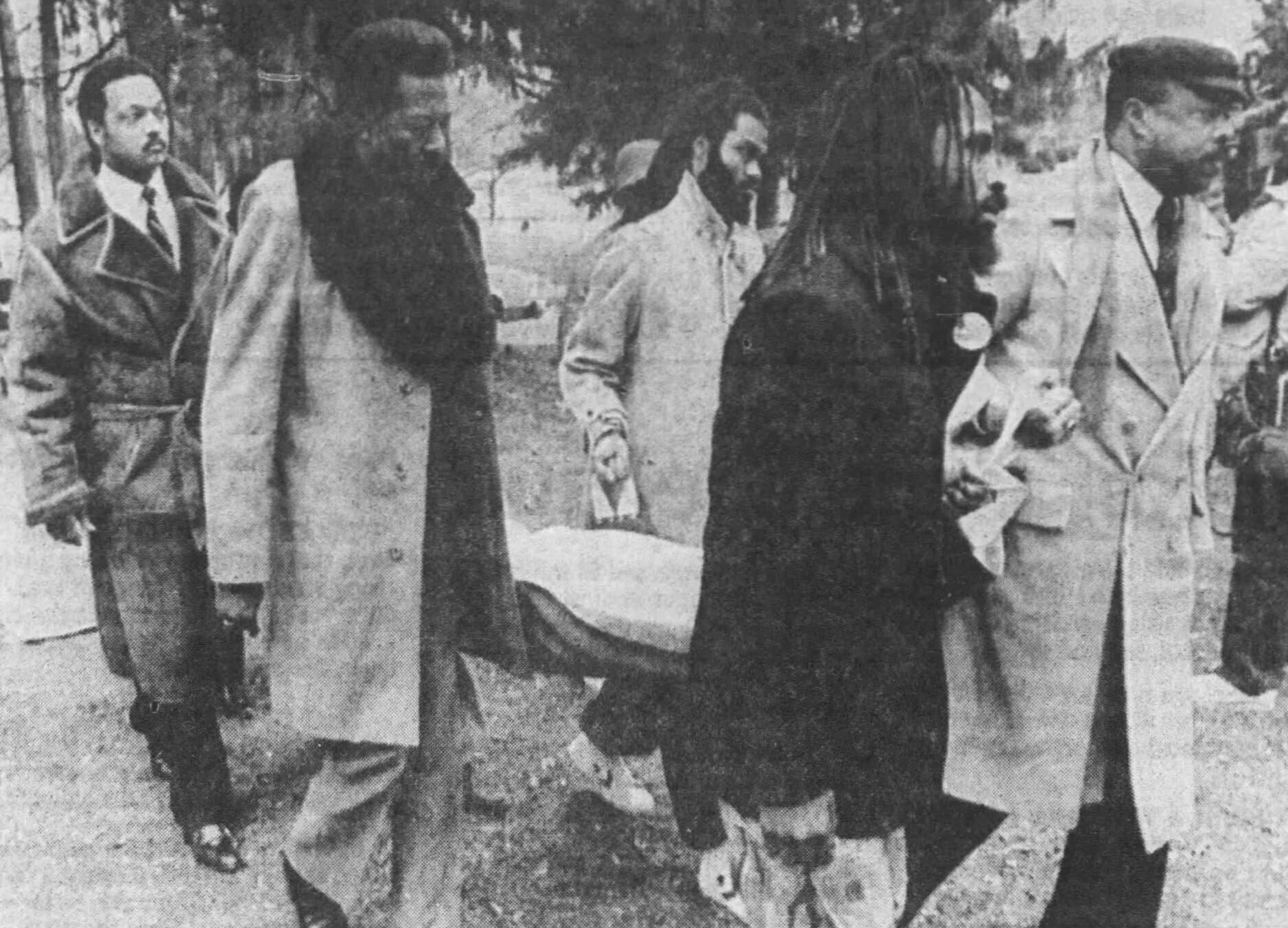
The Philadelphia Police Department bombed a neighborhood killing 11 people.
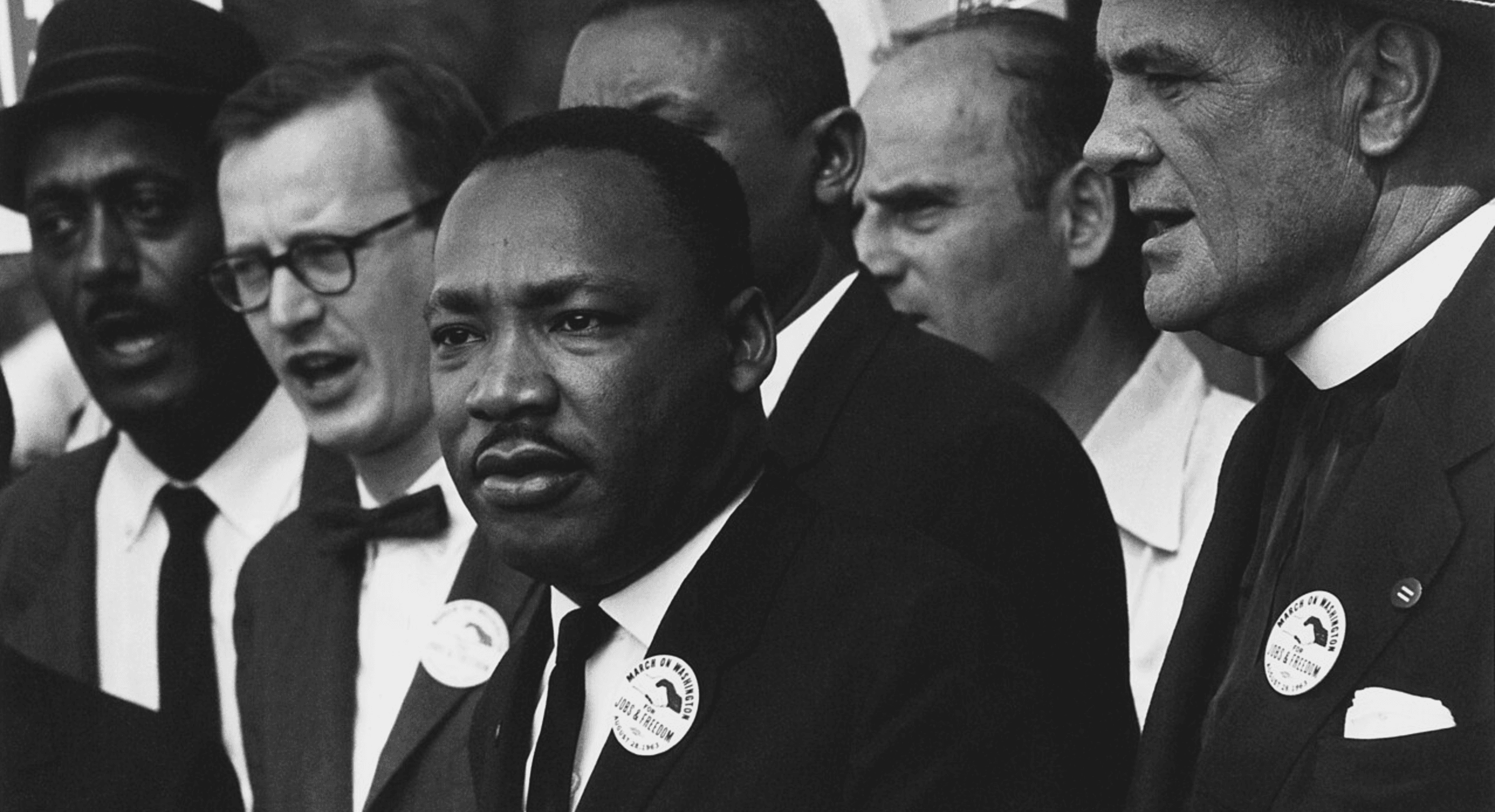
Civil Rights leader Dr. Martin Luther King Jr. was assassinated at this Memphis hotel.
A Quick Note From Our Founder
Morbid Tourism is independently researched and maintained by one person. Every location is fact-checked, verified, and mapped so you can find exactly what you're looking for. If this page helped you, a coffee keeps the research going.



.jpg)