Camp Scott - 10135 S 4406, Locust Grove, OK 74352
This page contains affiliate links. We may earn a small commission at no extra cost to you.
Author: Jewls Krueger
On the morning of June 13, 1977, three Girl Scouts were found raped and murdered outside their tent on the first night of camp at Camp Scott, a 49 year old Girl Scout camp in the wooded hills of Mayes County, Oklahoma. The victims were 8 year old Lori Lee Farmer of Tulsa, 9 year old Michele Heather Guse of Broken Arrow, and 10 year old Doris Denise Milner of Tulsa.
The case became one of the most notorious in Oklahoma history and remains officially unsolved almost fifty years later. Camp Scott has been closed since the morning the bodies were found.
Lori Farmer, Michele Guse, and Denise Milner had all boarded buses in Tulsa on the morning of June 12, 1977 for the two hour ride to Camp Scott. It was Lori and Michele's first summer at camp. Denise, who had attended day camp before, was reportedly nervous about her first sleepaway experience. Just over 130 campers and 30 counselors were on the property that first night.
The girls were assigned to Tent Number 8 in the camp's Kiowa Unit, a cluster of canvas platform tents that sat about 150 yards from the nearest shower and bath house, on the far western edge of the campground. It was the farthest tent from any counselor tent in the unit.
Camp Scott had opened on August 11, 1928, on 410 acres of dense woodland roughly two miles south of the small town of Locust Grove, Oklahoma, and about 50 miles east of Tulsa. The property had been donated by the Scott family and was operated by the Tulsa based Magic Empire Council of Girl Scouts. The camp featured a swimming area, a great hall, arts and crafts buildings, and 10 tent units named for Native American tribes. The tents were 12 by 14 foot canvas structures on wooden platforms, with rolled up canvas sides, and each tent slept four campers on cots.
Two months before the murders, in April 1977, an ominous incident occurred at Camp Scott during an on site counselor training weekend. A 15 year old camp aide named Michelle Hoffman returned to her tent and found her belongings had been ransacked and a box of doughnuts she had brought had been emptied. Inside the empty box were pieces of steno notebook paper with the word "kill" written repeatedly, and a fourth page reading "We are on a mission to kill three girls in tent one." Hoffman reported the note to the camp director, who told her a group of girls at the training weekend had confessed to leaving it as a prank.
The evening of June 12 brought a heavy thunderstorm to the camp. According to counselor and later police accounts, another counselor heard what she thought was a flashlight beam moving outside the Kiowa Unit and moaning sounds she initially assumed were a small animal in the early morning hours.
At approximately 6:00 a.m. on June 13, camp counselor Carla Wilhite stepped out of her tent and found three sleeping bags on the trail leading to the showers, each containing the body of one of the three girls from Tent 8. All three had been sexually assaulted and killed. Their bodies had been carried out of the tent and placed in a row along the trail. A flashlight had been left with the bodies.
The remaining campers were quickly gathered at the Great Hall and their parents were notified. All of the Girl Scouts were driven home to Tulsa that afternoon. Camp Scott was closed immediately and never reopened.
Investigators searching the surrounding forest located a cave roughly two miles from the camp that contained a flashlight battery, glasses believed to have been stolen from campers, and a group of Polaroid photographs of women. The photos were quickly traced to Gene Leroy "Sonny" Hart, a 33 year old member of the Cherokee Nation who had grown up about a mile from Camp Scott. Hart had previously been convicted in 1966 of the kidnapping and rape of two pregnant women along with four counts of first degree burglary and had been serving a sentence of 145 to 305 years when he escaped the Mayes County Jail in 1973. He had been at large for more than four years at the time of the murders. On the wall of a cave near the Camp Scott property, someone had scrawled, "The killer was here. Bye bye fools. 77-6-17."
The manhunt for Hart lasted 10 months and became the largest law enforcement operation in Oklahoma history to that point. Members of the local Cherokee community sheltered Hart during his years at large, and it was ultimately with the assistance of a Cherokee tribal informant that Oklahoma State Bureau of Investigation agents captured him on April 6, 1978 at the remote cabin of a Cherokee medicine man in Cherokee County, roughly 50 miles from Camp Scott.
Hart's murder trial began March 19, 1979 in Pryor, Oklahoma. Prosecutor S.M. "Buddy" Fallis argued that hair on the duct tape used to bind the girls resembled Hart's and that eyeglasses recovered in the cave had been stolen from camp. Defense attorney Garvin Isaacs argued the physical evidence had been mishandled or planted and pointed to another convicted rapist named William Stevens, whom witnesses had seen near Camp Scott in the days before the murders. On March 30, 1979, after less than a day of deliberation, a jury of six men and six women found Gene Leroy Hart not guilty.
Hart was returned to the Oklahoma State Penitentiary to serve out the sentences remaining on his earlier convictions. On June 4, 1979, just over two months after his acquittal, Hart collapsed of a heart attack in the prison exercise yard after roughly an hour of weight lifting and jogging. He was 35 years old.
Further Reading
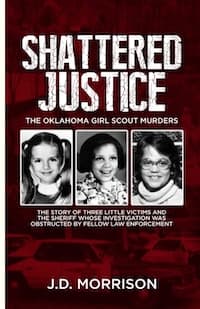
DNA testing was carried out on evidence from the case in 1989, 2008, and 2019. Each round of testing has pointed toward Hart and has helped eliminate other potential suspects. In May 2022, Mayes County Sheriff Mike Reed publicly announced that the most recent DNA results, though officially still classified as inconclusive due to the deterioration of the physical evidence, strongly pointed to Gene Leroy Hart as the killer. "Unless something new comes up," Reed said, "I am convinced where I'm sitting of Hart's guilt and involvement in this case."
Following the U.S. Supreme Court's 2020 McGirt v. Oklahoma ruling, the Cherokee Nation Marshal Service began working the case as well, since it involved a Native American perpetrator and victims on tribal land.
The 410 acre former Camp Scott property sits in the Cookson Hills about two miles south of Locust Grove, Oklahoma, historically accessed via a road known locally as Cookie Trail Road. After the Girl Scouts closed the camp in 1977, the property was sold to a local family and has remained in private hands ever since. The land is now used primarily as a hunting lease.
Many of the original camp buildings still stand, though heavily deteriorated. Photographs and reporting by the Tulsa World and Abandoned Oklahoma have documented the still visible ruins of the main hall, the recreation and shower area, and other structures. The concrete slab of one former bathroom in the Kiowa Unit and a lone tree near where the three bodies were found still mark the site. The Kiowa Unit tent platforms themselves have largely been reclaimed by the forest.
The property is private and is not open to the public. Please be respectful of the current property owners and the families of the three victims, stay on public roads at all times, and do not attempt to enter the former camp property under any circumstances.
A catastrophic July 2025 flood on the Guadalupe River killed 28 people at Camp Mystic, a historic all-girls Christian summer camp in Texas.
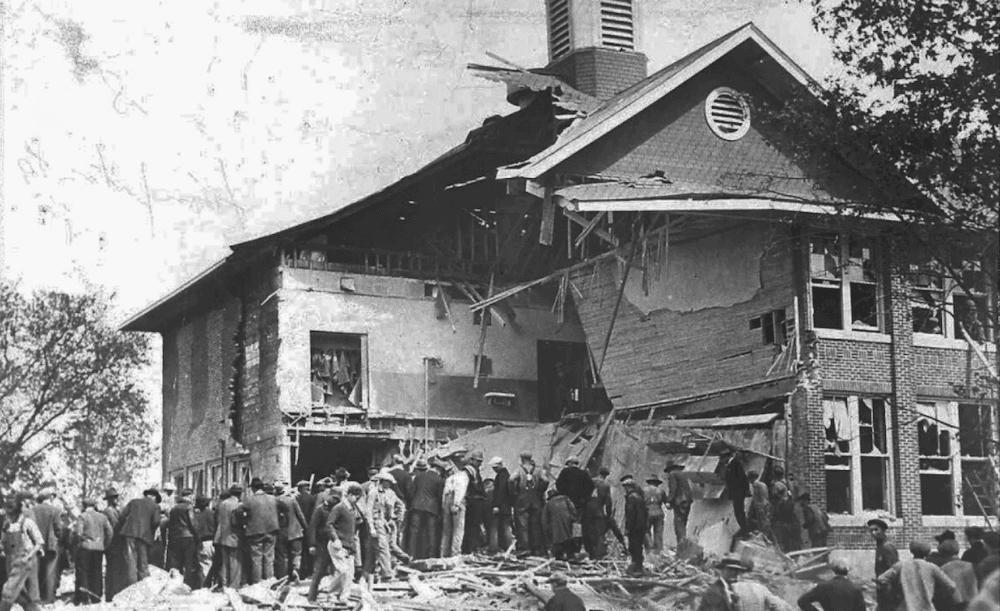
A 1927 bombing of a Michigan elementary school killed 45 people and remains the deadliest school massacre in U.S. history.

Brothers Robert & Michael Bever killed 5 of their family members in this rural Oklahoma home.
A Quick Note From Our Founder
Morbid Tourism is independently researched and maintained by one person. Every location is fact-checked, verified, and mapped so you can find exactly what you're looking for. If this page helped you, a coffee keeps the research going.