Par Rd 300, Gibsland, LA 71028
This page contains affiliate links. We may earn a small commission at no extra cost to you.
Author: Jewls Krueger
On the morning of May 23, 1934, notorious Depression era outlaws Bonnie Parker and Clyde Barrow were ambushed and killed by a posse of six lawmen along a remote stretch of Highway 154 in rural Bienville Parish, Louisiana.
The shootout ended a two year crime spree across the central United States that had captivated the country and left at least 13 people dead, including several lawmen.
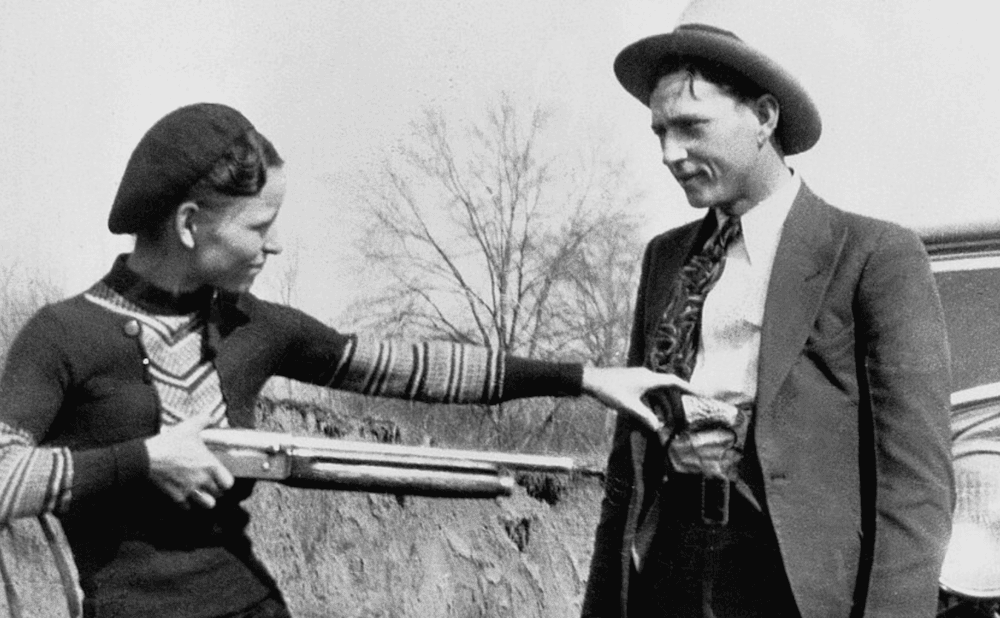
Clyde Chestnut Barrow was born March 24, 1909 in Telico, Texas, the fifth of seven children of poor tenant farmers who eventually moved to West Dallas in search of work. He began running afoul of the law as a teenager, mostly for petty theft, and served nearly two years at the brutal Eastham Prison Farm in Texas, where he killed another inmate who had been assaulting him. By the time of his release in February 1932, Clyde had vowed never to be sent back to prison alive.
Bonnie Elizabeth Parker was born October 1, 1910 in Rowena, Texas. She was a smart, popular student who excelled in school and dreamed of becoming an actress or poet. She married a man named Roy Thornton at age 16, but the marriage quickly fell apart and Roy ended up in prison. She was 19, separated, and waitressing in West Dallas when she met Clyde Barrow in January 1930.
The two became inseparable. Over the next four years, they led a loose group of associates known as the Barrow Gang on a string of robberies across Texas, Oklahoma, Missouri, Kansas, Iowa, and Louisiana, targeting mostly small town gas stations, grocery stores, and rural banks. The press, drawn to the romantic image of a young couple on the run, made them national celebrities.
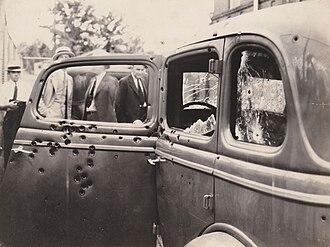
Bonnie and Clyde's car after the shootout - Public Domain
By early 1934, public sympathy for the Barrow Gang had largely turned. After Bonnie and Clyde helped engineer a prison break at the Eastham Prison Farm in January 1934 that killed a guard, Texas Department of Corrections officials hired former Texas Ranger captain Frank Hamer to track the couple down. Hamer studied their patterns for months and eventually narrowed in on a stretch of rural Louisiana where gang member Henry Methvin had family ties.
Through a deal cut with the Methvin family, Hamer learned that Bonnie and Clyde were expected to drive past the Methvin home on Highway 154 between the small towns of Gibsland and Sailes, Louisiana on the morning of May 23, 1934.
Hamer and a posse of six lawmen, including Texas officers and Louisiana sheriffs, took up positions in the brush along the road before dawn. They used a parked truck owned by Methvin's father to make it appear that he had broken down by the side of the road. Around 9:15 a.m., Bonnie and Clyde, driving a stolen tan Ford V-8, slowed down to check on the truck.
The lawmen opened fire from concealed positions with rifles, shotguns, and a Browning Automatic Rifle. More than 130 rounds were fired into the car. Both Bonnie and Clyde died at the scene. Clyde was 25 years old. Bonnie was 23.
Further Reading
The bodies were towed in the Ford to the small town of Arcadia, Louisiana, where coroner J. L. Wade conducted the official examination at the Conger Furniture Store, which also served as the local mortuary. Word of the ambush quickly drew thousands of onlookers and souvenir seekers to the scene, some of whom reportedly cut pieces of bloody clothing or hair from the bodies before they were secured.
Bonnie Parker and Clyde Barrow were buried separately in Dallas, against Bonnie's wishes that they be buried together. Clyde is buried at Western Heights Cemetery and Bonnie at Crown Hill Memorial Park. None of the six lawmen were ever charged or prosecuted, and the ambush was widely celebrated as a victory for law enforcement at the time. Frank Hamer continued to work as a Texas peace officer and security consultant until his death in 1955.
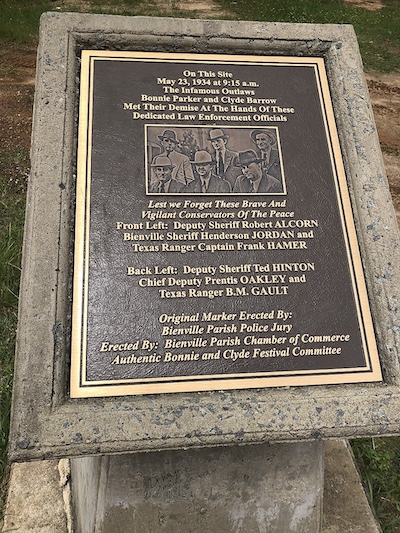
The monument to the lawmen at the site of the shootout - Creative Commons - Acarlin0577
The ambush site sits along a quiet, two lane stretch of Louisiana Highway 154 about eight miles south of Gibsland in Bienville Parish, in the piney woods of north central Louisiana. A simple stone marker installed in the 1970s, and later replaced by a more substantial historical marker, sits along the side of the road at the spot where the shooting took place. The original marker has been chipped at and vandalized over the years by souvenir hunters and is now protected by a metal cage.
The original vehicle from the shootout that Bonnie and Clyde were driving is located in Buffalo Bill's Casino in Primm, Nevada.
Nearby in the town of Gibsland, the Bonnie and Clyde Ambush Museum operates out of the former Ma Canfield's Cafe, where Bonnie and Clyde are believed to have purchased their final breakfast of sandwiches on the morning of the ambush. Each May, the town hosts the Bonnie and Clyde Festival, which includes a reenactment of the shooting at the original site.
The marker is on a public road and accessible to the public. Please be respectful of the rural surrounding area, do not damage or remove pieces of the marker, and stay on the shoulder of the road, as Highway 154 still carries regular traffic.
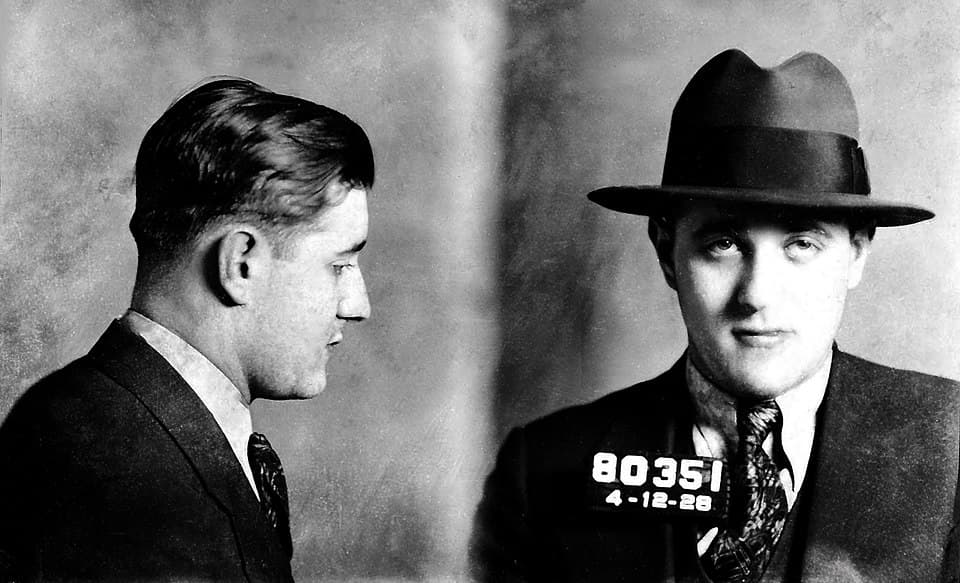
Mob boss Bugsy Siegel was shot dead through the window of his Beverly Hills home in 1947.
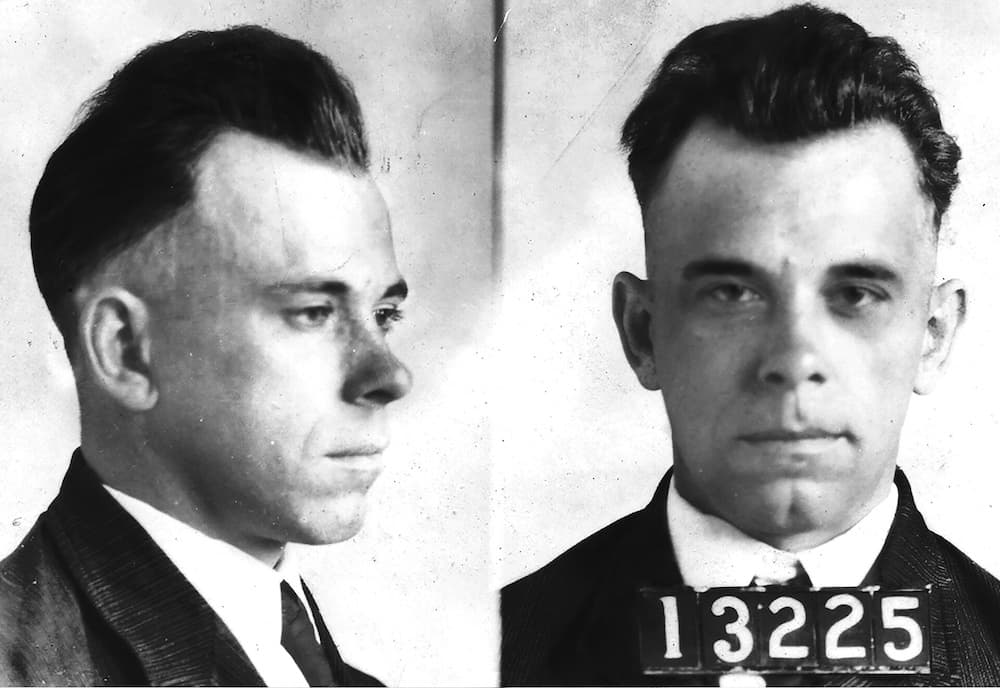
Bank Robber John Dillinger was gunned down outside of this Chicago area theater in 1934.
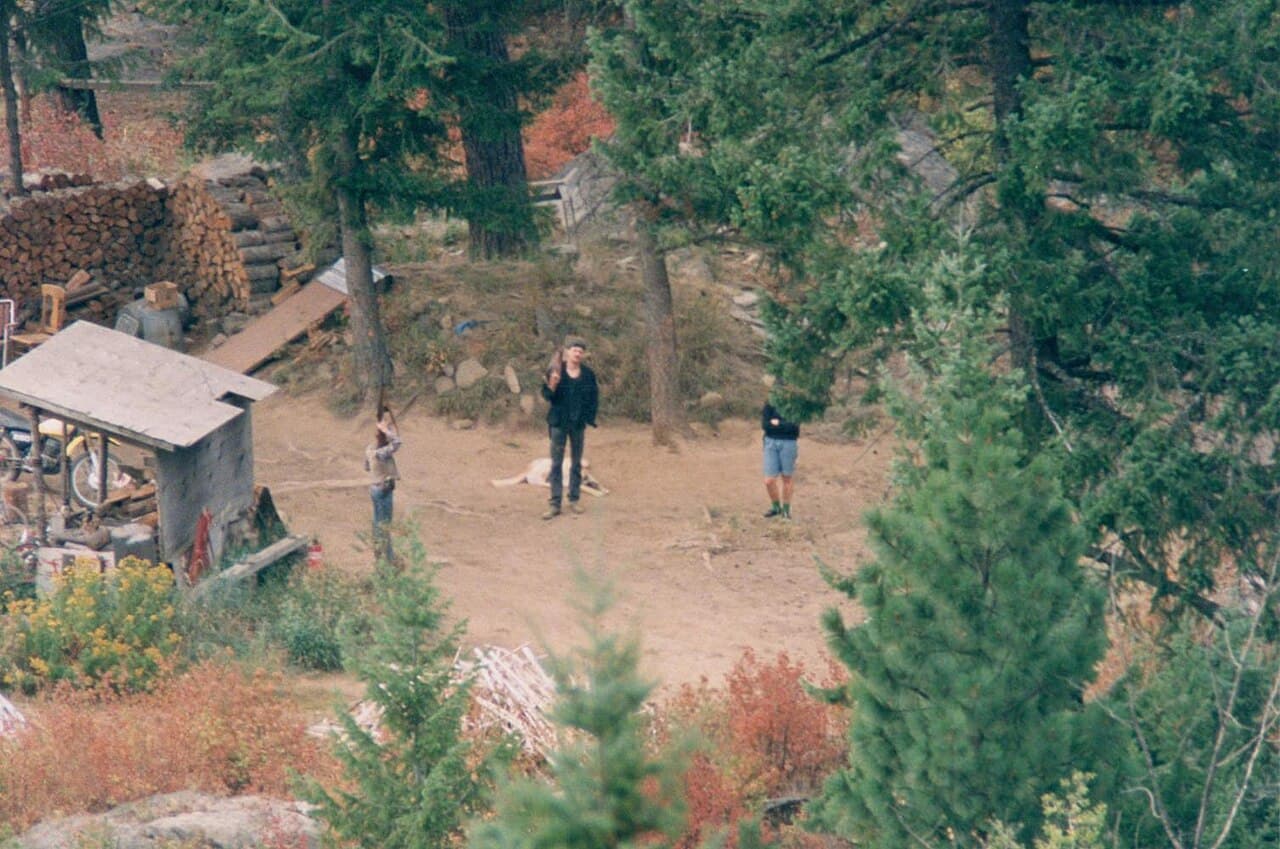
A standoff between property owners and the FBI that turned deadly in rural Idaho.
A Quick Note From Our Founder
Morbid Tourism is independently researched and maintained by one person. Every location is fact-checked, verified, and mapped so you can find exactly what you're looking for. If this page helped you, a coffee keeps the research going.