10780 Pipestone Rd SW, Albuquerque, NM 87121
This page contains affiliate links. We may earn a small commission at no extra cost to you.
Author: Jewls Krueger
Special thanks to Morbid Tourism fan Michael Glass for the photos in this article and for bringing this site to our attention.
On February 2, 2009, a young Albuquerque woman named Christine Ross was walking her dog Ruca through the undeveloped desert of West Mesa, an area of scrubland on the western edge of the city, when her dog scratched a large bone out of the sand. Ross photographed it and sent the image to her sister, a registered nurse, who identified it as a human femur. Ross called the Albuquerque Police Department.
Over the following weeks, investigators excavated the surrounding area and unearthed the skeletal remains of eleven women and one unborn child, all believed to have been buried between 2001 and 2005 by a single unidentified killer. In the years since the discovery, the killer has come to be known in the press as the "West Mesa Bone Collector." The case remains officially unsolved.
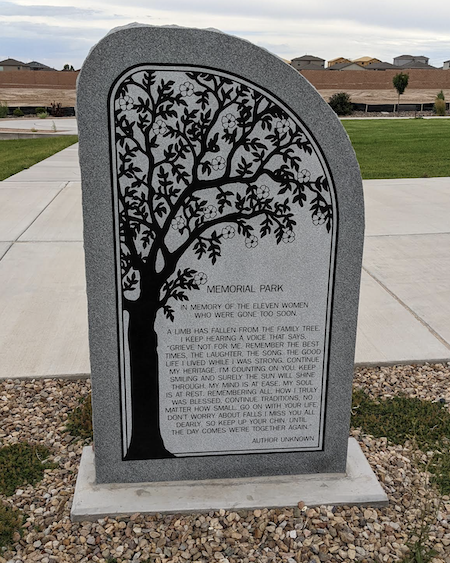
Memorial for the West Mesa 11 - Submitted to Morbid Tourism from Michael Glass
All eleven of the identified victims were female, ranged in age from 15 to 32, and were mostly Hispanic. Ten of the eleven had documented ties to sex work and drug addiction. The victims are:
Jamie Barela was Evelyn Salazar's 15 year old cousin and had disappeared with Salazar in April 2004 after they left a family gathering to walk to a park near San Mateo Boulevard and Gibson Boulevard in southeast Albuquerque. She was the only victim not connected to sex work or drug use.
The identifications took nearly a year to complete. Cloven and Salazar were identified through DNA testing at the University of North Texas in November 2009. Barela was identified in January 2010. By the time the recovery was complete, investigators had sifted through more than 40,000 cubic yards of desert dirt across a roughly 92 acre area near 118th Street SW.
The Albuquerque Police Department established a dedicated 118th Street Task Force to work the case, led at various points by Detective Ida Lopez and later Detective Mark Marany. Prior to the discovery, Lopez had already been building a list of Albuquerque women with ties to sex work and drug addiction who had disappeared between 2001 and 2006. Ten of the eleven West Mesa victims were on that list. Nine more women with similar backgrounds who also disappeared during that window have never been found, raising the possibility that the killer had more victims.
Further Reading
The cause of death for the eleven West Mesa victims was officially ruled "homicidal violence," but by the time the remains were recovered, medical examiners could not determine the specific method of killing. Investigators strongly suspect strangulation. No usable DNA evidence has ever been recovered from the burial site.
Analysis of satellite imagery of West Mesa taken between 2003 and 2005 revealed patches of disturbed soil and tire tracks consistent with the burial locations, and suggested that the last of the eleven victims was buried in 2005. By 2006, residential development had encroached on the area, and the site was platted for new homes. After the 2008 housing bubble collapse halted construction, a developer built a retaining wall to redirect storm water on the site, inadvertently causing several buried bones to work their way to the surface, which is how Christine Ross's dog Ruca eventually stumbled onto one.
Several men have drawn the attention of investigators over the years, though none have ever been formally charged in connection with the West Mesa case. Lorenzo Montoya was a pressman at a local printing company who lived less than three miles from the burial site. He had been arrested in 1999 for attempting to strangle a sex worker. Montoya was killed in December 2006 by the boyfriend of another sex worker named Sherek Hill after Montoya lured Hill into his home, tied her up, and began strangling her. The West Mesa killings appear to have stopped that same year. Fred Reynolds, an Albuquerque pimp who reportedly kept photos of missing sex workers, died of natural causes in January 2009 shortly before the burial site was discovered.
Joseph Blea, an Albuquerque man dubbed by police in the 1980s as the "Mid-School Rapist" for a series of attacks on young teenage girls, is currently serving a 90 year sentence following a 2015 conviction on multiple rape charges, including one involving a 13 year old girl. In 2014, following that conviction, investigators searched Blea's home and found jewelry that some victims' families believe belonged to the West Mesa women. Blea has denied any involvement. Investigators have also considered the possibility that the murders were connected to a sex trafficking ring operating through Texas and the American Southwest.
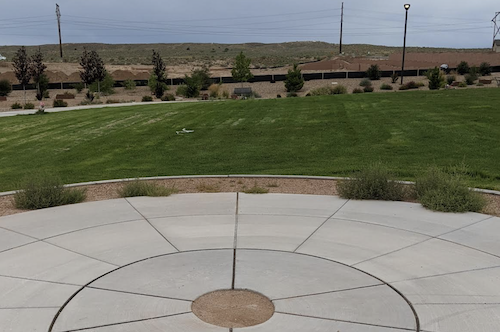
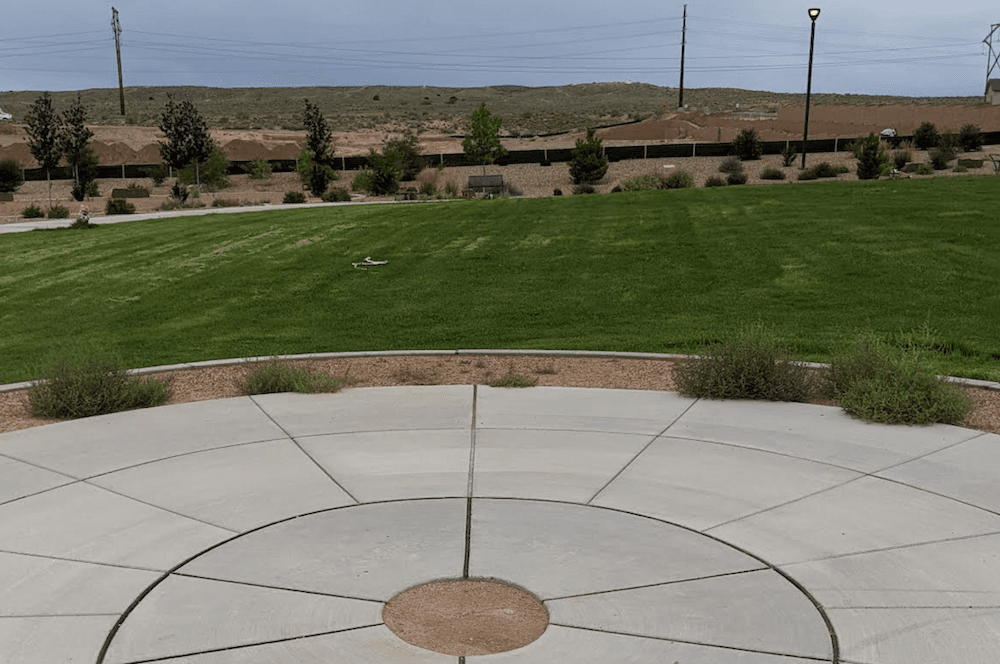
West Mesa Memorial Park - Submitted to Morbid Tourism by Michael Glass
The site where the eleven victims were found sat mostly untouched for years as a makeshift memorial, with small wooden crosses and plastic flowers left by family members. In 2016, the developer of the area, KB Home, deeded roughly two acres of land at the burial site to the City of Albuquerque for use as a memorial park. City leaders, elected officials, and victims' families broke ground on the West Mesa Memorial Park, also called the Women's Memorial Park, in the summer of 2018. It opened to the public in the following months.
The park sits at the intersection of 118th Street and Amole Mesa Avenue SW, at 10780 Pipestone Road SW, on the far western edge of Albuquerque. It features a small paved walkway, benches, and a central plaza with the names of the eleven victims engraved into the sidewalks around it. Two additional dedications were later added in the sidewalk paving to Dan Valdez, the father of Michelle Valdez, and to Ruca, the dog who found the first bone. At the request of the victims' families, the park does not have a plaque explaining the crime, so a first-time visitor may not immediately know what happened on the land. Nonprofit advocacy group Street Safe New Mexico organizes an annual gathering at the park on the anniversary of the discovery.
The park is open to the public during daylight hours. Please be respectful of the surrounding neighborhood, do not stray from the park's paved walkways onto the surrounding land, and remember that this is a place of ongoing grief for the families of eleven women and one unborn child whose killer has never been caught.
If you have any information about the West Mesa murders, the Albuquerque Police Department's 118th Street Task Force can be reached at 505-768-2450, or you can call Crime Stoppers at 505-843-STOP.
The serial killer known as the "Toy Box Killer" had a torture trailer located here.

Brothers Robert & Michael Bever killed 5 of their family members in this rural Oklahoma home.
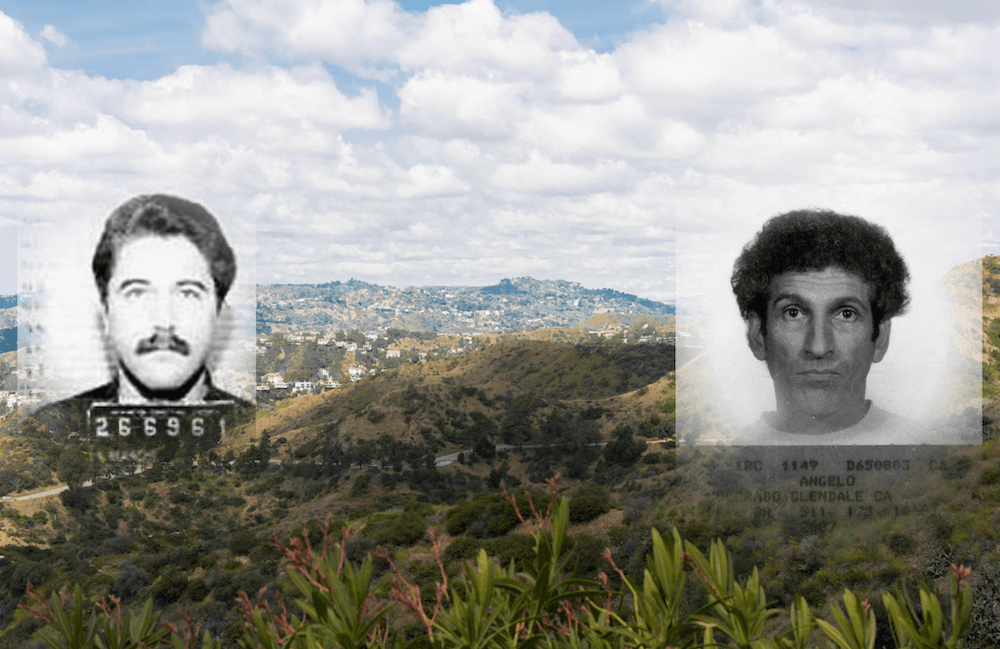
Cousins Kenneth Bianchi and Angelo Buono raped and murdered ten young women at Buono's Glendale upholstery shop in 1977 and 1978.
A Quick Note From Our Founder
Morbid Tourism is independently researched and maintained by one person. Every location is fact-checked, verified, and mapped so you can find exactly what you're looking for. If this page helped you, a coffee keeps the research going.