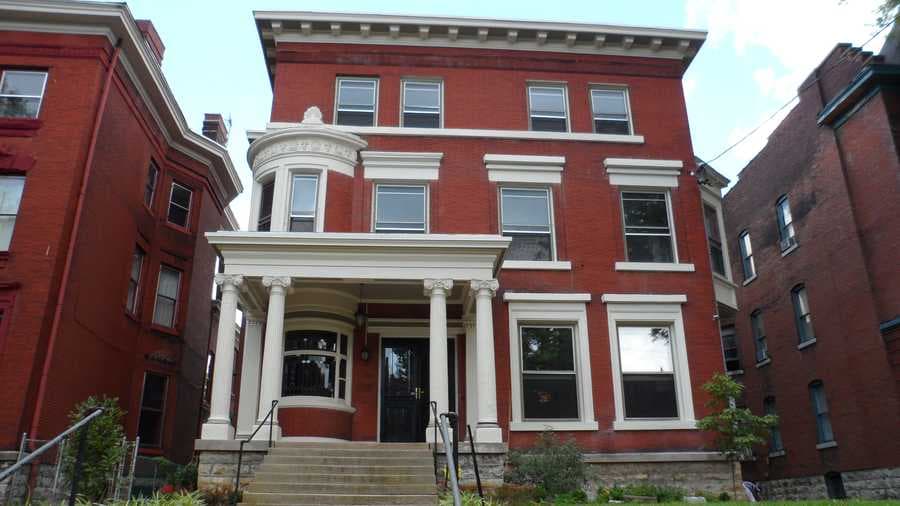
1435 S 4th St., Louisville, KY 40208
This page contains affiliate links. We may earn a small commission at no extra cost to you.
Author: Jewls Krueger
The Richard Robinson House is a Victorian mansion on the 1400 block of South Fourth Street in the Old Louisville historic district. Built in 1895, the roughly 7,700-square-foot home is one of the neighborhood's grand nineteenth-century residences, and it carried a reputation as a "haunted house" among locals long before it became a crime scene. In June 2010, police discovered the body of 37-year-old James "Jamie" Carroll buried in a plastic container beneath the dirt floor of the basement, roughly six months after he was killed there.
The case became one of the most talked-about murders in recent Louisville history. The two men who lived in the house, homeowner Jeffrey Mundt and his boyfriend Joseph Banis, each accused the other of the killing. Because all three men were gay, the case was locally nicknamed the "Pink Triangle Murder," and because the two defendants blamed one another in separate trials, it was also called the "he-said, he-said" case. The story reached national audiences in 2026 through an HBO documentary series.
James "Jamie" Carroll was 37 years old at the time of his death. A Kentucky native, he worked as a hairstylist and performed on Louisville's drag scene under the name Ronica Reed. Friends and former classmates remembered him as talented and magnetic, describing a personality that filled a room. In court proceedings, Carroll was described as the men's methamphetamine source, and he had a pending drug case at the time he disappeared. He was last accounted for in mid-December 2009, when he missed a scheduled court date.
Carroll met Banis and Mundt through a dating service for gay men. Their acquaintance moved from a personal relationship into drug transactions, and it was that overlap of sex, drugs, and money that prosecutors said set the stage for his death.
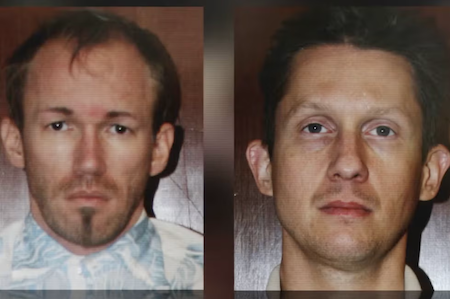
Jeffrey Mundt owned the mansion. He was an IT professional who had worked in university information technology and was generally regarded as a law-abiding, articulate, and well-educated man before the case. Joseph "Joey" Banis, his boyfriend, had a criminal record that included prior felony convictions and prison time, and he struggled with methamphetamine addiction. The two had been together only a matter of weeks before Carroll was killed. One of Mundt's attorneys later described the timeline pointedly, saying his client met Banis one night and, nine weeks later, had a body in his basement.
In mid-December 2009, Carroll, Mundt, and Banis gathered at the Old Louisville home for a drug-fueled encounter involving methamphetamine and sex. According to the account the Kentucky Supreme Court later summarized, the situation turned violent. Carroll was stabbed in the throat and shot. He died from multiple stab wounds and a gunshot injury to the neck.
The two men then concealed the body. Court documents describe the remains being cleaned, struck with a sledgehammer to fit inside a large plastic container, treated with lime to limit odor, and buried in a hole dug into the basement floor. The container sat undisturbed beneath the house for roughly six months. From the moment they were arrested, Mundt and Banis gave opposing accounts, each naming the other as the person who actually killed Carroll.
The crime came to light in June 2010, when Mundt called 911 to report that Banis was threatening him during the breakup of their relationship. Officers responded to the reported domestic dispute at the home. According to police, Banis told a detective on the way to the station that there was a body buried in the basement, and he provided investigators with a hand-drawn map showing where to dig. Police recovered the plastic container with Carroll's remains inside. Investigators also documented blood evidence inside the home. Mundt initially denied knowledge of the body, but later acknowledged awareness of the killing. Additional evidence tied to the case, including a firearm and counterfeit money, was recovered during the broader investigation.
Prosecutors sought the death penalty, and the two men were tried separately. In a deal that removed the death penalty from consideration, Banis agreed to testify against Mundt. In May 2013, a jury convicted Banis of murder along with robbery, tampering with evidence, and additional charges. He was sentenced to life in prison with the possibility of parole after 20 years, and he maintained his innocence at sentencing while admitting he had helped cover up the crime.
At Mundt's trial later in 2013, the jury reached a starkly different verdict. Mundt was found not guilty of murder and convicted only of the lesser charges of facilitation to robbery and tampering with physical evidence. He was sentenced to eight years but was eligible for parole almost immediately and was released after about a year. The two outcomes, one man serving life and the other soon free for the same killing in the same house, left many in Louisville questioning whether the case had been justly resolved.
Louisville author David Domine, a longtime chronicler of Old Louisville, wrote about the case in his book A Dark Room in Glitter Ball City: Murder, Secrets, and Scandal in Old Louisville. Domine also has a personal connection to the property, having toured the mansion when it was on the market before Mundt purchased it. In February 2026, a two-part HBO documentary series, Murder in Glitterball City, produced with World of Wonder, brought the case to a national audience, drawing on Domine's book and reexamining the dueling narratives of the two defendants.
Book Recommendation
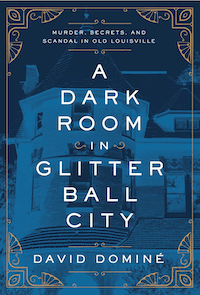
David Dominé's A Dark Room in Glitter Ball City is the book behind HBO's documentary series, tracing the discovery of a body buried in a Louisville mansion's wine cellar and the lurid murder case that followed.
Buy on Amazon →By purchasing through this link, we may earn a small commission at no extra cost to you. Thank you for supporting our work!
The Richard Robinson House remains a private residence on South Fourth Street in the heart of Old Louisville, an area known for having one of the largest concentrations of preserved Victorian homes in the country, near landmarks such as Belgravia Court and the neighborhood's pedestrian walking courts. After the case, the mansion changed hands and was restored, and it has since been used as a private home and rental property rather than a public attraction.
Because this is someone's home, visitors should view it only from the public sidewalk or street. Please do not enter the property, photograph residents, knock on the door, or disturb the current occupants or neighbors. The neighborhood is residential and walkable, and it can be appreciated respectfully without any contact with the people who live there now.
A disgruntled newspaper employee killed 8 of his coworkers in an office shooting spree.

The ruins of a secluded mansion where a grisly murder took place in 1982.

Michigan hairdresser Kevin Bacon was murdered by Mark Latunski on Christmas Eve 2019 after meeting on Grindr.
A Quick Note From Our Founder
Morbid Tourism is independently researched and maintained by one person. Every location is fact-checked, verified, and mapped so you can find exactly what you're looking for. If this page helped you, a coffee keeps the research going.