460 W. San Ysidro Blvd, San Ysidro, CA 92173
This page contains affiliate links. We may earn a small commission at no extra cost to you.
Author: Jewls Krueger
On the afternoon of July 18, 1984, 41-year-old James Oliver Huberty walked into a McDonald's restaurant on San Ysidro Boulevard, in a working-class neighborhood of San Diego about a mile from the Mexican border, and opened fire on staff and customers. Over the next 77 minutes he killed 22 people, including a pregnant woman and her unborn child, and wounded 19 others before a police sharpshooter killed him. At the time it was the deadliest mass shooting by a single gunman in United States history, and it remains the deadliest mass shooting in California history.
The victims ranged in age from an eight-month-old baby to a 74-year-old man, and most were of Mexican or Mexican American descent, reflecting the community around them. The site today is home to a satellite college campus and a permanent memorial to the dead.

James Huberty was born in Canton, Ohio, on October 11, 1942. He contracted polio as a young child and walked with a lifelong limp. His mother left the family when he was a boy, an abandonment those close to him described as deeply wounding. He developed an early fixation on firearms.
Huberty studied sociology and later trained as an embalmer, working briefly in that field before spending years as a welder, including a long stretch at the Babcock and Wilcox plant in Ohio. He was laid off in late 1982. A self-described survivalist, he stockpiled guns and supplies in the belief that economic collapse or nuclear war was near. Friends and neighbors described him as sullen, short-tempered, and paranoid. His wife, Etna, later said he began hearing voices after losing his welding job, and that he once held a gun to his own head.
Unable to find lasting work in Ohio, Huberty moved his wife and two daughters to Tijuana in 1983, then to San Ysidro. He found work as a security guard but was fired on July 10, 1984. A week later he called a mental health clinic asking for an appointment. The clinic logged the request as non-urgent, and no one called him back. The following day, after a family visit to the San Diego Zoo, he told Etna he was "going hunting... hunting for humans," according to accounts she gave afterward.
Huberty arrived at the McDonald's at roughly 3:56 p.m., carrying a 9mm Browning pistol, a 9mm Uzi carbine, a 12-gauge shotgun, and hundreds of rounds of ammunition. About 45 people were inside. He shot the 22-year-old manager, Neva Caine, in the opening moments, then ordered everyone to the floor and began firing on customers and employees, including families with young children who tried to shield one another.
The shooting continued both inside and in the parking lot, where Huberty fired on people arriving by car and on three boys who had ridden up on their bicycles. Among those killed were an eight-month-old infant and an elderly couple approaching the entrance. Some staff and customers survived by hiding in a basement utility room. Huberty fired at least 257 rounds over the course of the attack, alternating between his weapons.
Book Recommendation
Jillian Peterson and James Densley's The Violence Project uses the most comprehensive mass shooter database ever compiled to identify the warning signs that defined James Huberty's path to the San Ysidro massacre and countless shootings since.
Buy on Amazon →By purchasing through this link, we may earn a small commission at no extra cost to you. Thank you for supporting our work!
The first emergency calls came in shortly after 4:00 p.m., but a dispatcher initially sent officers to a different McDonald's about two miles away, delaying the response. Once police identified the correct location, they sealed off the area, established a command post, and deployed roughly 175 officers along with SWAT team members.
Shattered, bullet-marked windows made it difficult for officers to see inside and to be certain how many gunmen were present. At 5:17 p.m., Huberty moved into view near a doorway, and SWAT sniper Charles Foster, positioned on the roof of a nearby post office, killed him with a single rifle shot. The entire incident had lasted 77 minutes. A later police review concluded the department had acted appropriately, though the case prompted lasting changes in how San Diego and other agencies train and equip officers for mass-casualty attacks.
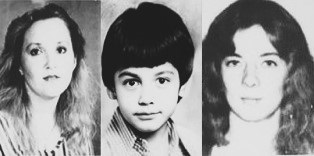
In the end, 23 people were dead including an unborn baby and Hubert himself. 19 others were injured but ultimately survived the shooting.
Investigators never established a clear motive. San Diego Police Chief William Kolender rejected the idea that the attack was racially motivated, telling reporters simply, "He didn't like anybody."
McDonald's initially refurbished the restaurant with plans to reopen, but after discussions with community leaders decided against it. The building was demolished that September. The company donated the land to the city on the condition that no restaurant be built there, and opened a new location a couple of blocks away. McDonald's and the Kroc family also contributed to a survivors' relief fund that eventually exceeded 1.4 million dollars.
Families and survivors sued McDonald's and the police department. In 1987, a California appeals court upheld the dismissal of those claims, ruling that a business has no duty to protect patrons from an unforeseeable attack of this kind and that the police could not have prevented the deaths. A separate lawsuit filed by Etna Huberty, which alleged that workplace chemical exposure and diet had triggered her husband's actions, was also dismissed in 1987. Etna Huberty died of breast cancer in 2003.
One survivor, Alberto Leos, was a teenage employee shot several times during the attack. He went on to a career in law enforcement, later serving with the San Diego Police Department.
The land where the restaurant stood is now the Southwestern College Higher Education Center, a satellite campus in the San Ysidro neighborhood near the intersection of San Ysidro Boulevard and Averil Road. In front of the building stands a permanent memorial, dedicated in December 1990, consisting of 21 hexagonal white marble pillars ranging from about one to six feet in height. The varying heights represent the range of victims' ages, and a plaque lists their names. The memorial was designed by Roberto Valdes, a former Southwestern College student.
Each year on July 18, the community gathers at the site, and the pillars are covered with flowers. During the Day of the Dead, candles and offerings are left in the victims' memory. The college has taken on the role of caretaker for the memorial and includes a display inside the building recounting the history of the shooting.
The memorial sits along a busy public boulevard and is open to visitors. Anyone stopping by is asked to treat it as the place of mourning it is, to be respectful of students and staff on the working campus, and to remember the families and survivors for whom this remains a living wound.

A shooting rampage in 1991 at this Texas restaurant left 22 people dead.
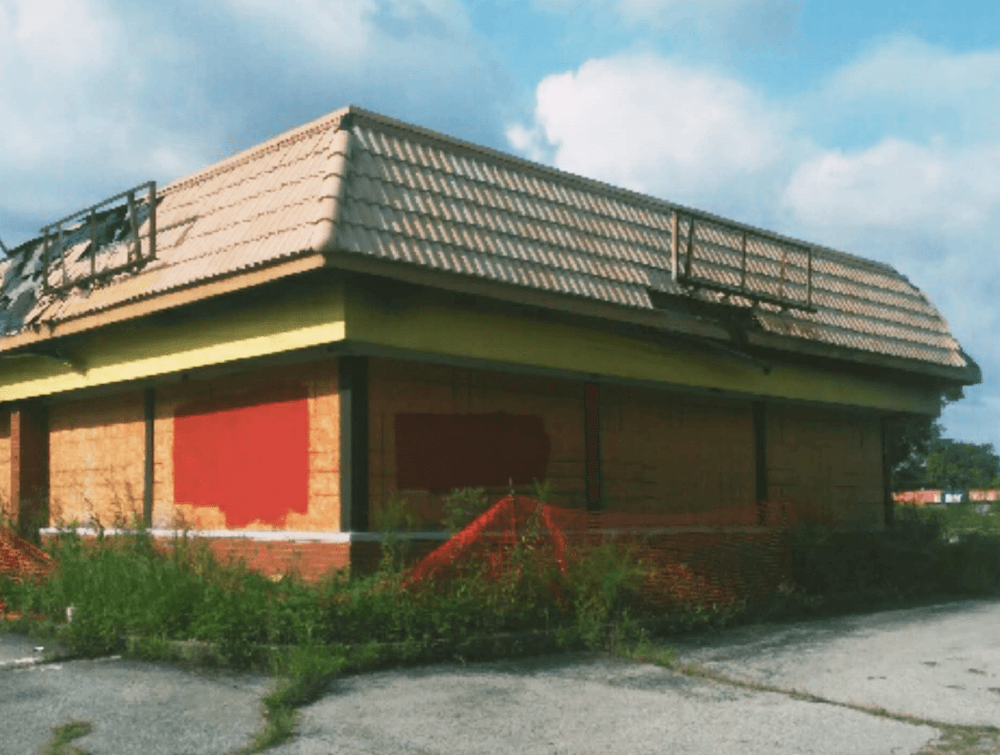
Four young employees at a Speedway, Indiana Burger Chef were abducted and murdered in 1978 in one of Indiana's most infamous unsolved crimes.
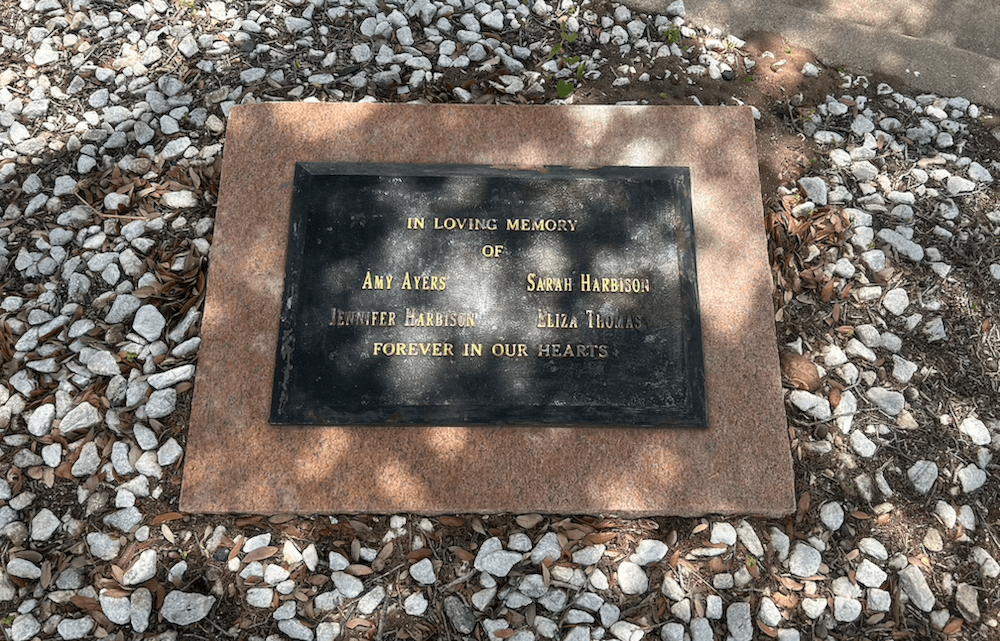
The site of the Austin Yogurt Shop Murders where 4 teenage girls were murdered in 1991.
A Quick Note From Our Founder
Morbid Tourism is independently researched and maintained by one person. Every location is fact-checked, verified, and mapped so you can find exactly what you're looking for. If this page helped you, a coffee keeps the research going.