2231 SW Westport Square, Topeka, KS 66614
Author: Jewls Krueger
On July 7, 2002, Karen Harkness and her boyfriend Mike Sisco were found shot to death in the basement bedroom of Harkness' home in a quiet residential neighborhood in southwest Topeka, Kansas. The couple had returned home only hours earlier from a night at a casino, and relatives had gathered for a family get-together when Harkness' father discovered the bodies. There was no sign of forced entry and nothing of value was taken.
What followed was one of the longest legal sagas in recent Kansas history, spanning nearly a quarter century and three separate trials before Sisco's ex-wife, Dana Chandler, was finally and lastingly convicted of the murders in 2025.
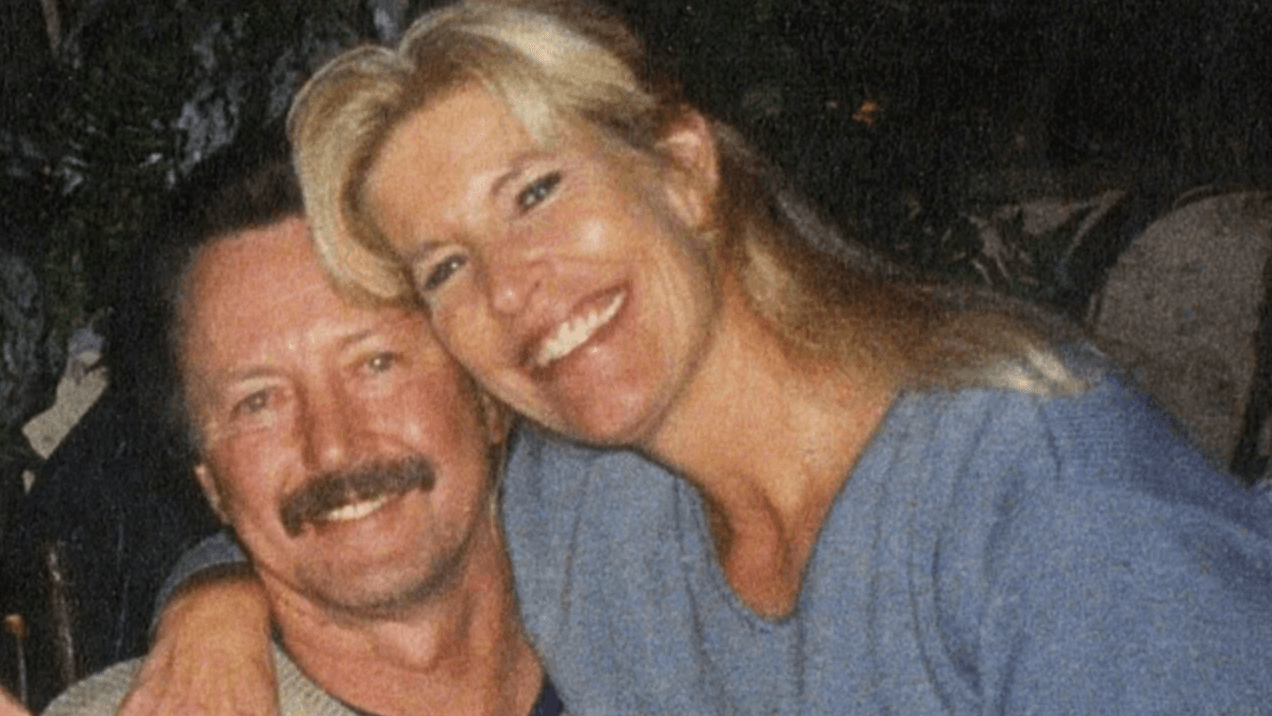
Karen Harkness, 53, worked in the hospitality industry and was the daughter of Topeka businessman Harold Worswick. She was a divorced mother of two adult children, Chad Harkness and Erin Sutton, both in their twenties at the time of her death. Friends and family described her as warm and well liked. She had been dating Mike Sisco for about four years, and relatives believed the couple was on the verge of announcing their engagement.
Mike Sisco, 47, was a salesperson for a welding company. Divorced from Dana Chandler, he had custody of their two teenage children, Hailey and Dustin, who were 17 and 15 when he was killed. According to his family, Sisco had grown fearful in the months before his death. His brother-in-law, Mark Boots, testified that on a fishing trip nine days before the murders, Sisco said that if he was ever found dead, Chandler was responsible.
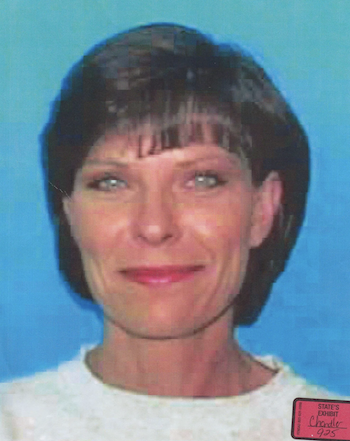
Dana Chandler was Mike Sisco's ex-wife and a Denver-based accountant. The couple married in the early 1980s and divorced in 1998 after roughly 15 years of marriage, following what relatives described as a bitter split and custody battle. Sisco's family said Chandler struggled with alcohol and repeatedly turned up at his home unannounced.
Prosecutors later presented evidence that she called Sisco and Harkness more than 600 times in the six months before the killings. Chandler, who lived roughly 550 miles from Topeka, denied any involvement and has maintained her innocence throughout.
Harkness and Sisco had spent the night of July 6 at the Sac and Fox Casino outside Topeka. Surveillance footage captured them leaving around 1:30 a.m. and stopping for coffee, the last time either was recorded alive.
The following afternoon, Harold Worswick came to the house for a planned family gathering, entered through an open sliding door, and found the couple dead in the downstairs bedroom. Both had been shot multiple times with a 9mm handgun as they lay in bed, Harkness five times and Sisco as many as seven. The bullets were traced to an Israeli manufacturer, and the weapon was never recovered. Investigators found more than $1,000 in cash, a Rolex watch, and jewelry untouched, and quickly ruled out robbery.
With no forced entry and no apparent financial motive, detectives concluded the killings were personal. Suspicion turned to Chandler after Sisco's and Harkness' relatives described her history of harassment. Investigators noted a 27-hour gap in her cellphone activity around the time of the murders and an inconsistent account of her whereabouts, along with a receipt showing she had bought two five-gallon gas cans the day before. Even so, there was no DNA, no fingerprints, and no witness who could place her in Kansas. The case went cold by the end of 2002. Nearly a decade later, in July 2011, District Attorney Chad Taylor decided to move forward with the circumstantial evidence, and Chandler was arrested and charged with both murders.
Chandler was convicted of first-degree murder in 2012 and sentenced to life in prison. In 2018, the Kansas Supreme Court overturned that conviction, finding that prosecutor Jacqie Spradling had committed serious misconduct, which the court called "intolerable acts of deception." Spradling was later disbarred. A second trial in 2022, held in Shawnee County, ended in a hung jury that reportedly split seven to five in favor of conviction.
Prosecutors tried Chandler a third time in 2025, after a change of venue moved the case to Pottawatomie County, about 60 miles away. Chandler dismissed her attorneys and represented herself, testifying for roughly 20 hours over seven days. On March 7, 2025, a jury found her guilty on both counts, and on June 3, 2025, she was sentenced to two consecutive life terms with no possibility of parole for 50 years. She continues to maintain her innocence and has pursued an appeal.
In September 2026, the case became the subject of a three-part HBO documentary series, "A Killer Story," which premiered on September 10. Directed by Matthew Galkin and produced by Story Syndicate, the series was filmed across the final six years of the legal fight and follows Joe Sexton, a former New York Times and ProPublica journalist, as he re-examines the case against Chandler.
Sexton was drawn in by Eileen and Keen Umbehr, a married couple from Alma, Kansas, who spent years advocating for Chandler despite having no personal connection to her. Keen Umbehr, an attorney, became Chandler's research lawyer and filed the 2016 ethics complaint that ultimately led to prosecutor Jacqie Spradling's disbarment. The Umbehrs came to believe another person was responsible, though no law enforcement agency ever named that person a suspect, and DNA testing did not link him to the crime.
The documentary does not claim to resolve the question of Chandler's guilt. It focuses instead on the lack of physical evidence in the case and on the certainty that drove investigators, prosecutors, and amateur sleuths alike. Chandler's conviction stands, and she continues to pursue an appeal.
The home where Karen Harkness and Mike Sisco were killed sits in a quiet residential neighborhood in the southwest part of Topeka. It remains a private residence and is not a memorial or a public site. The case has drawn renewed national attention, and the recent HBO documentary series has brought fresh interest to the location.
Anyone curious about the site should view it only from public streets and sidewalks, avoid contact with current residents or neighbors, and refrain from entering the property. This is still a private home in a neighborhood that lived through a violent loss, and it deserves to be treated with respect.

A jealous ex-wife murdered her husband and his new wife in this San Diego home.

Salesman Travis Alexander was brutally murdered in his Mesa, Arizona home by his ex-girlfriend Jodi Arias in 2008.

James Cannon was brutally murdered by his wife in this Nashville area home.
A Quick Note From Our Founder
Morbid Tourism is independently researched and maintained by one person. Every location is fact-checked, verified, and mapped so you can find exactly what you're looking for. If this page helped you, a coffee keeps the research going.