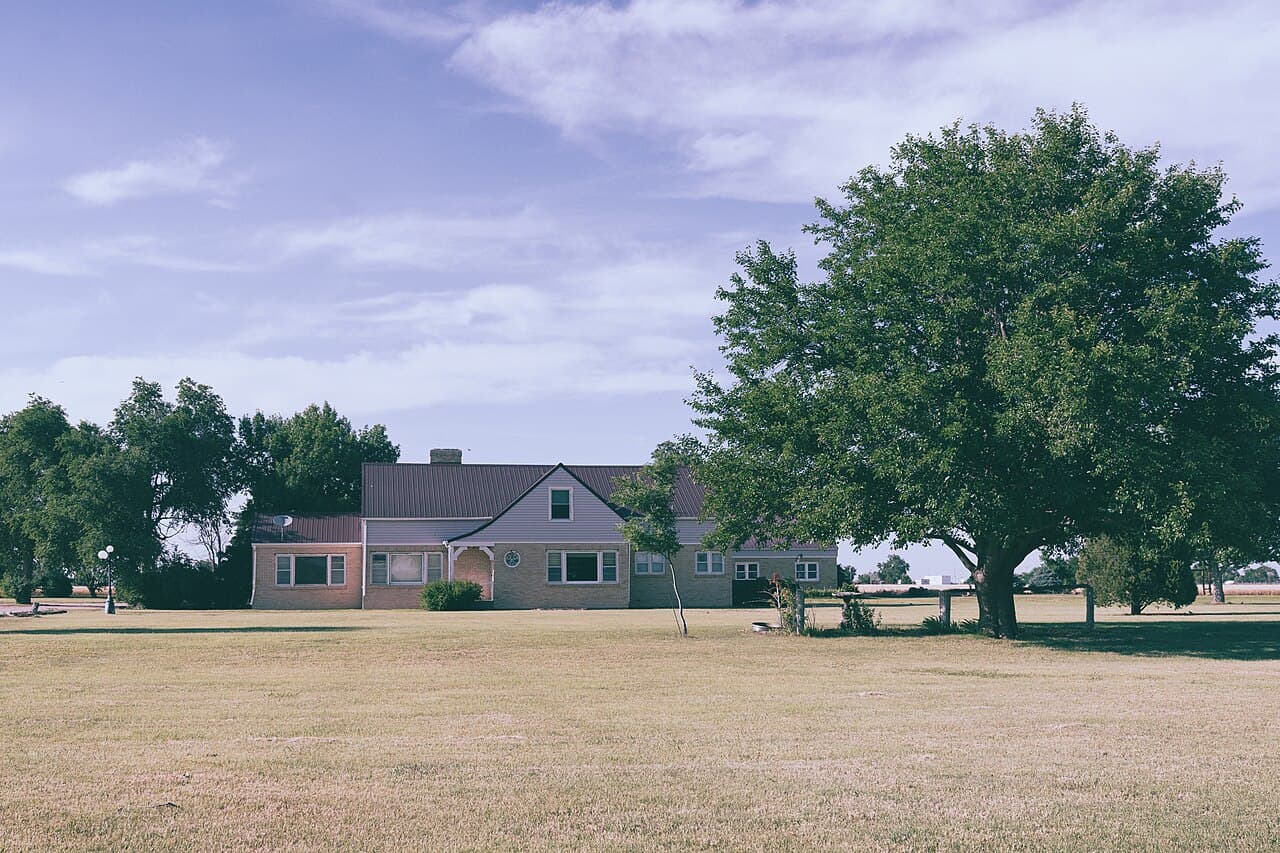
611 Oak Ave, Holcomb, KS 67851
ADVERTISEMENT
This page contains affiliate links. We may earn a small commission at no extra cost to you.
Author: Jewls Krueger
In the early morning hours of November 15, 1959, four members of the Clutter family were murdered in their farmhouse on the outskirts of Holcomb, Kansas, by two ex-convicts named Richard "Dick" Hickock and Perry Edward Smith.
The crime shocked the small farming community and the nation, and would go on to become the subject of Truman Capote's 1966 nonfiction novel "In Cold Blood," widely considered the foundational work of the modern true crime genre.
Herbert "Herb" Clutter, 48, was one of the most respected men in Finney County, Kansas. He was a Methodist church leader, a Kansas State College graduate, and a successful wheat farmer who had built his property, called River Valley Farm, into a prosperous operation. He had been appointed to the Federal Farm Credit Board by President Dwight D. Eisenhower in 1953. He employed as many as 18 farmhands at a time, who reportedly admired him for his fair treatment and good wages.
Herb's wife, Bonnie Mae Clutter, 45, had a long history of physical ailments and was often described in early accounts of the case as suffering from clinical depression, although family and friends would later push back on Truman Capote's depiction and say she remained active in the community and the family.
The Clutters had four children. Their two oldest daughters, Eveanna and Beverly, had already moved away from home. Still living in the family farmhouse were Nancy Clutter, 16, and Kenyon Clutter, 15. Nancy was an honor student at Holcomb High School, a member of multiple clubs, and an active church youth group member who loved horseback riding and baking. Kenyon was a high school freshman, an avid woodworker, and a member of the Holcomb basketball team.
The family lived in a large, brick two story home that Herb Clutter had designed and built in 1948, on a property west of Holcomb.
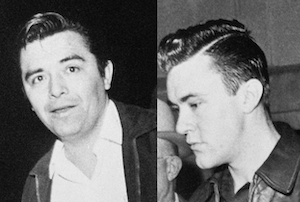
Perry Smith & Richard Hicock - Public Domain
Richard Eugene "Dick" Hickock, 28, was born to a farming family in eastern Kansas. He had been a high school athlete and good student in his youth, but after a serious car accident in his early 20s drifted into a string of arrests for forgery, burglary, and bad check writing. He was paroled from the Kansas State Penitentiary in Lansing in August 1959.
Perry Edward Smith, 31, was the son of a Cherokee mother and an Irish American rodeo cowboy father. He had a deeply unstable childhood that included time in foster care, religious orphanages, and the Merchant Marine and Army. A 1952 motorcycle accident in Alaska had left him with chronic, severe leg pain that he managed with handfuls of aspirin. Hickock and Smith had briefly shared a cell at Lansing before Smith's parole earlier in 1959.
The plan that brought the two men to the Clutter farm came from a third inmate, Floyd Wells. Wells had worked as a farmhand for Herb Clutter roughly a decade earlier and shared a cell with Hickock in 1959. He had told Hickock that Herb Clutter kept a large safe full of cash at the farmhouse, with as much as $10,000 inside, particularly around harvest time. The safe did not actually exist. Hickock seized on the idea, called the imagined heist "a cinch, the perfect score," and recruited Smith to help carry it out once they were both paroled.
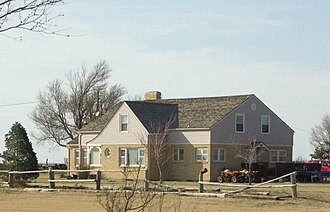
The Clutter Family Home - Creative Commons: Spacini
Just after midnight on November 15, 1959, Hickock and Smith arrived at the Clutter home, having driven roughly 400 miles west across Kansas in a stolen Chevrolet. They entered through an unlocked door and woke the sleeping family.
After unsuccessfully searching for the safe on their own, the pair took Herb Clutter into the basement and demanded he show them where the cash was kept. They soon discovered there was no safe at all. Herb did most of his business by check, and there was only around $40 in cash in the home. The pair had driven 400 miles for nothing.
Believing they could not leave any witnesses behind, Smith and Hickock killed each member of the family. Herb Clutter was killed in the basement. Kenyon was also killed in the basement, on a sofa. Bonnie was killed in her upstairs bedroom, and Nancy was killed in her own bed. All four had been bound and gagged.
The bodies were discovered later that morning by Nancy Clutter's friend Susan Kidwell and another friend, Nancy Ewalt, who had arrived to pick Nancy up for Sunday church.
The case stalled for weeks. The break came when Floyd Wells, still incarcerated at Kansas State Penitentiary, heard a radio broadcast about the murders and realized the crime matched Hickock's plan. He contacted prison officials, and a tip was passed to the Kansas Bureau of Investigation, naming Hickock and Smith.
Hickock and Smith had spent the weeks after the murders driving through Kansas, Missouri, Mexico, and the southwestern United States, passing bad checks and stealing along the way. They were arrested in Las Vegas, Nevada on December 30, 1959, after Las Vegas police identified the stolen Kansas license plates on their car. Both men eventually confessed in detail after being returned to Kansas.
Their trial began in Garden City, Kansas in March 1960. On March 29, 1960, after deliberating for just 40 minutes, an all male jury found both men guilty of four counts of first degree murder. They were sentenced to death.
Hickock and Smith spent the next five years on death row at the Kansas State Penitentiary while their appeals worked through the state and federal courts. After the U.S. Supreme Court declined to hear their case, both men were hanged in the prison's gallows just after midnight on April 14, 1965. Hickock was executed first, followed shortly after by Smith.
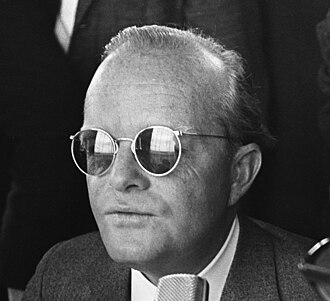
Truman Capote - Creative Commons: Eric Koch for Anefo
Truman Capote, then a 35 year old novelist and journalist, read a short Associated Press article about the murders in The New York Times within days of the killings and traveled to Kansas to begin researching the case. He was accompanied by his childhood friend Nelle Harper Lee, who would publish her own novel "To Kill a Mockingbird" later that year.
Capote spent the next six years researching the case, conducting hundreds of interviews with residents of Holcomb, Kansas Bureau of Investigation agents, and, eventually, Hickock and Smith themselves. He attended their execution.
His resulting book, "In Cold Blood," was serialized in The New Yorker in 1965 and published as a book in 1966. It was an instant critical and commercial sensation, often credited with inventing the modern true crime genre. The 1967 film adaptation, directed by Richard Brooks, filmed several scenes at the actual Clutter house.
Further Reading
The Clutter family home still stands today on the outskirts of Holcomb, Kansas, about seven miles west of Garden City. The brick, two story farmhouse was built in 1948 and was originally designed by Herb Clutter himself. It sits at the end of a long driveway lined with Chinese elms, with views of surrounding farmland on all sides.
The home was sold for the first time after the murders in the 1970s, then was sold again in 1990 to Donna and Leonard Mader, who lived there for several decades. In the early 1990s, the Maders briefly began offering paid walk through tours of the home at $5 per person, but stopped after only a few months in the face of resistance from people connected to the Clutter case and the personal demands of keeping the home constantly presentable to visitors.
The home was listed for sale by the Maders in 2006 and again in subsequent years. A small fire damaged an upstairs bedroom in 2009, but the home survived largely intact. The property has since changed hands and remains a private residence.
The home is at the end of a long, private driveway and is not visible from the public road. Please be respectful of the current owners and the neighbors, obey all posted signage, and stay on public roads at all times.
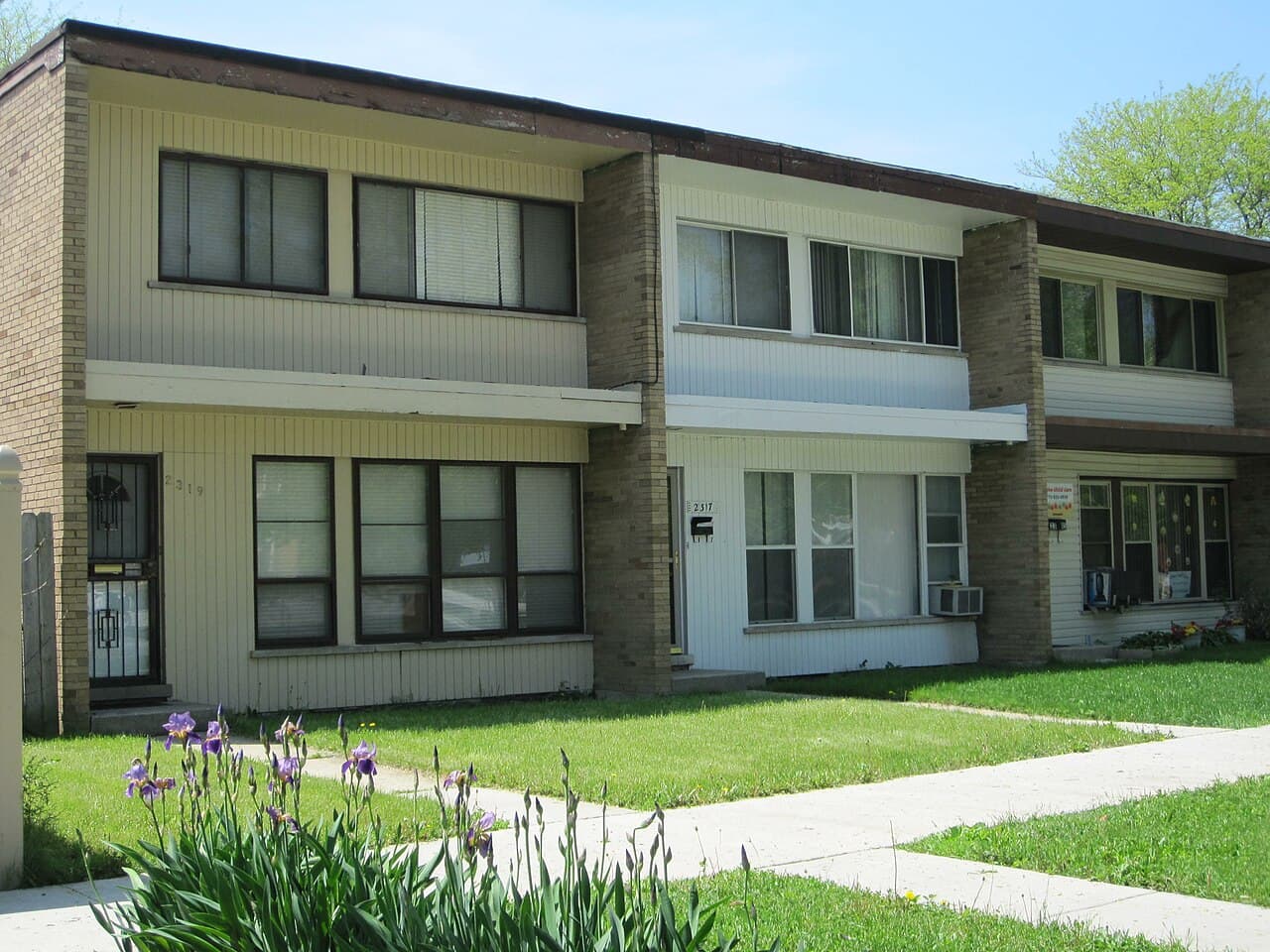
Richard Speck tortured and murdered 8 women in this house in 1966.
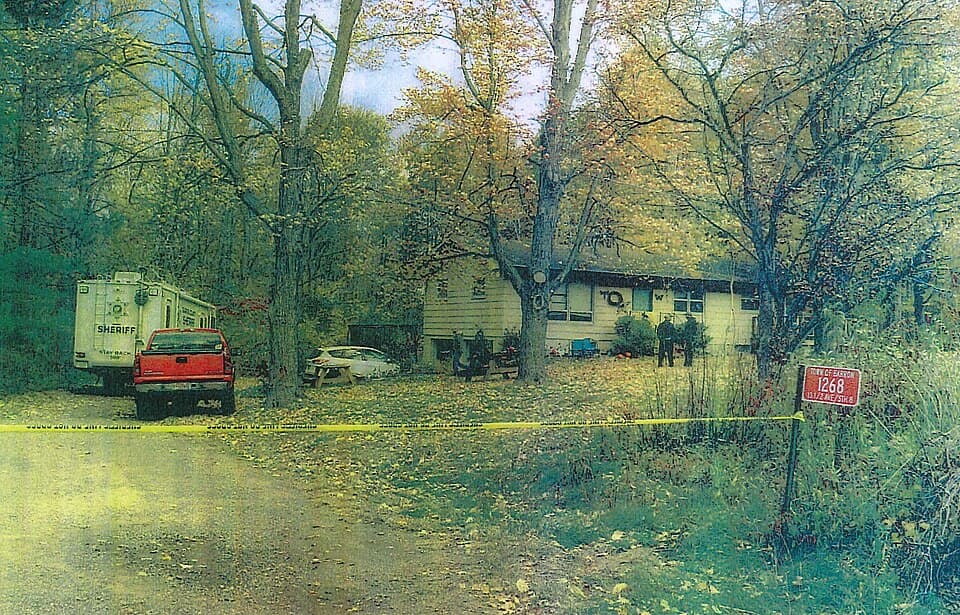
Jayme Closs' parents were murdered and she was abducted from this Barron, WI home.

BTK killer Dennis Rader murdered 4 members of the Otero Family in their Kansas home.
A Quick Note From Our Founder
Morbid Tourism is independently researched and maintained by one person. Every location is fact-checked, verified, and mapped so you can find exactly what you're looking for. If this page helped you, a coffee keeps the research going.